
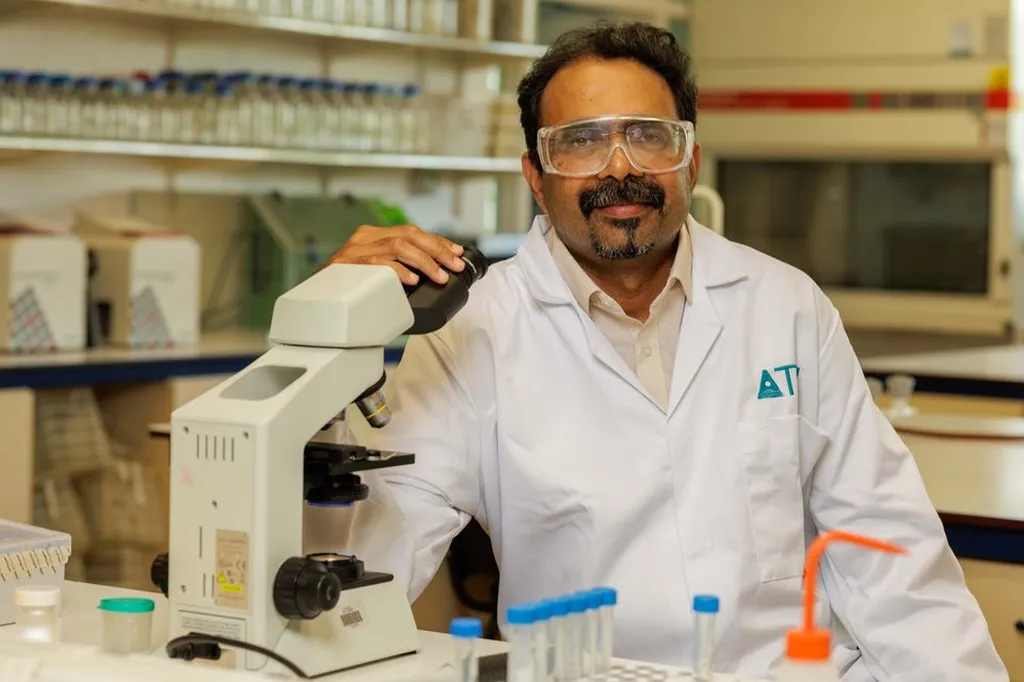
In the rapidly evolving world of additive manufacturing, researchers are constantly seeking innovative solutions to enhance the capabilities of 3D printing technologies. A recent study published in *Materials Research Express* (which translates to *Materials Research Express* in English) offers a promising breakthrough in the realm of binder jetting additive manufacturing, particularly for the production of zirconia parts. The research, led by Kaushik Balasubramanian from the Department of Automobile Engineering at PSG College of Technology in Coimbatore, India, introduces a novel method for formulating custom binder inks that could revolutionize the industry.
Binder jetting additive manufacturing, a process that involves selectively depositing a liquid binding agent onto a powder bed to create 3D printed objects, has long faced challenges in finding suitable binder materials. Traditional binders often contain harmful components that can leave behind carbon residue during the sintering process, compromising the quality of the final product. Balasubramanian and his team set out to address this issue by developing a new approach to binder ink formulation that is both flexible and rapid.
“The ability to formulate suitable binder materials, especially using bio-based polymers, is crucial to meet the increasing demand for a range of materials for various applications,” Balasubramanian explained. The team focused on studying the rheology of the binder inks, their interaction with powder, and the green strength they provide. By investigating the printability of these inks using an inkjet printer, they were able to determine the binder strength achieved for a given binder composition.
One of the most significant findings of the study was that increasing concentrations of Carboxy Methyl Cellulose and Chitosan from 0.1% to just about 0.5% significantly increased the binder strength, making it comparable to that obtained using 15% concentration of Polyvinyl Pyrrolidone. This discovery opens up new possibilities for the development of more effective and environmentally friendly binder inks.
The research also employed numerical simulations to study the interaction of a binder drop after impact on the powder bed and to understand the dynamics of different drop sizes as they penetrated into the powder bed. Through this, the team determined a ratio value of approximately 0.675, which was used to establish a relationship between the drop size and the powder layer thickness for this study.
The implications of this research are far-reaching, particularly for the energy sector. As the demand for advanced materials and components grows, the ability to rapidly develop and optimize binder inks for binder jetting additive manufacturing becomes increasingly important. The insights gained from this study contribute to advancing the binder jetting process, facilitating the optimization and finalization of appropriate binder inks and printing parameters to successfully print parts on any binder jetting machine in a very short time.
“This research provides valuable insights that could shape the future of binder jetting additive manufacturing,” Balasubramanian noted. “By understanding the dynamics of binder drop interaction with the powder bed, we can optimize the printing process and improve the quality of the final product.”
As the industry continues to evolve, the development of custom binder inks that are both effective and environmentally friendly will play a crucial role in meeting the growing demand for advanced materials. The research conducted by Balasubramanian and his team represents a significant step forward in this direction, offering a promising solution to one of the key challenges in binder jetting additive manufacturing.