
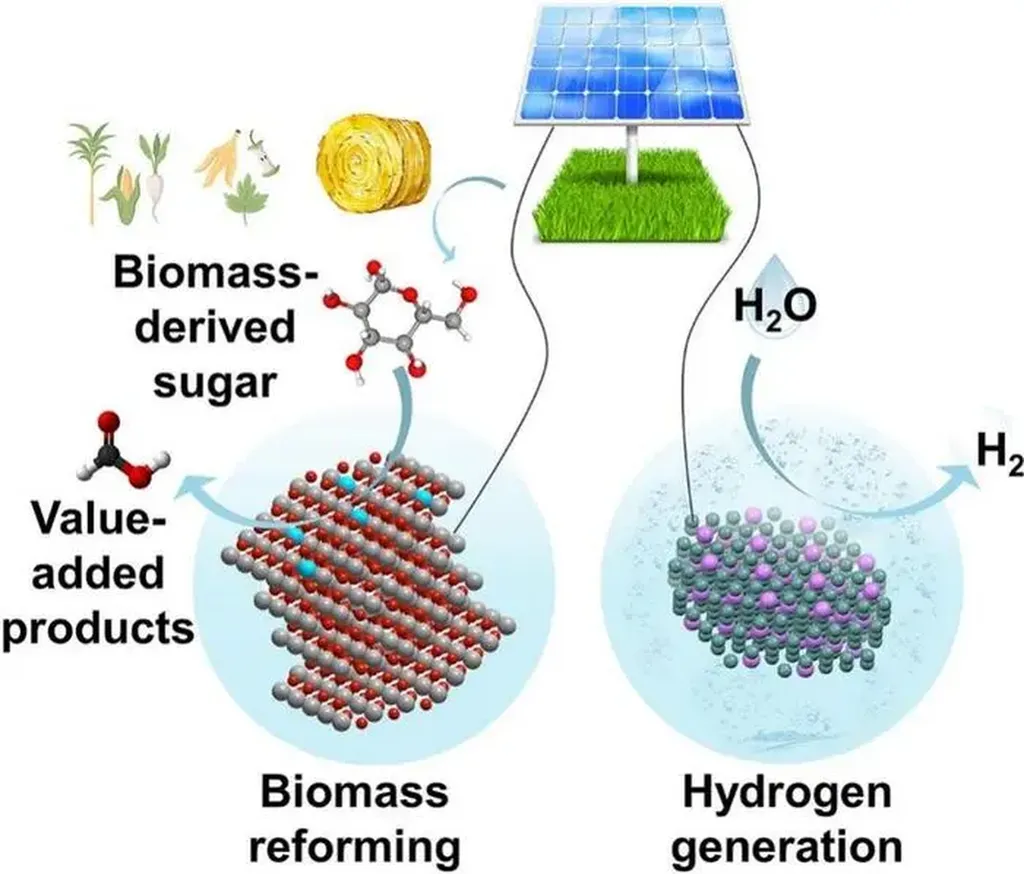
In a significant stride towards making green hydrogen more economically viable, researchers have developed a novel electrocatalyst that could revolutionize the energy sector. The breakthrough, published in the journal Sustainable Materials (SusMat), translates to English as “Sustainable Materials,” comes from the lab of Ji Seong Hyoung at Korea University in Seoul, South Korea. The team has engineered a cost-effective and durable alternative to platinum-based catalysts, a critical hurdle in the widespread adoption of proton exchange membrane water electrolysis (PEMWE) for hydrogen production.
The research focuses on the hydrogen evolution reaction (HER), a key process in PEMWE that has traditionally relied on expensive platinum-group metals. “The high cost of platinum has been a major barrier to the commercialization of green hydrogen,” explains Ji Seong Hyoung, the lead author of the study. “Our goal was to develop a catalyst that not only reduces costs but also matches or surpasses the performance of platinum-based systems.”
The team’s solution is a phosphorus-modified nickel with ruthenium nanoclusters, self-supported on carbon paper (P–NiRu/CP). By leveraging metal-organic framework precursors and optimizing the phosphidation process, they created a dynamic interface between ruthenium, nickel, and phosphorus. This interface optimizes hydrogen adsorption and desorption energies, facilitating efficient hydrogen mobility and promoting effective Tafel recombination.
The results are impressive. The P–NiRu/CP catalyst exhibited an overpotential of just 22 millivolts at 10 milliamperes per square centimeter and a Tafel slope of 29 millivolts per decade, outperforming benchmark platinum on carbon (Pt/C). When employed as the cathode in a PEMWE single cell, the P–NiRu/CP achieved 2.05 volts at 3.0 amperes per square centimeter with stable operation over 500 hours.
The commercial implications of this research are substantial. “This breakthrough could significantly reduce the capital expenditure for hydrogen production facilities,” says Ji Seong Hyoung. “By replacing platinum with a more abundant and cheaper alternative, we can make green hydrogen more competitive with fossil fuel-based hydrogen production methods.”
The study also highlights the potential for scaling up the production of these catalysts. The use of carbon paper as a support material and the self-supported nature of the nanoclusters suggest that the synthesis process could be adapted to industrial-scale manufacturing.
The research not only provides a viable alternative to platinum-based catalysts but also offers insights into the design of future electrocatalysts. The dynamic interface concept demonstrated in this study could inspire further innovations in catalyst design, potentially leading to even more efficient and durable systems.
As the world increasingly turns to hydrogen as a clean energy carrier, this research from Ji Seong Hyoung’s lab at Korea University could play a pivotal role in shaping the future of the energy sector. The findings, published in SusMat, represent a significant step forward in the quest for sustainable and affordable hydrogen production.