
In a groundbreaking development that could revolutionize tissue engineering and regenerative medicine, researchers have introduced a novel class of bioinks that promise to enhance the functionality and complexity of 3D bioprinted tissues. Led by Hung Pang Lee from the Department of Orthopaedic Surgery at Stanford University, the study published in *Bioactive Materials* (which translates to *Bioactive Materials* in English) focuses on ribbon-shaped microgels, offering a versatile platform for creating anisotropic tissue structures.
Traditional bioinks, often relying on spherical microgels, have limitations in mimicking the natural anisotropy found in many tissues. “Most native tissues are inherently anisotropic, meaning they have a preferred direction or orientation,” explains Lee. “Our work addresses this gap by introducing ribbon-shaped microgels (μRBs) that support cell alignment and provide tunable niche cues, which are crucial for mimicking the complex architectures found in nature.”
The μRBs developed by Lee and his team are not only printable but also align during extrusion, a critical feature for creating tissues with directional properties. This alignment supports the orientation of mesenchymal stromal cells (MSCs) and endothelial cells, with greater alignment observed as the stiffness of the μRBs increases. “By tuning the stiffness of these microgels, we can influence cell behavior and differentiation,” says Lee. “This is particularly exciting for applications in bone tissue engineering, where we’ve seen accelerated osteogenesis with stiffer μRBs.”
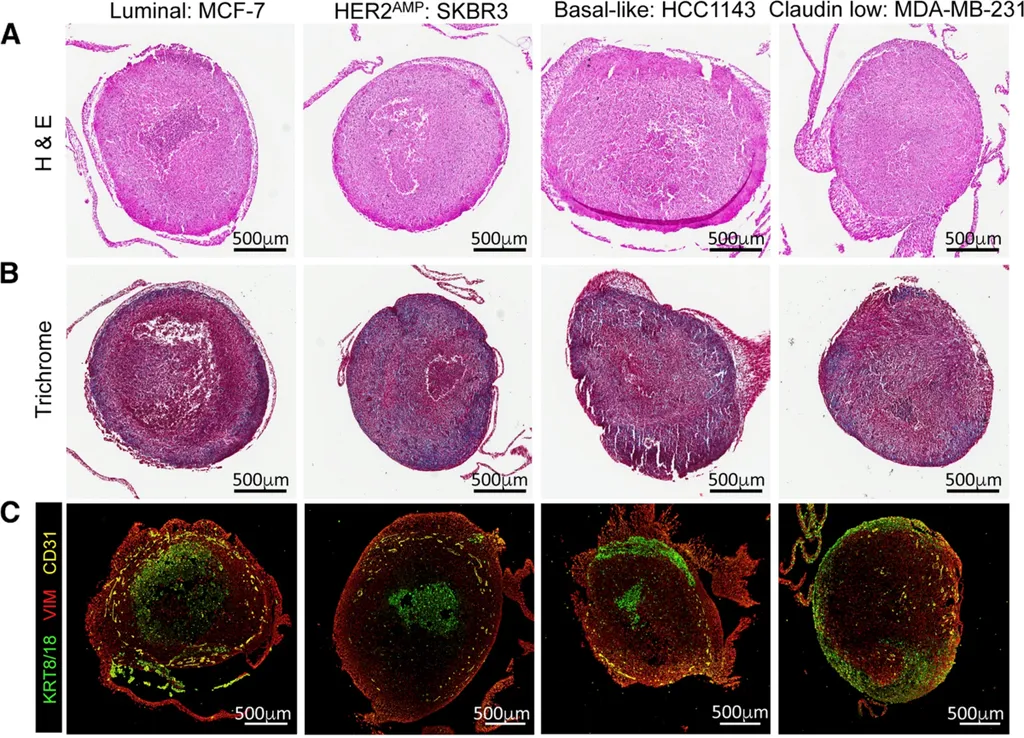
The potential applications of this technology extend beyond bone tissue engineering. The study demonstrates the use of μRB bioinks for modeling breast cancer-bone metastasis, showcasing the ability to spatially pattern multiple cell types to simulate cancer cell invasion at the tissue interface. This capability could significantly advance cancer research and drug development by providing more accurate and complex models of disease progression.
The implications for the energy sector, particularly in bioenergy and bioprocessing, are also noteworthy. The ability to create anisotropic tissues with precise control over cell alignment and differentiation could lead to the development of more efficient biofuels and bioprocessing systems. For instance, engineered tissues could be used to optimize the production of biofuels by enhancing the efficiency of microbial or algal cultures.
Moreover, the versatility of μRB bioinks opens up new avenues for creating functional tissues for various industrial applications. For example, in the energy sector, bioprinted tissues could be used to develop more efficient and sustainable energy storage systems, such as biobatteries or biofuel cells. The ability to tailor the properties of these tissues to specific needs could lead to significant advancements in energy technology.
As the field of 3D bioprinting continues to evolve, the introduction of ribbon-shaped microgels represents a significant step forward. “This research not only advances our understanding of bioink design but also opens up new possibilities for creating functional tissues that can address a wide range of medical and industrial challenges,” says Lee.
The study’s findings, published in *Bioactive Materials*, highlight the potential of μRB bioinks to support a broad range of bioprinting applications, from tissue engineering to cancer research and beyond. As researchers continue to explore the capabilities of these innovative bioinks, the future of 3D bioprinting looks increasingly promising, with far-reaching implications for both the medical and energy sectors.