
In the quest for cleaner energy solutions, researchers have long been fascinated by the intricacies of the electrochemical oxygen evolution reaction (OER), a critical process in water splitting for hydrogen production. A recent study published in *InfoMat* (translated from Chinese as *Information Materials*), led by Tofik Ahmed Shifa from the Department of Molecular Sciences and Nanosystems at Ca’ Foscari University of Venice, Italy, has shed new light on the dynamic nature of active sites in advanced materials, potentially revolutionizing the energy sector.
The research focuses on a heterostructure composed of two distinct phases: Brunogeierite (Fe2GeO4) and serpentine (Ni3Ge2O5(OH)4). By introducing varying amounts of a nickel precursor into pristine Fe2GeO4, the team uncovered a fascinating transformation in the catalytic behavior of the materials. “Initially, the iron in Fe2GeO4 showed better performance for the OER compared to the nickel in Ni3Ge2GeO5(OH)4,” explains Shifa. “However, when we formed the heterostructure, the nickel became more active due to structural distortion and increased electron transfer.”
This discovery was confirmed through a combination of computational studies and experimental work, including ex situ and in situ X-ray absorption spectroscopy (XAS) studies. The findings highlight the synergy between structural and electronic factors, which can significantly enhance catalytic performance. The optimized heterostructure demonstrated impressive electrocatalytic performance, achieving an overpotential of 325 mV versus the reversible hydrogen electrode (RHE) to reach a current density of 100 mA cm–2. It also exhibited a low Tafel slope of 42 mV dec–1 and long-term stability exceeding 50 hours, even at high current densities.
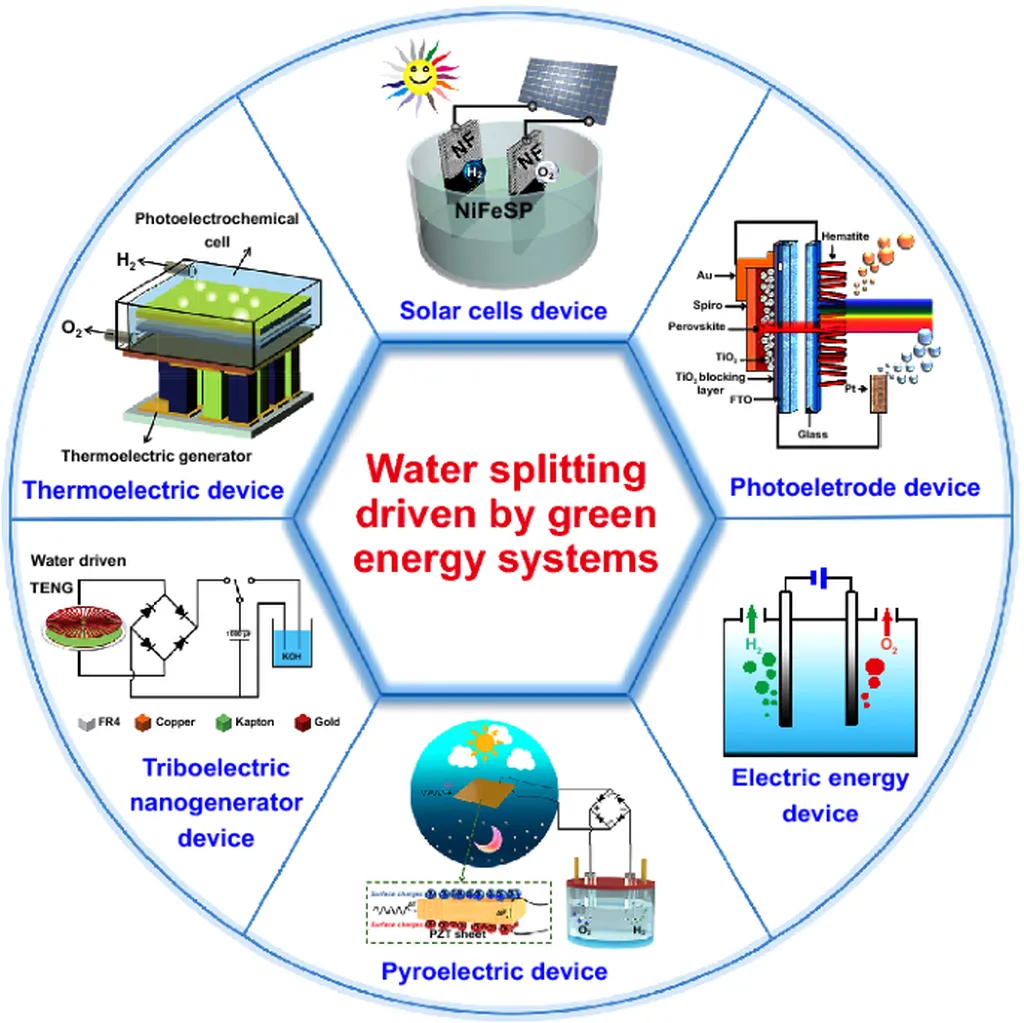
The implications for the energy sector are substantial. Efficient water oxidation is a cornerstone of various electrochemical energy conversion technologies, including water electrolysis for hydrogen production and photoelectrochemical cells. The ability to dynamically tune the active sites in catalytic materials could lead to more efficient and cost-effective energy solutions. “This research opens up new avenues for designing advanced catalysts with enhanced performance,” says Shifa. “By understanding and controlling the evolution of active sites, we can push the boundaries of what’s possible in electrochemical energy conversion.”
As the world continues to seek sustainable energy solutions, the insights gained from this study could pave the way for significant advancements in the field. The dynamic nature of active sites in heterostructures offers a promising path forward, potentially transforming the landscape of electrochemical energy technologies and bringing us closer to a cleaner, more sustainable future.