
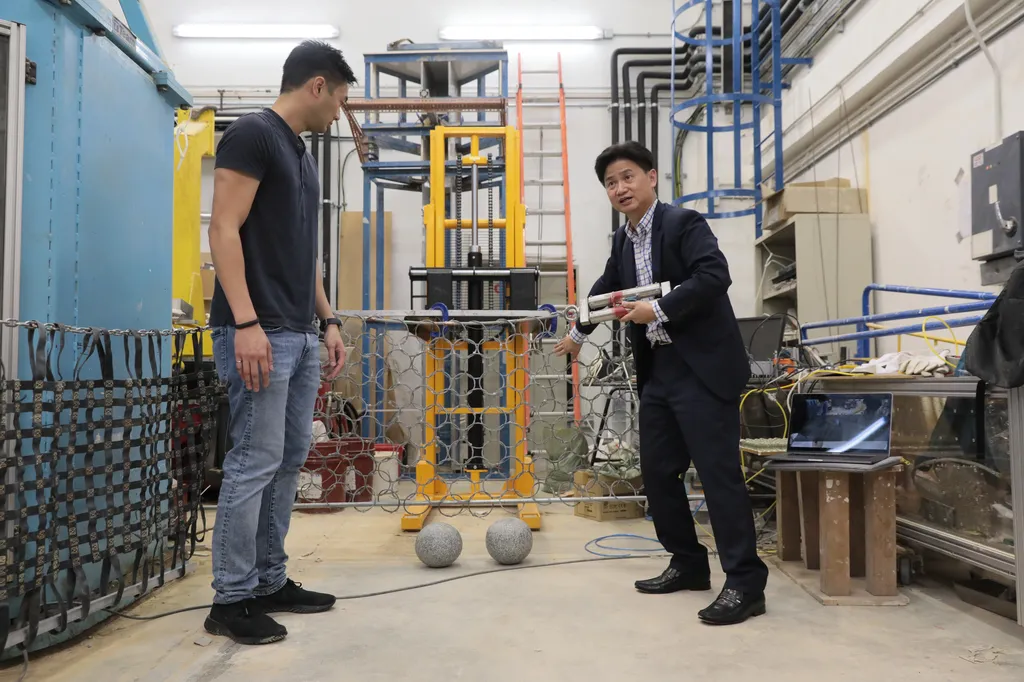
In the shadow of the Wenchuan earthquake’s devastating aftermath, a team of researchers led by Dr. Limin Zhang from the Department of Civil and Environmental Engineering at The Hong Kong University of Science and Technology has been unraveling the intricate web of geological hazard chains. Their work, recently published in *Yantu gongcheng xuebao* (Chinese Journal of Geotechnical Engineering), offers a beacon of hope for mitigating risks that threaten infrastructure and communities alike.
Geological hazard chains are a domino effect of natural disasters, where one hazard triggers another, creating a cascade of destruction. “Imagine a landslide that starts as a simple slope failure but evolves into a debris flow and then a flood,” explains Dr. Zhang. “Each stage amplifies the risk, making the overall impact far greater than the sum of its parts.” This multi-hazard transformation poses severe threats to societal and infrastructural safety, particularly in regions with significant energy infrastructure.
The research establishes a comprehensive technical framework that spans mechanism studies, numerical simulation, risk assessment, and intelligent prevention. Using the Wenchuan earthquake as a case study, the team analyzed the triggers, types, and multi-decade spatiotemporal evolution of hazard chains. Their findings underscore the critical need to integrate the full lifecycle of hazard chains into engineering design.
One of the standout tools developed by the team is the EDDA platform, which models the complete “rainfall–landslide–debris flow–flood” cascade in rain-induced landslides. This platform, along with the GMFA model, which addresses thermo-hydro-mechanical coupling and hazard transition in glacial landslide chains, enables the simulation of the entire hazard-chain process. “These tools allow us to predict and understand the complex interactions and amplification effects that occur during these cascading events,” says Dr. Zhang.
In the realm of risk assessment, the team proposed a five-phase framework to quantify the interactions and amplification effects in hazard chains. They developed two rapid-assessment tools: the PoLA system for regional quantitative risk assessment of rainfall-induced landslides and the QuakeSlide system for real-time risk forecasts of global earthquake-induced landslides. These tools are invaluable for energy sector stakeholders, providing critical data to safeguard infrastructure and ensure operational continuity.
The research also advocates for a risk-informed engineering design approach, emphasizing proactive defense and dynamic emergency risk assessment protocols powered by digital twin technology. “By integrating these advanced tools and methodologies, we can significantly enhance our ability to mitigate risks and manage emergencies effectively,” Dr. Zhang notes.
The implications of this research are far-reaching, particularly for the energy sector. Energy infrastructure, such as power plants, pipelines, and transmission lines, is often located in geographically vulnerable areas. Understanding and mitigating the risks associated with geological hazard chains can prevent catastrophic failures, ensuring the reliability and safety of energy supplies.
As the energy sector continues to expand into remote and challenging terrains, the insights gained from this research will be instrumental in shaping future developments. By adopting a proactive approach to risk management, energy companies can protect their assets, minimize downtime, and ensure the safety of their personnel and the communities they serve.
In conclusion, Dr. Zhang’s work represents a significant leap forward in the field of geological hazard management. By providing a comprehensive framework and advanced tools for risk assessment and mitigation, this research paves the way for a safer and more resilient future. As the energy sector navigates the complexities of operating in high-risk areas, the insights and methodologies developed by Dr. Zhang and his team will be invaluable in ensuring the safety and reliability of critical infrastructure.