
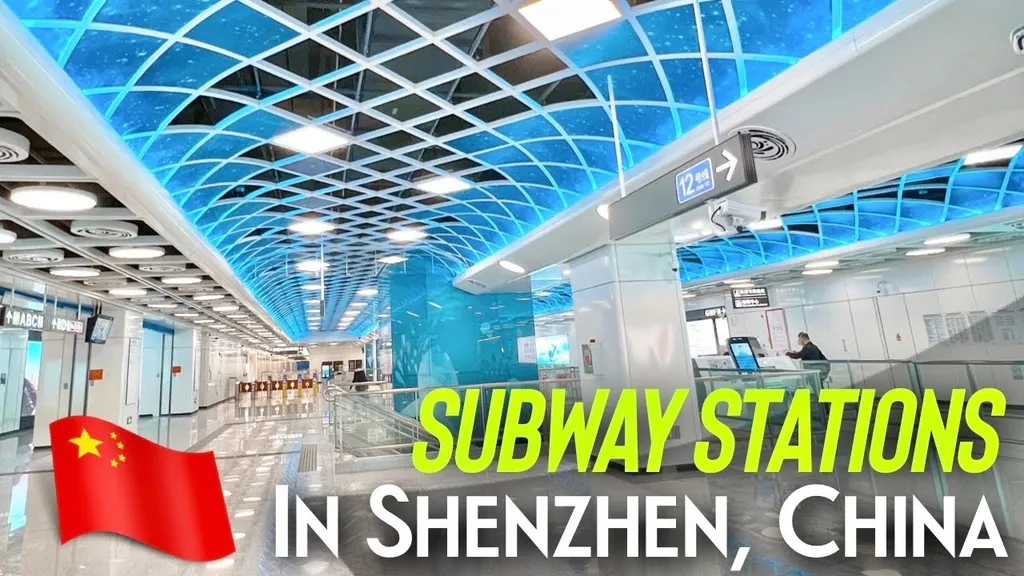
In the bustling underground networks of China’s metro systems, a quiet revolution is taking place, one that could redefine how urban spaces blend culture and technology. At the heart of this transformation is Jinye Xie, a researcher from the School of Visual Communication at Suzhou Art & Design Technology Institute, who has been pioneering a novel approach to infuse Jiangnan culture into metro spaces. This innovative practice, detailed in a recent study published in ‘Chengshi guidao jiaotong yanjiu’ (Urban Rail Transit Research), aims to tackle the homogenization of metro environments while preserving and promoting regional cultural heritage.
Xie’s research addresses a pressing issue in urban development: the often sterile and uniform nature of metro spaces. “Metro spaces are typically designed with functionality in mind, but they lack cultural identity,” Xie explains. “This project seeks to change that by integrating Jiangnan culture into the very fabric of these spaces, creating a more immersive and culturally rich environment for commuters.”
The study outlines a comprehensive framework that involves deconstructing Jiangnan culture into its core symbols and then translating these elements into a multimodal display system. This system employs new materials and Internet of Things (IoT) technology to create interactive and engaging cultural scenes. “We’re not just slapping on some traditional decorations,” Xie clarifies. “We’re embedding cultural elements into the spatial planning and functional facilities, creating a seamless blend of space, behavior, and culture.”
One of the most intriguing aspects of this research is the use of digital platforms to bridge the gap between online and offline experiences. By integrating digital interactions with physical spaces, the project aims to create a multi-dimensional cultural environment that resonates with a broader audience. “This approach not only enhances the cultural identity of metro spaces but also turns them into dynamic cultural hubs,” Xie adds.
The commercial implications of this research are significant, particularly for the energy sector. As cities continue to expand and metro systems become more complex, the need for culturally resonant and technologically advanced spaces will grow. Xie’s framework provides a replicable model that can be adapted to different cultural contexts, offering a blueprint for future developments in urban planning and design.
Moreover, the integration of IoT technology and new materials into cultural expressions opens up new avenues for innovation in the energy sector. Smart materials and interactive displays require advanced energy solutions, creating opportunities for energy companies to develop and implement cutting-edge technologies. “This is not just about preserving culture; it’s about creating a sustainable and innovative urban ecosystem,” Xie notes.
The study’s findings have already been validated through case studies in the Jiangnan region, demonstrating the effectiveness of the proposed framework. The coordination mechanism has been shown to strengthen cultural perception, while digital interactive systems and new materials enhance cultural immersion. “We’ve seen firsthand how this approach can transform metro spaces into vibrant cultural landmarks,” Xie concludes.
As cities around the world grapple with the challenges of urbanization and cultural preservation, Xie’s research offers a compelling solution. By blending technology, culture, and space, this innovative practice not only enriches the urban experience but also paves the way for a more culturally empowered and technologically advanced future. The study, published in ‘Urban Rail Transit Research,’ serves as a testament to the potential of interdisciplinary collaboration in addressing the complex issues of modern urban development.