
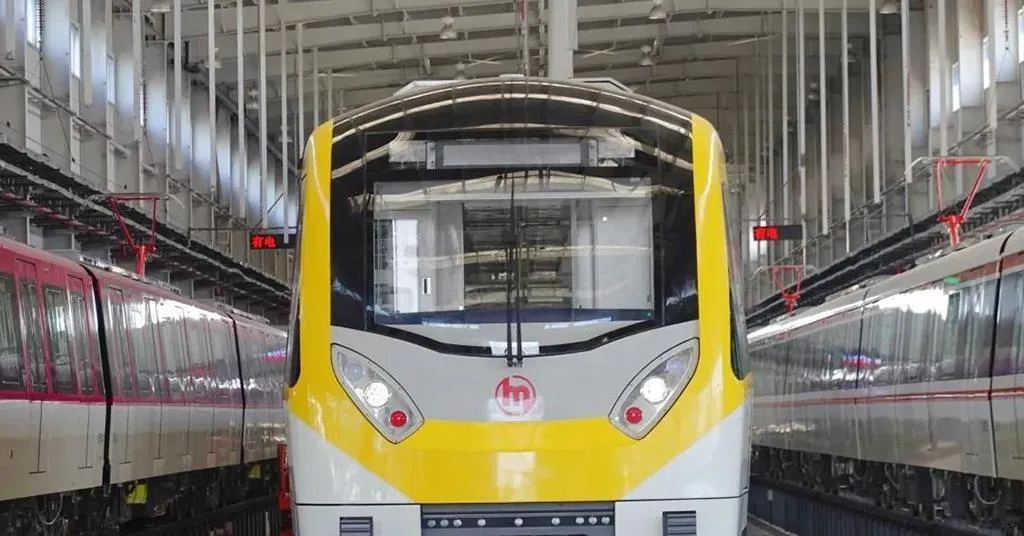
In the bustling city of Hangzhou, a meticulous and complex operation has just been completed, one that could set a new standard for metro line splitting and renovation projects worldwide. The Linping Branch of Hangzhou Metro Line 1 has been successfully split, allowing both lines to operate independently, thanks to the pioneering work of Zhiming Sun and his team at Hangzhou MTR Co., Ltd.
The project, detailed in a recent study published in ‘Chengshi guidao jiaotong yanjiu’ (Urban Rail Transit Research), is a testament to the intricate planning and execution required in such high-stakes environments. “The splitting and renovation of metro operating lines is a highly complex task,” Sun explains. “It involves multiple professional disciplines and presents significant challenges, particularly in ensuring compatibility between new and existing systems.”
The key to the project’s success lay in addressing these challenges head-on. Sun and his team focused on several critical aspects, including system interface relationships, compatibility between new and old equipment, and the design of switchover commissioning devices. They also paid meticulous attention to the dismantling of obsolete equipment, ensuring that every step was taken to minimize operational risks.
The implementation stage was equally demanding. The team had to organize EMU train debugging, manage software configuration, oversee switchover cabinet management, and conduct full-system switchover rehearsals. Operational coordination and handover procedures were also crucial, requiring seamless collaboration among various stakeholders.
The commercial implications of this research are substantial. As cities around the world expand their metro networks, the need for efficient and safe line splitting and renovation projects will only grow. The methods and insights gleaned from this project could serve as a blueprint for future endeavors, helping to reduce risks and improve outcomes.
Moreover, the energy sector stands to benefit from these advancements. Efficient metro operations contribute to reduced energy consumption and lower emissions, aligning with global sustainability goals. By optimizing the performance of existing infrastructure, cities can enhance their energy efficiency and reduce their carbon footprint.
The successful completion of the Linping Branch splitting project marks a significant milestone in the field of urban rail transit. As Sun and his team have demonstrated, with careful planning, innovative solutions, and meticulous execution, even the most complex challenges can be overcome. The insights from this project are sure to shape future developments, paving the way for more efficient, safer, and sustainable metro systems worldwide.