
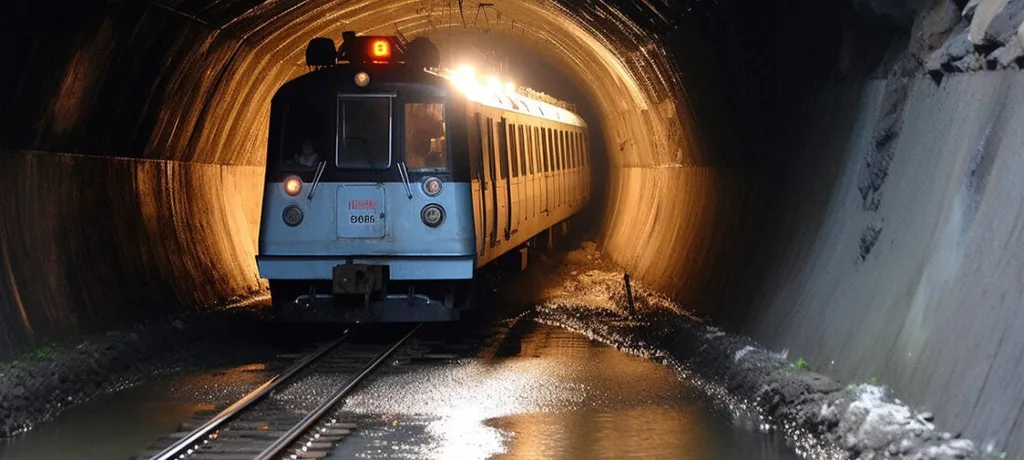
In the bustling world of urban rail transit, safety is paramount. Yet, a critical issue has been lurking beneath the surface, threatening the efficiency and safety of emergency evacuations. Huajun Guo, a leading expert from China Railway Investment Group Transportation Operation Co., Ltd., has shed light on this pressing concern in a groundbreaking study published in the journal *Chengshi guidao jiaotong yanjiu*, which translates to *Urban Rail Transit Research*.
Guo’s research reveals a fragmented landscape of emergency evacuation standards, scattered across various guidelines. This lack of cohesion has led to inconsistent interpretations and implementations by design, construction, and operation units. “Differences in key indicators such as evacuation time, evacuation routes, and safety zones have seriously affected the efficiency and safety of emergency evacuation,” Guo explains.
The study delves into the heart of the problem, comparing and analyzing technical requirements from multiple standards. It explores the relationships among various emergency evacuation indicators, including evacuation time, routes, safe zones, and population density. Guo’s work identifies conflicts among these indicators and investigates the underlying causes, which stem from divergent perspectives due to differences in standard-setting mechanisms and the lack of synchronization between technological advancement and standard updates.
The commercial impacts of this research are significant. For the energy sector, which often intersects with urban infrastructure projects, understanding and mitigating these risks is crucial. Efficient emergency evacuation plans can minimize downtime and ensure the safety of passengers, ultimately benefiting the overall operation and reputation of rail transit systems.
Guo’s recommendations are practical and actionable. He suggests that during the early stages of engineering design, professional technical teams should integrate and analyze relevant standards to determine reasonable design standards based on actual project conditions. During the design process, when inconsistencies arise among different standard requirements, design units should optimize design schemes to balance the demands of multiple standards.
Operating units are advised to develop a unified, detailed, and highly operable emergency evacuation procedure, tailored to the characteristics and actual conditions of their operating lines. Additionally, industry regulatory authorities should establish a dynamic updating mechanism for emergency evacuation standards in urban rail transit.
This research is poised to shape future developments in the field. By addressing the inconsistencies in emergency evacuation standards, Guo’s work paves the way for safer, more efficient urban rail transit systems. As cities continue to grow and evolve, the insights from this study will be invaluable in ensuring the safety and reliability of urban infrastructure.
In the words of Huajun Guo, “It is necessary to conduct a systematic discussion on emergency evacuation standards for urban rail transit industry.” This call to action resonates with professionals across the industry, urging them to collaborate and improve the standards that govern the safety of millions of commuters worldwide.