
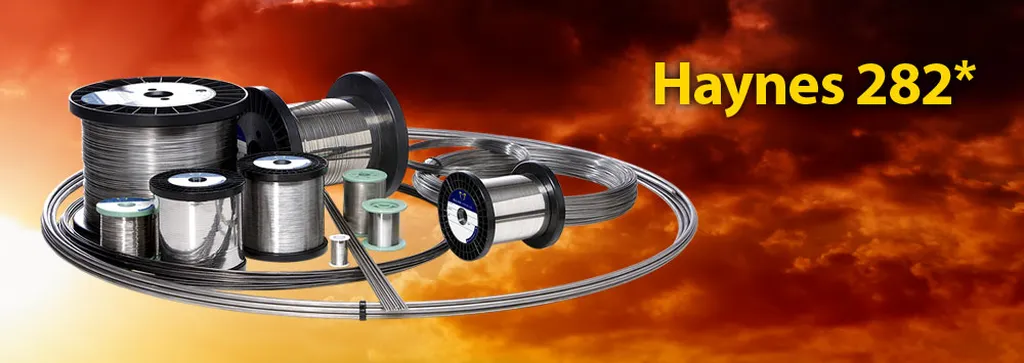
In the high-stakes world of high-temperature seals, the devil is often in the details—and those details can make or break the performance of critical components in the energy sector. A recent study published in *Teshugang* (which translates to *Heat Treatment*) has shed new light on how the annealing process can dramatically influence the microstructure and properties of Haynes 282 alloy wire, a material widely used in demanding applications like gas turbines and nuclear reactors. The research, led by Wang Jianqiao, offers insights that could reshape how manufacturers approach the production of these vital components.
The study zeroed in on the delicate balance between cold drawing reduction and annealing parameters, exploring how these factors affect the strength, ductility, and microstructure of Haynes 282 alloy wire. Using a combination of optical microscopy, scanning electron microscopy, room-temperature tensile testing, and hardness measurements, the team uncovered some fascinating relationships. As the annealing temperature increased or the holding time extended, the grain size of the alloy grew, while its hardness decreased. This inverse relationship is crucial for manufacturers aiming to fine-tune the properties of their materials.
One of the most striking findings was the linear relationship between cold drawing reduction in area and tensile strength. When the reduction reached 69.14%, the tensile strength soared to an impressive 1,805 MPa, thanks to the formation of a fully fibrous microstructure. However, the study also revealed that annealing within low area reduction ranges (10.80%-39.51%) and at an area reduction of 62.65% led to abnormal grain growth and a decline in properties, likely due to non-uniform deformation.
Wang Jianqiao emphasized the importance of these findings for industrial applications. “Understanding these relationships allows us to optimize the annealing process to achieve the best balance between strength and ductility,” he said. “This is particularly important for high-temperature seals, where performance and reliability are non-negotiable.”
The research also identified the optimal annealing parameters for Haynes 282 alloy wire: 1140°C for 45 minutes, with a cold drawing reduction in area between 45.60% and 55.56%. These parameters produce a stable microstructure and an optimal strength-ductility balance, making them ideal for high-performance applications in the energy sector.
The implications of this research are far-reaching. By fine-tuning the annealing process, manufacturers can produce Haynes 282 alloy wire with superior properties, enhancing the reliability and longevity of high-temperature seals. This could lead to more efficient and durable components for gas turbines, nuclear reactors, and other critical energy infrastructure.
As the energy sector continues to evolve, the demand for high-performance materials will only grow. This study provides a roadmap for manufacturers to meet those demands, ensuring that the components they produce are up to the task. With the insights gained from this research, the future of high-temperature seals looks brighter—and stronger—than ever before.