
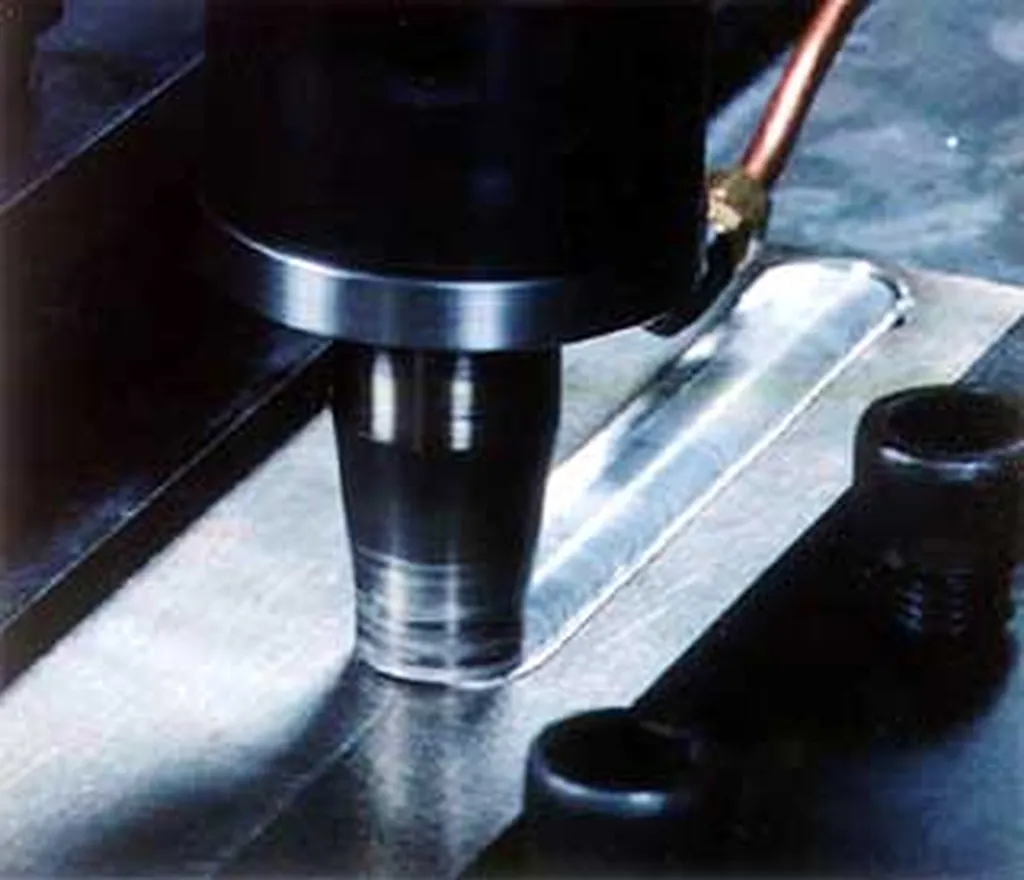
In a breakthrough that could reshape the energy sector, researchers have made significant strides in overcoming the challenges of joining dissimilar metals, specifically aluminum alloy 7075-T6 and low carbon steel, through friction welding. This advancement, led by Masaaki Kimura from the Department of Mechanical Engineering at the University of Hyogo in Japan, opens new avenues for lightweight and high-strength structures crucial for energy infrastructure.
The study, published in the *Journal of Advanced Joining Processes* (translated from Japanese as “Journal of Advanced Connection Technologies”), addresses a longstanding issue in the industry: the tendency for cracks to form in the aluminum alloy during direct friction welding with low carbon steel. These cracks not only compromise the integrity of the joint but also limit the application of these materials in critical sectors such as energy and transportation.
Kimura and his team explored the use of commercially pure titanium (CP-Ti) as an insert metal in a single-step friction welding process. Their goal was to achieve a crack-free joint between the aluminum alloy and low carbon steel. While varying the shape of the CP-Ti insert metal alone did not yield the desired results, the researchers discovered that a specific configuration could prevent flash cracking. By ensuring the weld diameter on the aluminum alloy side was larger than that of the CP-Ti insert metal and incorporating a groove on the aluminum alloy side, they successfully minimized cracking.
“The key was to optimize the shape of the CP-Ti insert metal and control the weld diameter,” Kimura explained. “This approach not only prevented cracking but also significantly enhanced the tensile strength of the joint.”
The findings revealed that a forge pressure of 400 MPa resulted in a joint strength that exceeded the yield strength of the low carbon steel base metal, achieving approximately 83% of its tensile strength. However, the researchers noted that further optimization of the CP-Ti insert metal shape is necessary to promote greater deformation of the low carbon steel side, ultimately enhancing the overall joint characteristics.
The implications of this research are profound for the energy sector, where the demand for lightweight, high-strength materials is ever-increasing. The ability to reliably join dissimilar metals like aluminum alloy and low carbon steel can lead to the development of more efficient and durable structures, from wind turbine components to pipelines and beyond.
As the energy industry continues to evolve, the need for innovative joining techniques becomes ever more critical. Kimura’s research not only addresses a technical challenge but also paves the way for future advancements in material science and engineering. By pushing the boundaries of what is possible, this study sets the stage for a new era of lightweight, high-performance structures that can withstand the demands of the energy sector.
In the words of Kimura, “This research is just the beginning. There is still much to explore in optimizing the joining process and enhancing the properties of dissimilar metal joints.” As the industry looks to the future, the insights gained from this study will undoubtedly play a pivotal role in shaping the next generation of energy infrastructure.