
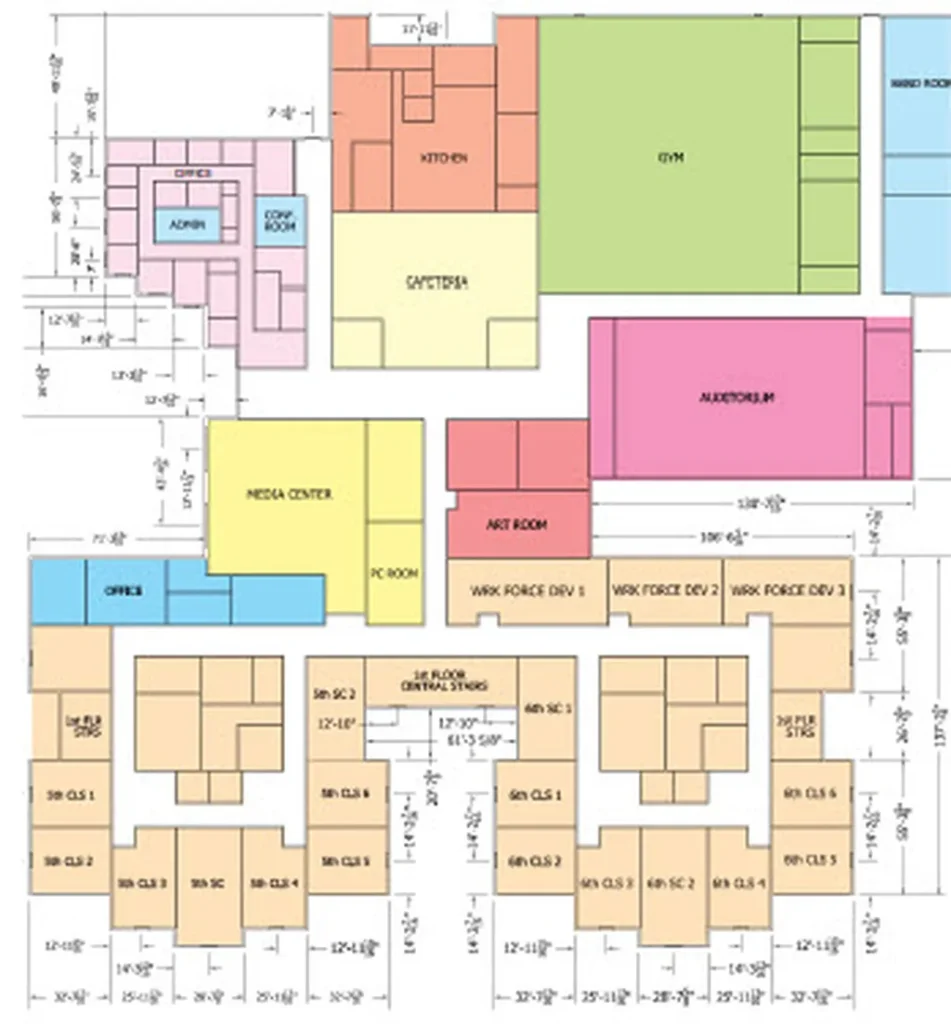
In the quest for sustainable and energy-efficient buildings, architects and designers are increasingly turning to daylight as a key component. A recent study published in the *Journal of Daylighting* (translated from Persian as “Journal of Daylighting”) sheds new light on how spatial layouts in schools can significantly impact daylight distribution and visual quality, offering valuable insights for the energy sector.
Led by Seyed Hossein Neshat Safavi from the Architectural Engineering Department at Imam Khomeini International University in Qazvin, Iran, the research integrates spatial layout analysis with daylighting and visual quality metrics. The study evaluated seven different school plan layouts, using advanced simulation tools like the Honeybee plugin and Radiance engine in Rhinoceros software.
The findings are compelling. “Well-designed interior layouts can significantly enhance both daylight distribution and visual quality,” Safavi explains. The study found that Layout C, characterized by a higher Drift Angle (DA) and longer visual range (Max radial), outperformed other layouts in both daylighting and visual quality metrics. This layout achieved a Daylight Autonomy (DA) of 52.93% and a Useful Daylight Illuminance (UDI) of 68.17%, providing a dynamic and open environment that is both visually stimulating and energy-efficient.
Layouts F and E also performed well, while Models D and G showed less daylight performance, with UDI-low values around 31–34%. The research highlights the importance of an integrated design approach that considers Daylight Autonomy, Useful Daylight Illuminance, Isovist metrics, and plan layouts.
The implications for the energy sector are substantial. By optimizing spatial layouts to maximize natural light, schools can reduce their reliance on artificial lighting, leading to significant energy savings. This not only aligns with global sustainability standards but also contributes to more visually enriched and energy-efficient learning environments.
As Safavi notes, “The outcomes emphasize the importance of an integrated design approach, offering a new framework to enhance daylight benefits in educational spaces.” This research provides valuable insights for architects, designers, and policymakers, paving the way for more sustainable and energy-efficient school designs.
The study’s findings are particularly relevant for the energy sector, as they demonstrate the potential for significant energy savings through thoughtful design. By integrating daylighting and visual quality metrics into the design process, architects can create spaces that are not only aesthetically pleasing but also energy-efficient.
As the world continues to grapple with climate change and the need for sustainable solutions, this research offers a promising path forward. By harnessing the power of natural light, we can create buildings that are not only good for the environment but also enhance the well-being of their occupants.