
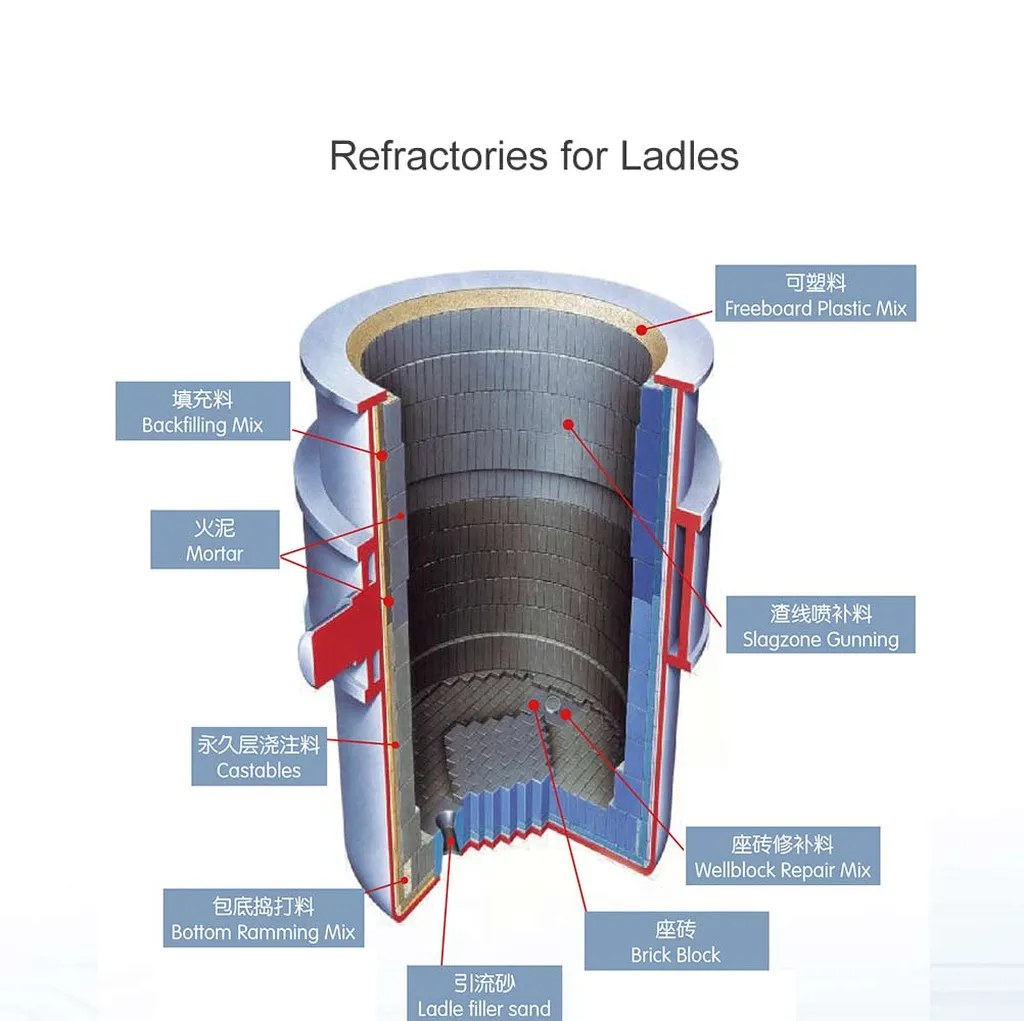
In the world of steel production, even the smallest improvements in efficiency and quality can have massive ripple effects across the energy sector. A recent study published in *Teshugang* (translated as “Iron and Steel”) is making waves for its innovative approach to optimizing ladle bottom structures, a critical component in the continuous casting process. Led by Xu Xuejun, this research could redefine how steelmakers approach slag entrapment and inclusion control, ultimately leading to cleaner, higher-quality steel slabs.
The study zeroes in on a persistent challenge in steel production: the tendency for slag to become entrained in the molten steel during the casting process. This entrainment can lead to inclusions in the final product, which not only compromise the steel’s integrity but also increase costs due to rework or scrap. Xu and his team tackled this issue by focusing on the critical vortex height—a key indicator of slag entrainment tendency—and developed empirical formulas to correlate this height with three critical parameters: step volume, steel throughput, and the distance from the nozzle to the step.
One of the most compelling aspects of this research is the practical application of the findings. Xu and his team designed a novel sloped step-type ladle bottom structure, optimized to minimize slag entrainment. “By sloping the ladle bottom toward the nozzle, we’ve created a structure that effectively controls slag entrapment at the end of casting,” Xu explains. This design is particularly suited for ladles with capacities between 150 and 300 tons, a range that covers a significant portion of industrial applications.
The results speak for themselves. Industrial trials conducted to verify the design’s effectiveness showed a dramatic reduction in both oxygen and nitrogen content in the tundish steel samples. The number density of inclusions larger than 2 micrometers plummeted from 28/mm² to just 5/mm². In the slabs themselves, the number of inclusions in the 10-14 micrometer range was significantly reduced, with the maximum size of inclusions decreasing from 53 micrometers to 24 micrometers. Perhaps most notably, the area fraction and number density of inclusions showed the most significant reduction at the slab thickness center, a critical area for structural integrity.
The implications of this research are far-reaching. For the energy sector, which relies heavily on high-quality steel for everything from pipelines to power generation equipment, the potential for cleaner, more consistent steel slabs is a game-changer. “This optimization not only enhances the cleanliness of the molten steel but also suppresses the migration and accumulation of inclusions,” Xu notes. “It’s a win-win for both quality and efficiency.”
As the steel industry continues to evolve, research like Xu’s provides a roadmap for future developments. By focusing on structural optimization and leveraging data-driven design, steelmakers can achieve significant improvements in product quality and process efficiency. For professionals in the field, this study serves as a reminder that even the most seemingly minor adjustments can yield substantial benefits, paving the way for a more efficient and sustainable future in steel production.
Published in *Teshugang*, this research is a testament to the power of innovation and the potential for transformative change in the steel industry. As the sector continues to grapple with the challenges of quality control and efficiency, Xu’s work offers a beacon of hope and a blueprint for progress.