
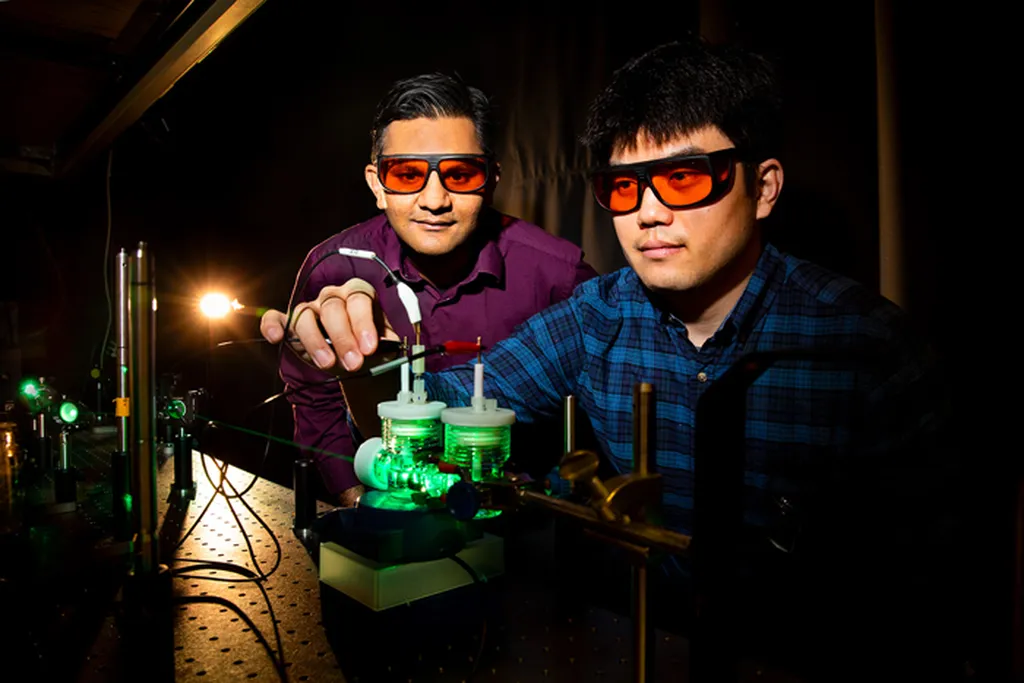
In the heart of Hong Kong, researchers are tackling one of the most pressing challenges of our time: turning carbon dioxide (CO2) into a valuable resource. An Zhang, a leading chemist from the Department of Chemistry at City University of Hong Kong, has recently published a comprehensive review in the journal *SmartMat* (which translates to *Smart Materials*), shedding light on the latest advancements in CO2 conversion technologies. This work could significantly impact the energy sector by offering sustainable pathways to produce fuels and chemicals, potentially reducing our reliance on fossil fuels and mitigating climate change.
The conversion of CO2 into useful products is not a new concept, but scaling it up has been a persistent challenge. “Despite the broad range of products we can derive from CO2, including carbon monoxide, formic acid, and even multi-carbon hydrocarbons, the large-scale implementation of these technologies is still hindered by low catalytic efficiency and high energy consumption,” Zhang explains. His review highlights recent progress in catalytic materials design, focusing on the intricate relationships between a catalyst’s structure and its performance.
Catalysts are the unsung heroes in this process, acting as the driving force behind chemical reactions. Zhang’s review delves into various CO2 conversion methods, including photocatalysis, electrocatalysis, CO2 hydrogenation, photothermal conversion, non-thermal plasma techniques, and even biological approaches. Each method has its unique advantages and challenges, but the common goal is to optimize reaction pathways to achieve specific, high-value products efficiently.
One of the most exciting aspects of this research is the potential for tailored CO2 conversion processes. By understanding the synergies among catalyst architectures, key intermediates, catalytic mechanisms, and reactor designs, scientists can develop more efficient and scalable technologies. This could lead to a circular carbon economy, where CO2 is not just a waste product but a valuable feedstock for the production of sustainable fuels and chemicals.
The implications for the energy sector are profound. As the world shifts towards renewable energy sources, the ability to convert CO2 into fuels could provide a sustainable alternative to traditional fossil fuels. This could not only reduce greenhouse gas emissions but also create new economic opportunities in the energy sector.
Zhang’s review, published in *SmartMat*, serves as a roadmap for future developments in this field. By highlighting the latest advancements and identifying key challenges, it provides a clear path forward for researchers and industry professionals alike. As we strive towards a more sustainable future, the work of scientists like An Zhang offers hope and a tangible pathway to achieving our goals.
In the words of Zhang, “The potential for tailored CO2 conversion processes with optimized reaction pathways is immense. This review not only explores the current state of the art but also provides a roadmap for the development of efficient, scalable CO2 conversion technologies.” This research is a testament to the power of innovation and the potential for science to drive meaningful change in the energy sector.