
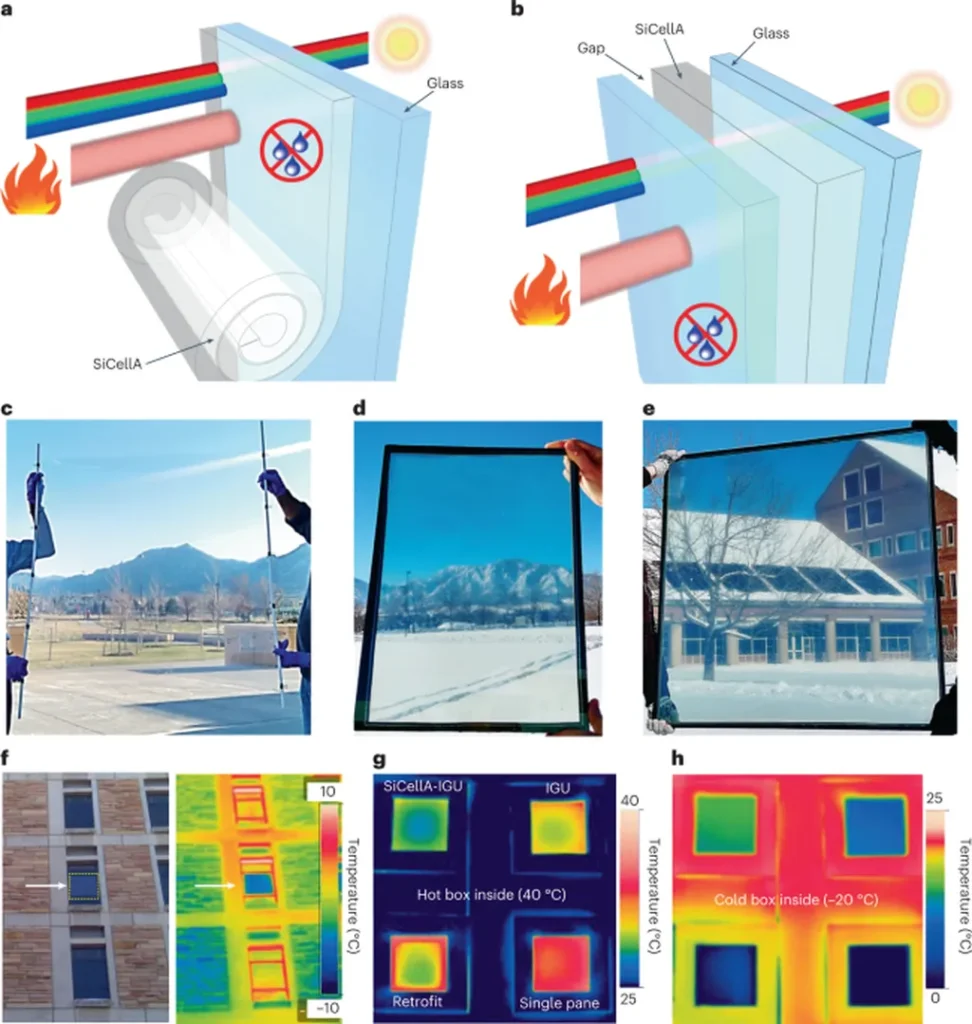
In a groundbreaking development poised to reshape the energy efficiency landscape of buildings, researchers have unveiled a novel, transparent cellulose aerogel that could revolutionize window technology. The study, led by Yuxuan Xue from the SMARL Lab at Zhejiang University and Nanjing Tech University, introduces a material that combines high transparency with superior thermal insulation, offering a promising solution for climate-adaptive, energy-efficient windows.
Windows, while essential for natural light and ventilation, are often the weakest link in a building’s thermal envelope. Traditional single-pane windows can lead to significant heat loss, while double-pane windows, although more efficient, are bulkier and more expensive. The newly developed cellulose aerogel addresses these issues by providing an ultra-thin, transparent film that can be easily applied to existing windows, enhancing their insulating properties without compromising visibility.
“The key innovation here is the combination of high transparency and excellent thermal insulation in a single material,” explains Yuxuan Xue. “Our cellulose aerogel achieves approximately 90% transparency, similar to glass, while boasting a thermal conductivity of just 0.027 W/m·K, which is comparable to some of the best insulating materials available.”
The aerogel is derived from sustainable and renewable cellulose sources, subjected to high-pressure homogenization and sonication to optimize its structure. This process results in a material with a high length-to-diameter ratio and an ideal size distribution for transparency and insulation. The film can be attached to glass surfaces via electrostatic forces, making it a versatile and cost-effective solution for retrofitting existing windows.
In hot stage and outdoor tests, single-pane windows treated with the cellulose aerogel film demonstrated superior insulation properties compared to conventional double-pane windows. Building energy simulations further revealed that the composite window structure, which combines the aerogel with spectral selective features, could achieve up to 40% energy savings compared to single-pane glazing. This translates to significant reductions in heating and cooling costs, contributing to the overall energy efficiency and carbon neutrality of buildings.
The implications for the energy sector are substantial. As buildings account for a significant portion of global energy consumption, innovative materials like this cellulose aerogel can play a crucial role in reducing energy demand and lowering carbon emissions. The cost-effectiveness and scalability of the material, derived from biomass resources, make it a viable option for large-scale applications, potentially replacing commercially available glazing systems.
Published in the journal “Next Materials” (translated from Chinese as “Next Generation Materials”), this research opens up new avenues for developing advanced energy-efficient windows. As the world grapples with the challenges of climate change and energy sustainability, such innovations offer a glimmer of hope, demonstrating how cutting-edge materials science can drive meaningful progress in the energy sector.
The study not only highlights the potential of cellulose-based materials in construction but also underscores the importance of interdisciplinary research in addressing global energy challenges. As Yuxuan Xue notes, “This is just the beginning. We are excited about the possibilities and the impact this technology can have on the future of sustainable building design.”
With further research and development, this transparent cellulose aerogel could become a game-changer in the quest for energy-efficient, climate-adaptive buildings, paving the way for a more sustainable future.