
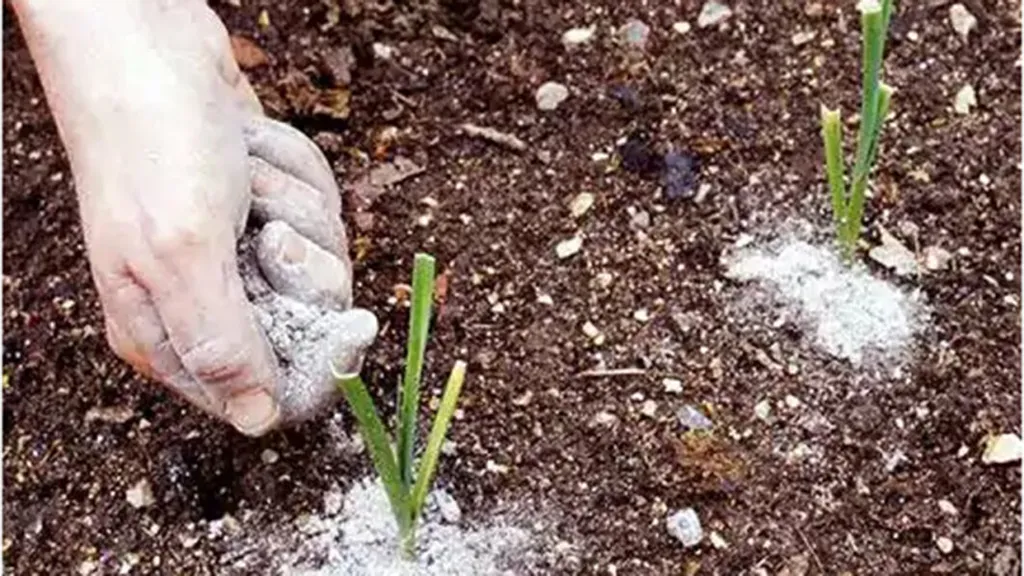
In a groundbreaking study published in ‘Frontiers in Soil Science’ (which translates to ‘Frontiers in Soil Science’), researchers have uncovered a promising solution for improving soil health and agricultural productivity using a readily available byproduct of the timber industry: wood ash. The lead author, Rebecca B. Abney, and her team have demonstrated that wood ash can be a highly effective soil amendment, offering significant benefits for both the environment and the economy.
Wood ash, a common byproduct of industrial timber and timber product production, has long been used as a soil amendment to increase pH. However, much of this valuable resource currently ends up in landfills. Abney’s research, conducted on a soil previously used for agriculture, investigated the impact of wood ash on soil properties and the growth of bermudagrass (Cynodon dactylon). The study compared wood ash with other treatments, including lime, fertilizer, and combinations thereof, to determine the most effective method for enhancing soil health and crop yield.
The results were striking. Treatments with wood ash showed the highest overall productivity, with a yield twice that of the control treatment in the first cutting. “We found that using forest waste wood ash as a soil amendment can be an effective strategy to increase soil carbon sequestration, divert waste from landfills, and increase productivity,” Abney explained. This finding is particularly significant for the energy sector, as it presents a sustainable and cost-effective way to manage a byproduct of timber processing while simultaneously enhancing agricultural output.
The study also revealed substantial improvements in soil properties. Soils amended with wood ash exhibited increased soil carbon levels, cation exchange capacity, and concentrations of phosphorus and potassium compared to non-ash treatments. These enhancements are crucial for improving soil health and fertility, particularly in intensively managed or degraded agricultural soils.
The commercial implications of this research are far-reaching. By utilizing wood ash as a soil amendment, timber and energy companies can reduce waste disposal costs and generate additional revenue streams by selling the ash as a soil amendment. Farmers, on the other hand, can benefit from improved soil health and higher crop yields, leading to increased profitability and sustainability.
As the world seeks innovative solutions to address environmental challenges and improve agricultural productivity, Abney’s research offers a compelling example of how industrial byproducts can be repurposed for the greater good. “This type of amendment is generally well-suited for intensively managed or degraded southeastern piedmont agricultural soils that would benefit from an increase in pH, nutrient concentrations, soil organic matter, or overall soil health,” Abney noted.
The findings of this study have the potential to shape future developments in soil management and agricultural practices. By embracing the use of wood ash as a soil amendment, the timber and energy sectors can contribute to a more sustainable and circular economy, where waste is minimized, and resources are used more efficiently. This research not only highlights the importance of interdisciplinary collaboration but also underscores the need for continued innovation in the pursuit of sustainable development.