
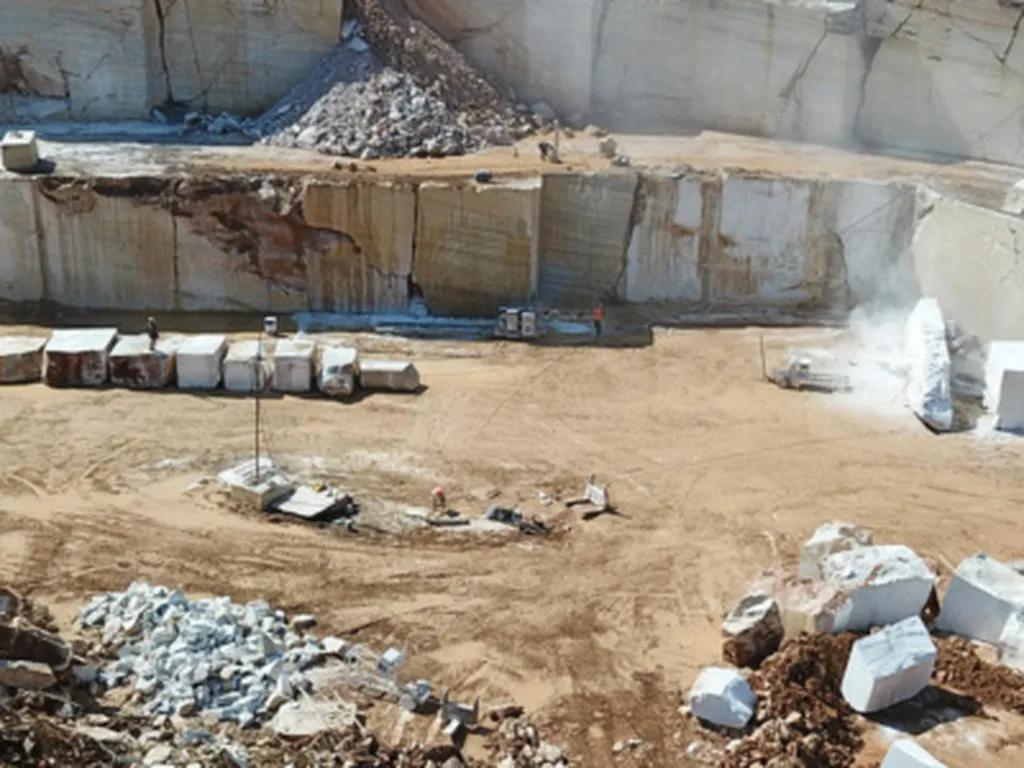
In the heart of Türkiye, a nation that has become a titan in Europe’s concrete production industry, a groundbreaking study is reshaping the way we think about construction materials. Emre Danışman, a researcher from Antalya Bilim University, has delved into the properties of aggregates from two quarries in Şanlıurfa province, offering insights that could significantly impact the construction and energy sectors.
Türkiye’s construction boom has led to a dramatic increase in concrete use, making the search for sustainable and high-quality aggregates more crucial than ever. Danışman’s study, published in the *Journal of Innovative Science and Engineering* (translated as *Journal of Innovative Science and Engineering*), focuses on the physical, mechanical, and chemical properties of aggregates from Seferoğlu and Yetimoğlu quarries. The research employs a rigorous experimental methodology to compare these aggregates, providing valuable data for the industry.
“The granulometry of rock samples is one of the main sources of aggregates,” Danışman explains. “By understanding these properties, we can better prepare materials for concrete, ensuring durability and sustainability.” The study measures various properties, including specific gravity, volumetric weight, organic matter content, alkali-silica reactivity, freeze-thaw resistance, Los Angeles abrasion, high-temperature resistance, capillary water permeability, ultrasonic velocity, and pressure test results.
One of the most compelling findings is the superior physical and mechanical properties of the aggregates from these quarries compared to natural aggregates. “The results revealed that the aggregates demonstrated better physical and mechanical properties concerning the depletion of natural aggregates,” Danışman notes. This could have significant implications for the construction industry, particularly in terms of durability and long-term performance of structures.
For the energy sector, the implications are equally profound. High-quality aggregates are essential for the construction of energy infrastructure, including power plants, wind turbines, and solar farms. The use of durable and sustainable aggregates can enhance the longevity of these structures, reducing maintenance costs and improving overall efficiency.
Danışman’s research not only highlights the potential of Şanlıurfa’s aggregates but also underscores the importance of sustainable practices in the construction industry. As Türkiye continues to lead in concrete production, the insights from this study could shape future developments, ensuring that the nation remains at the forefront of innovation and sustainability.
In an industry where every detail matters, Danışman’s work serves as a reminder that the foundation of our buildings and infrastructure is just as important as the structures themselves. As we look to the future, the lessons learned from this research could pave the way for more resilient and sustainable construction practices, benefiting not only Türkiye but the global construction and energy sectors as well.