
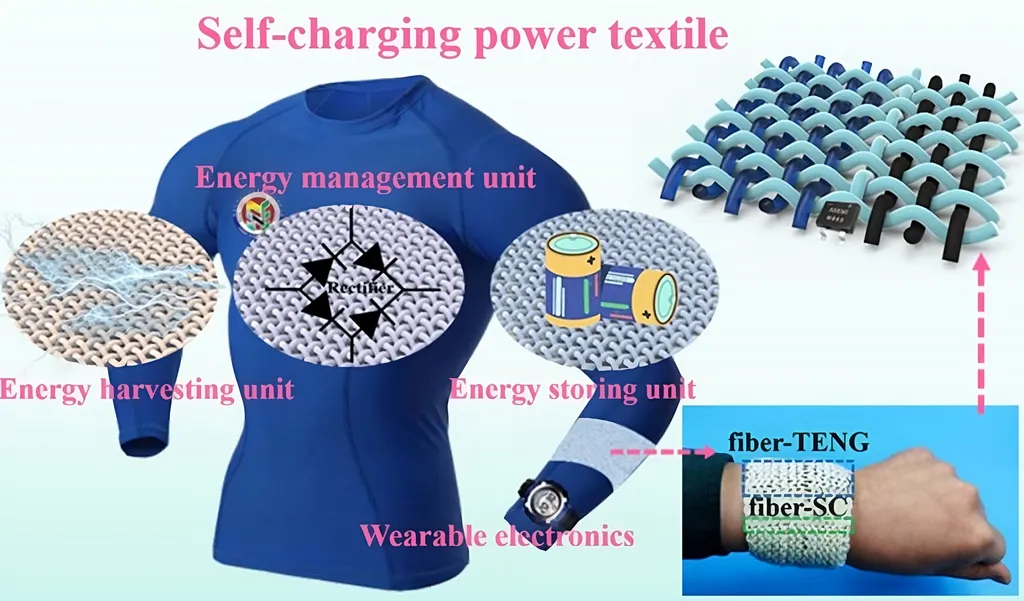
In the quest for high-performance, eco-friendly energy storage solutions, researchers have made a significant stride with the development of a novel electrode material for aqueous zinc-ion batteries. This breakthrough, published in *Energy Material Advances* (translated as *Advanced Energy Materials*), could potentially reshape the landscape of wearable electronics and other energy-intensive applications.
At the heart of this innovation is a team led by Chunru Zhao from the School of Materials Science and Engineering at Shenyang University of Technology in China. The researchers have synthesized CaVO2-polyvinylpyrrolidone (PVP) nanobelts through a straightforward hydrothermal process. This material has demonstrated remarkable properties, offering a discharge capacity of 334 mAh/g at a current density of 0.5 A/g. Even at the challenging environmental temperature of 0°C, the button batteries maintained a discharge capacity of 279 mAh/g at 1.0 A/g.
The implications of this research are substantial for the energy sector, particularly in the realm of wearable devices. “The outstanding mechanical stability of our flexible pouch devices under various folding states opens up new possibilities for wearable electronics,” Zhao explained. This adaptability to different mechanical stresses is a critical factor for the practical application of batteries in flexible and wearable technologies.
The commercial potential of vanadium-based oxides has long been recognized due to their eco-friendliness and high energy density. However, issues such as poor capacity retention and electrical conductivity have hindered their widespread adoption. The introduction of Ca2+ and PVP modifications addresses these challenges, paving the way for more efficient and reliable energy storage solutions.
As the demand for high-capacity, temperature-adaptative batteries continues to grow, this research offers a promising avenue for future developments. The ability to maintain performance under extreme conditions and mechanical stresses is a game-changer for industries relying on robust and versatile energy storage systems.
In the broader context, this innovation aligns with the global push towards sustainable and efficient energy solutions. The eco-friendliness of the materials used, combined with their high performance, makes them an attractive option for various applications. As Zhao and his team continue to refine their approach, the energy sector can look forward to even more advancements in the field of aqueous zinc-ion batteries.
This research not only highlights the potential of vanadium-based oxides but also underscores the importance of interdisciplinary collaboration in driving technological progress. The findings published in *Energy Material Advances* serve as a testament to the power of innovative thinking and meticulous scientific inquiry in addressing real-world challenges. As the energy sector evolves, such breakthroughs will be crucial in shaping a more sustainable and efficient future.