
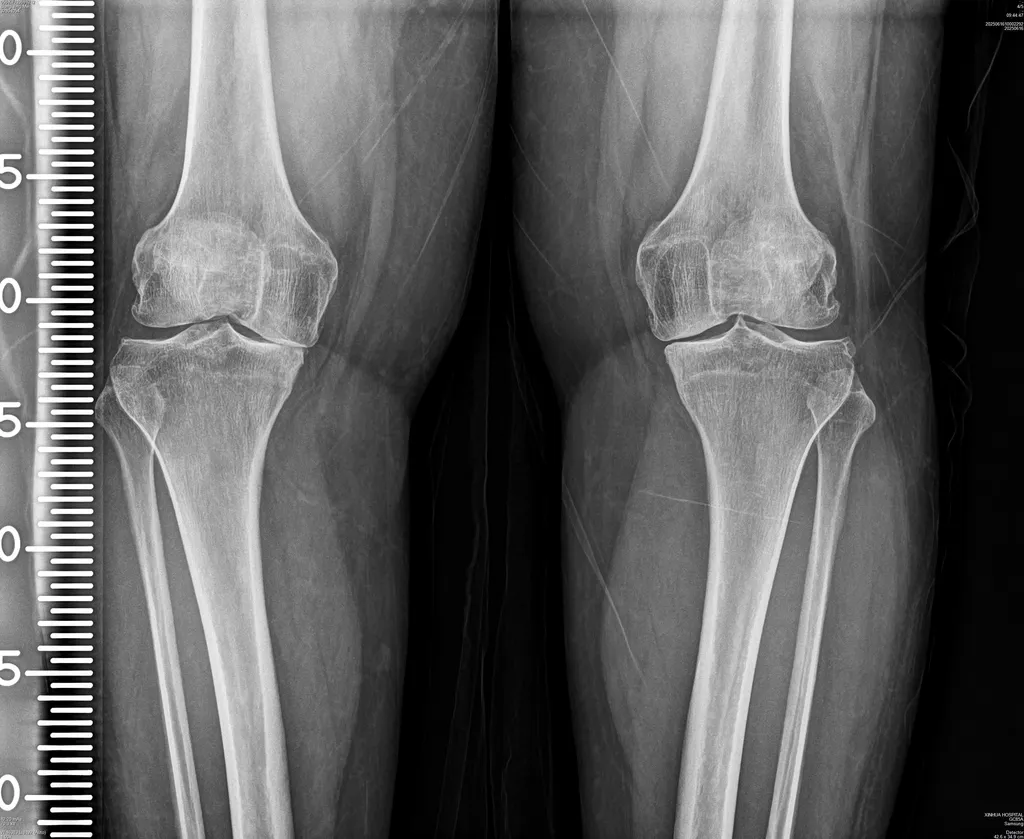
In the relentless pursuit of effective treatments for osteoarthritis (OA), a team of researchers led by Shaoyi Wang from the Department of Orthopaedic Surgery at Qilu Hospital, Shandong University, has made a significant stride. Their work, recently published in *Small Science* (translated as “Small Science”), introduces a novel nanotherapeutic approach that could potentially revolutionize OA treatment by targeting a specific type of cell death known as ferroptosis.
Osteoarthritis, a degenerative joint disease characterized by cartilage degradation, affects millions worldwide, often leading to chronic pain and disability. Current treatments primarily focus on managing symptoms rather than halting or reversing the disease progression. However, Wang and his team have developed a promising strategy that tackles the root cause of cartilage degradation.
The researchers engineered chondrocyte-targeted, chondroitin sulfate (CS)-modified PLGA nanoparticles loaded with N-acetylcysteine (NAC), a potent antioxidant. These nanoparticles, dubbed CS-NAC-NPs, are designed for sustained and localized delivery of NAC, addressing its rapid degradation and poor retention issues.
“Our nanoparticles exhibit excellent physical and chemical properties, biocompatibility, and chondrocyte targeting capabilities,” Wang explained. In vitro studies demonstrated that CS-NAC-NPs attenuated mechanical stress-induced reactive oxygen species (ROS) accumulation, preserved mitochondrial integrity, restored glutathione (GSH) levels, and suppressed ferroptosis. This was evidenced by increased GPX4 expression and improved chondrocyte viability.
In a murine model of OA, intraarticular injection of CS-NAC-NPs significantly reduced cartilage degradation and osteophyte formation, improved histological scores, and maintained extracellular matrix homeostasis more effectively than free NAC or nontargeted NAC-NPs. The therapeutic effect was abolished in GPX4-deficient mice, confirming that CS-NAC-NPs act via GPX4-mediated ferroptosis inhibition.
Moreover, in vivo tracking showed excellent joint retention and no off-target toxicity, underscoring their translational safety. This study introduces a novel nanotherapeutic platform that couples biomechanical targeting with redox-responsive delivery to modulate ferroptosis, offering a promising disease-modifying approach for OA treatment.
The implications of this research extend beyond the medical field. In the energy sector, understanding and controlling ferroptosis could have significant impacts on materials science and engineering. For instance, developing materials that resist oxidative degradation could enhance the longevity and efficiency of energy storage devices, such as batteries and supercapacitors.
Furthermore, the targeted delivery approach demonstrated in this study could inspire innovations in other industries, such as agriculture and environmental science, where precise delivery of active compounds is crucial for optimizing performance and minimizing waste.
As Wang and his team continue to refine their nanotherapeutic platform, the potential for translating these findings into clinical practice grows. Their work not only sheds light on the complex mechanisms underlying osteoarthritis but also paves the way for innovative solutions that could benefit various sectors, from healthcare to energy.
In the words of Shaoyi Wang, “This study introduces a novel nanotherapeutic platform that couples biomechanical targeting with redox-responsive delivery to modulate ferroptosis, offering a promising disease-modifying approach for OA treatment.” The journey from bench to bedside is long, but with each breakthrough, the path becomes clearer, and the future of OA treatment shines a little brighter.