
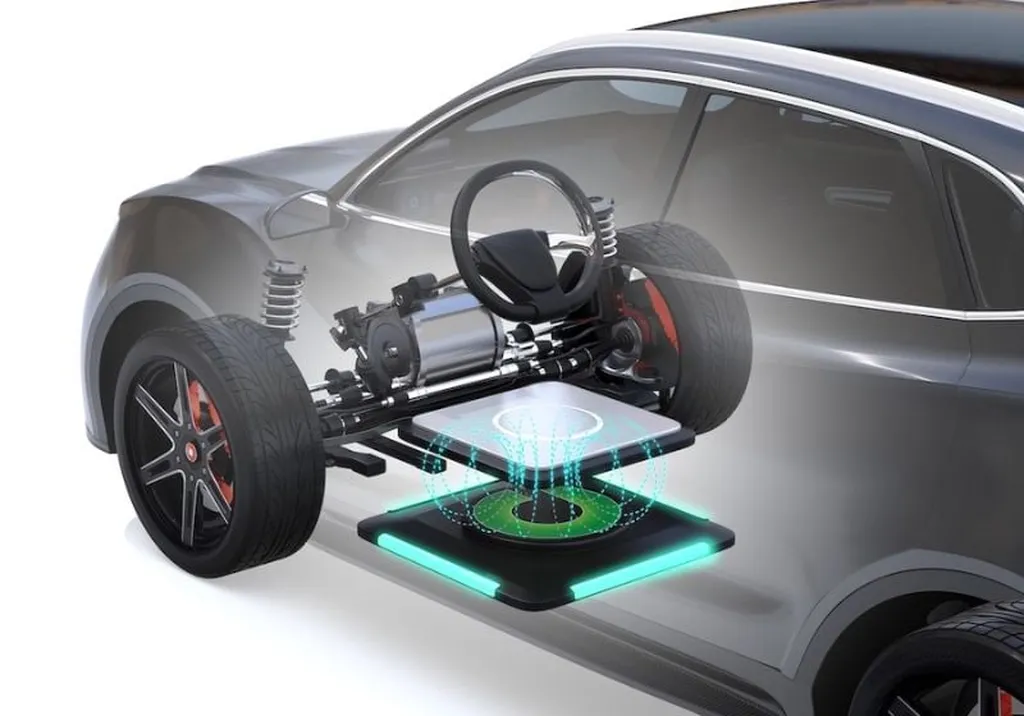
In a significant stride towards advancing electric vehicle (EV) technology, researchers have developed a novel experimental system that could make dynamic wireless power transfer (DWPT) more accessible and cost-effective. The study, led by Takachika Hatano from Tokyo Metropolitan University’s Department of Electrical Engineering and Computer Science, introduces a rotation-type system that simplifies the complex and expensive processes typically associated with DWPT testing.
Traditional DWPT experiments often require vast testing grounds and substantial investments, posing considerable challenges for researchers and industries alike. Hatano’s team addressed this issue by proposing a system that utilizes rotational motion, drastically reducing the need for extensive infrastructure. “Our goal was to create a more practical and economical approach to DWPT experimentation,” Hatano explained. “By leveraging rotational motion, we can mimic the conditions of a linear system without the same level of logistical complexity.”
The research, published in the IEEE Open Journal of Vehicular Technology (translated as the IEEE Open Journal of Vehicle Technology), details the construction and design methodology of the prototype system. The team employed simulations to verify mechanical stability, analyzing stress and critical rotational speeds of the components. Electromagnetic field simulations were used to design a sector-shaped transmitter coil, which demonstrated characteristics comparable to conventional linear-rail-based systems.
One of the key aspects of the study was evaluating the effects of misalignment between transmitter and receiver coils, as well as the electrical characteristics of slip rings and brushes. These components are crucial for maintaining efficient power transfer in a dynamic environment. The researchers validated the system’s power transfer characteristics through experiments conducted at a linear velocity equivalent to 40 km/h, achieving a power transfer of 3.3 kW.
The implications of this research are far-reaching for the energy sector and EV industry. By simplifying the experimental process, Hatano’s team has paved the way for more widespread and affordable DWPT research. This could accelerate the development of wireless charging infrastructure for EVs, making electric transportation more convenient and appealing to consumers.
Moreover, the insights gained from this study could influence the design of future DWPT systems, particularly in urban environments where space and cost constraints are significant factors. As the demand for sustainable transportation solutions continues to grow, innovations like this rotation-type experimental system will play a pivotal role in shaping the future of the energy sector.
Hatano’s work underscores the importance of interdisciplinary collaboration and innovative thinking in overcoming technical challenges. By pushing the boundaries of existing technologies, researchers are not only advancing scientific knowledge but also driving commercial impacts that can transform industries and societies. As the world moves towards a more sustainable future, the role of such groundbreaking research cannot be overstated.