
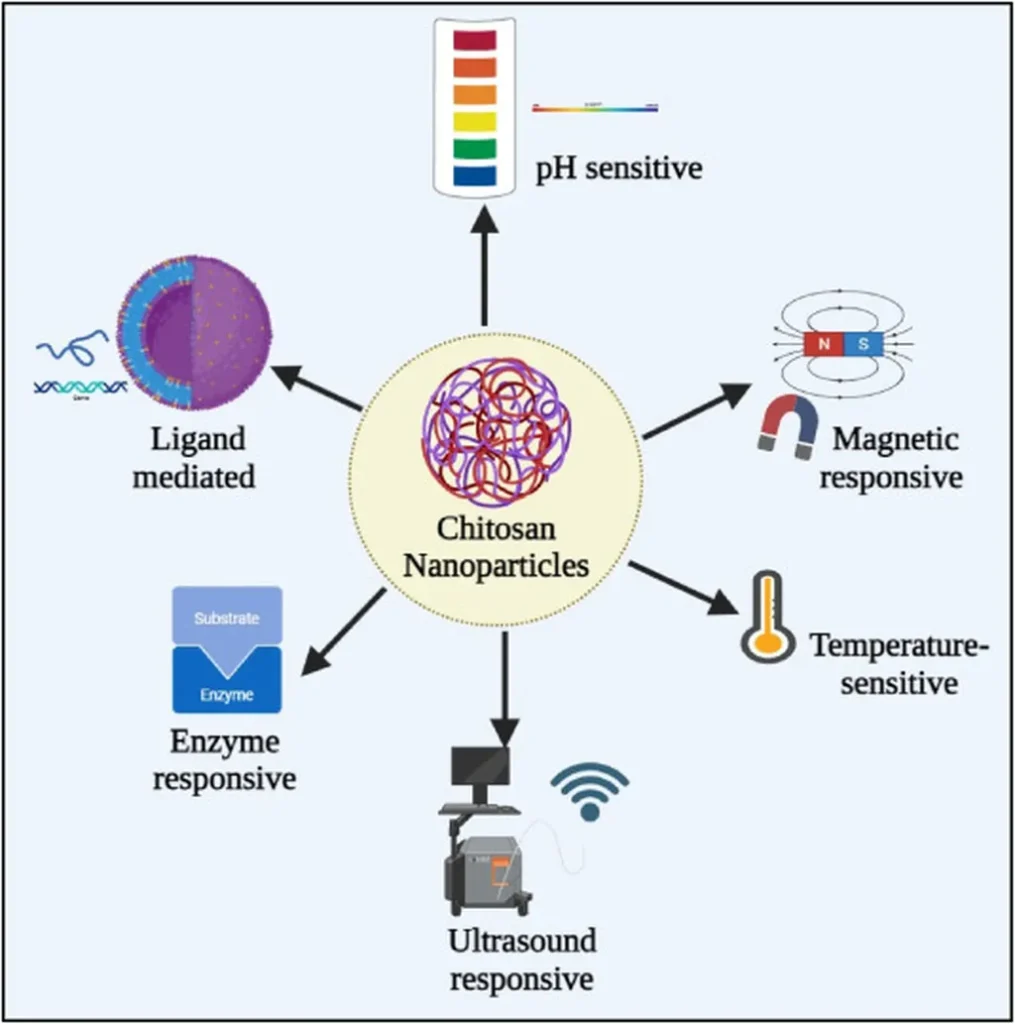
In a groundbreaking development that could revolutionize cancer treatment and open new avenues in the energy sector, researchers have engineered biodegradable piezoelectric nanoparticles that respond to ultrasound, offering a non-invasive, drug-free approach to combat brain cancer. The study, led by Attilio Marino of the Istituto Italiano di Tecnologia (Italian Institute of Technology) in Pontedera, Italy, introduces chitosan nanoparticles (ChNPs) with intrinsic piezoelectric properties, marking a significant stride in the field of bioelectric stimulation and sonodynamic therapy.
Piezoelectric materials, which convert mechanical energy into electrical signals, have long been explored for their potential in remote cell stimulation. However, the lack of biodegradable or bioabsorbable nanoparticles with clinically approved components has hindered their translational potential. Marino and his team have addressed this challenge by engineering ChNPs that exhibit piezoelectric properties when activated by ultrasound (US), demonstrating excellent antiproliferative and proapoptotic activity in patient-derived glioblastoma cells.
“The combination of piezoelectric responsiveness, biodegradability, and preclinical feasibility highlights the potential of ChNPs as a safe, noninvasive therapeutic platform for next-generation cancer treatments,” Marino explained. This innovative approach not only shows promise in the medical field but also holds significant implications for the energy sector. The ability to harness mechanical energy and convert it into electrical signals could inspire new energy-harvesting technologies, particularly in biomedical applications where sustainability and biocompatibility are paramount.
The study, published in the journal ‘Small Science’ (translated to English as ‘Small Science’), employed advanced physicochemical and electromechanical techniques to investigate the structural, mechanical, and piezoelectric characteristics of the ChNPs. Biological evaluations revealed that when stimulated with US, the ChNPs generated reactive oxygen species, triggering antiproliferative and proapoptotic effects in glioblastoma cells. This drug-free anticancer stimulation approach was further validated in more complex ex ovo models, underscoring its potential for clinical translation.
The research not only advances the understanding of biodegradable piezoelectric polymers but also paves the way for future developments in bioelectric stimulation and energy harvesting. As the energy sector increasingly seeks sustainable and biocompatible solutions, the principles demonstrated in this study could inspire novel technologies that leverage mechanical energy for various applications.
Marino’s work represents a significant step forward in the integration of piezoelectric materials into biomedical and energy applications. By addressing the limitations of existing technologies, this research opens new possibilities for non-invasive cancer treatments and sustainable energy solutions, shaping the future of both the medical and energy sectors.