
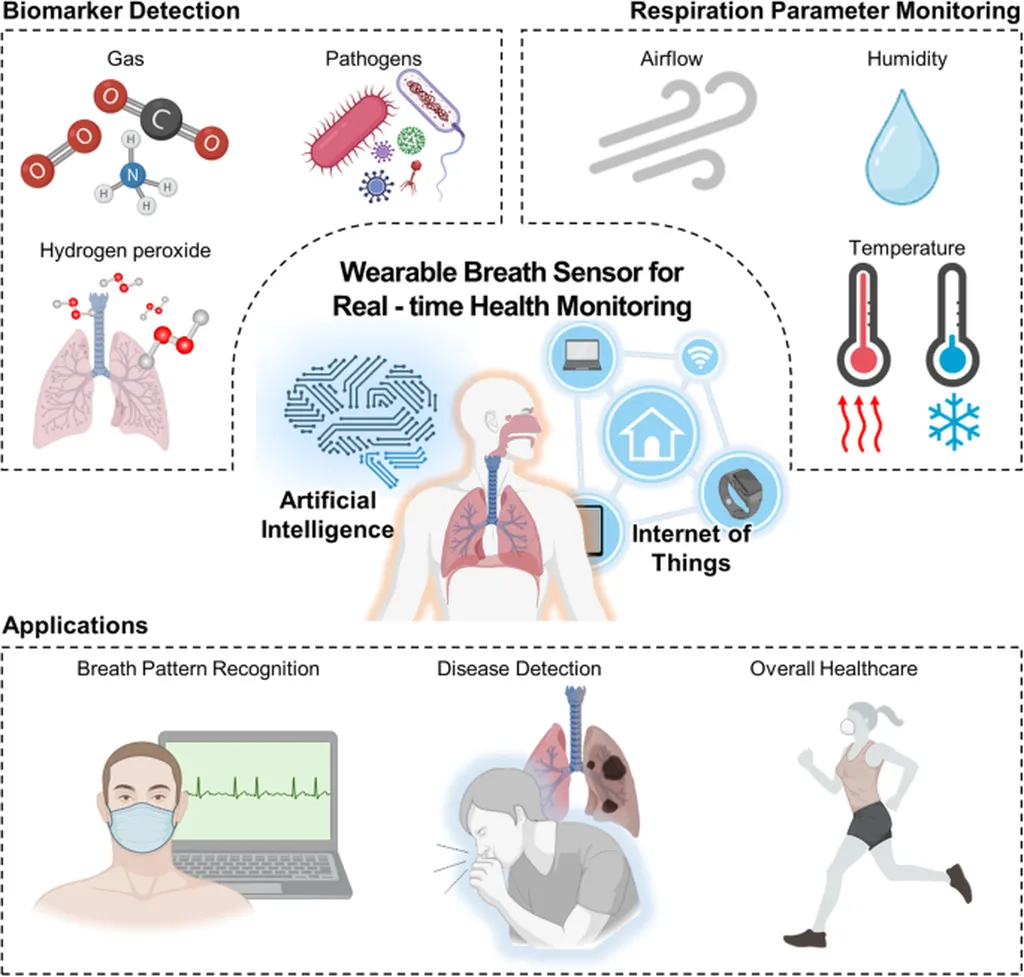
In a groundbreaking development poised to revolutionize respiratory disease diagnosis, researchers have introduced a novel aptasensor that could potentially replace conventional spirometry. The study, led by Seokho Jung from the Department of Chemical Engineering at Kwangwoon University in Seoul, South Korea, presents an extended-gate field-effect transistor-type aptasensor designed for the simultaneous detection of granzyme B (GzmB) and perforin (PRF). These biomarkers are indicative of localized immune responses in respiratory diseases, offering a more objective and reproducible diagnostic approach.
The research, published in *Small Science* (translated as “Small Science”), addresses a significant limitation in current diagnostic tools. Spirometry, while widely used, relies heavily on the patient’s subjective condition, leading to variability in results. “Our goal was to develop a tool that provides rapid, selective, and sensitive detection, independent of the patient’s subjective state,” Jung explained. The novel aptasensor achieves this by utilizing Au-ReS2 and an alternating current electrothermal flow technique to amplify the biosensing signal and accelerate detection within just 10 minutes.
The aptasensor’s linear response to target concentration, even under 10% human serum, demonstrates its potential for clinical application. With detection limits of 330 fM for GzmB and 440 fM for PRF, the device shows strong clinical correlation with bronchial conditions in chronic obstructive pulmonary disease (COPD) patients. This dual-biomarker approach not only enhances diagnostic accuracy but also opens new avenues for early detection and therapeutic monitoring of various respiratory diseases.
The implications of this research extend beyond the medical field, with potential commercial impacts in the energy sector. As respiratory diseases continue to pose significant health and economic burdens, the development of more efficient and accurate diagnostic tools is crucial. The aptasensor’s ability to provide rapid and reliable results could lead to earlier interventions, reducing the severity and progression of diseases. This, in turn, could lower healthcare costs and improve patient outcomes, benefiting both individuals and the broader economy.
Moreover, the technology’s adaptability suggests it could be applied to other areas where rapid and sensitive detection of biomarkers is essential. As Jung noted, “The principles underlying our aptasensor could be extended to other fields, offering new possibilities for diagnostic and monitoring tools.” This versatility underscores the potential for significant advancements in medical technology and beyond.
The study’s findings represent a significant step forward in respiratory disease diagnosis, offering a promising alternative to traditional methods. As research continues, the aptasensor could become a standard tool in clinical settings, shaping the future of respiratory disease management and potentially transforming the energy sector’s approach to health and safety.