
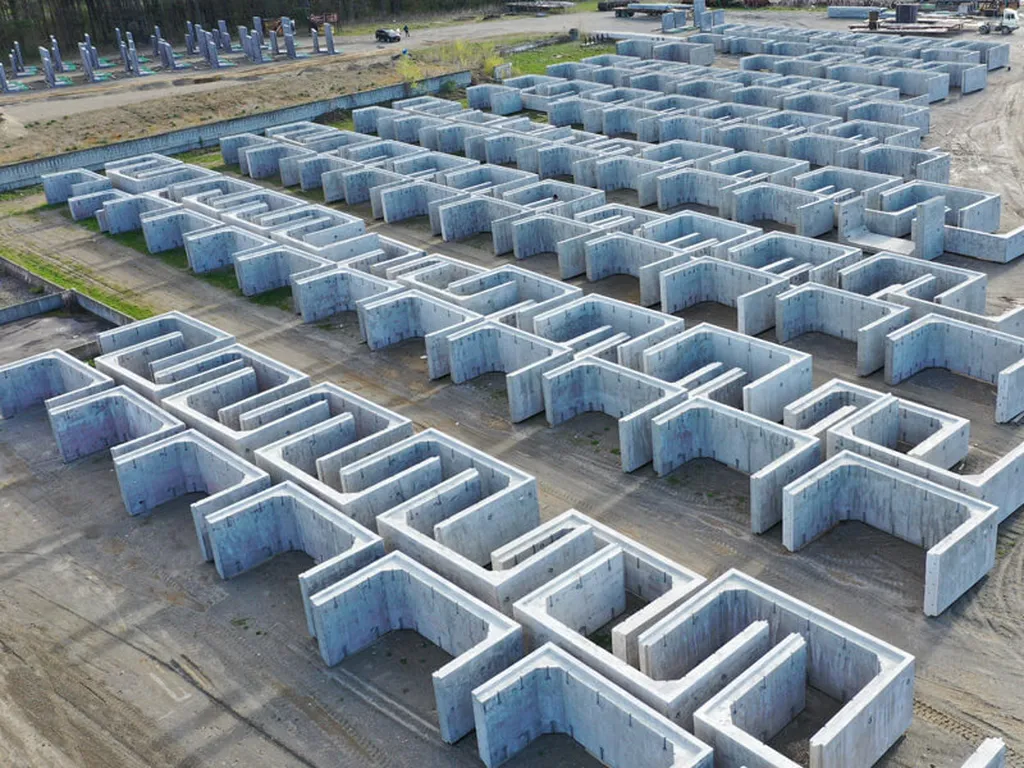
In the ever-evolving world of industrialized construction, a groundbreaking study led by Tao Yang from The Key Laboratory of Urban Security and Disaster Engineering of Ministry of Education is set to redefine the way we think about prefabricated tank structures. Published in the esteemed journal *Advances in Civil Engineering* (translated as *Advances in Civil Engineering*), this research delves into the tensile performance of prefabricated tank walls connected using ultrahigh-performance concrete (UHPC), offering promising implications for the energy sector.
Prefabricated tank structures have long been a staple in industrial construction, but the behavior of connections between precast segments has remained a mystery. Tao Yang and his team set out to change that, introducing a novel joint detail employing cast-in-place UHPC. “The mechanical properties of these connections govern the structural performance of prefabricated tanks,” Yang explains. “By leveraging the superior tensile strength of UHPC, we aimed to enhance the overall performance and reliability of these structures.”
The study involved testing three precast wall specimens with UHPC joints, each designed with varying reinforcement anchorage lengths, and one monolithic cast-in-place normal concrete (NC) wall specimen. The results were striking. The maximum tensile yield and failure capacities of the UHPC-connected walls exceeded those of the monolithic NC wall by 17.3% and 16.1%, respectively. This means that the proposed prefabricated tank wall system can achieve a load-bearing capacity comparable to that of cast-in-place construction, a significant leap forward in the field.
But the implications don’t stop there. The research also developed a theoretical framework to predict the tensile capacity and displacement behavior of precast walls with UHPC joints, showing close agreement with experimental results. This framework provides both practical evidence and design guidance for the reliable application of prefabricated tank structures, paving the way for more efficient and cost-effective construction methods.
For the energy sector, these findings are particularly exciting. Prefabricated tank structures are widely used in various energy-related applications, from storage tanks to containment structures. The enhanced performance and reliability offered by UHPC connections could lead to safer, more durable, and more economical solutions. As the demand for energy continues to grow, the need for robust and efficient infrastructure becomes ever more critical. This research offers a promising path forward, one that could shape the future of energy infrastructure.
In the words of Tao Yang, “This study provides a solid foundation for the widespread adoption of prefabricated tank structures in the energy sector. By harnessing the power of UHPC, we can build stronger, more resilient, and more sustainable energy infrastructure for the future.” As the industry continues to evolve, this research serves as a beacon of innovation, guiding the way towards a more efficient and reliable future.