
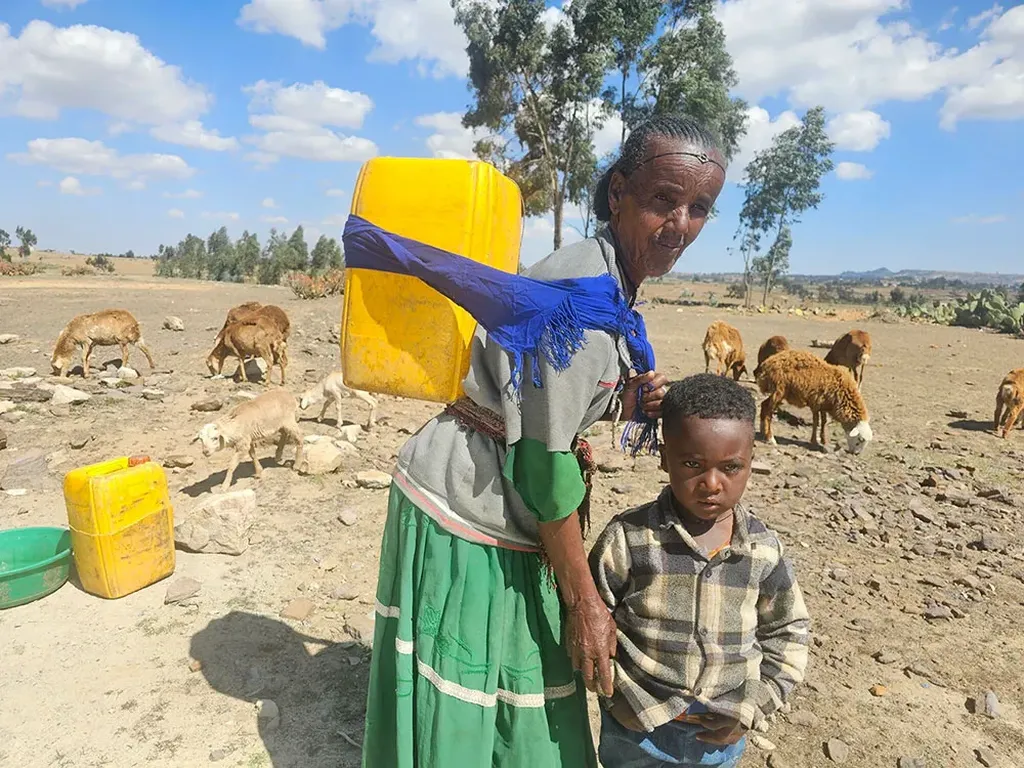
In the heart of Ethiopia’s Rift Valley Basin, a critical study is shedding light on the looming threat of hydrological drought, with significant implications for the energy sector. Rediat Legese, a researcher from the Department of Hydraulic and Water Resources Engineering, has been delving into the intricate dynamics of the Hamessa watershed, revealing a stark picture of the challenges ahead.
Legese’s research, published in the journal “Advances in Civil Engineering” (translated from Amharic as “Progress in Civil Engineering”), employs advanced modeling techniques to project the impact of climate change on water resources. The study utilizes the Soil and Water Assessment Tool (SWAT) and SWAT-CUP for calibration and validation, providing a robust framework for understanding the watershed’s vulnerability.
The findings are sobering. Projections under both the RCP2.6 and RCP8.5 scenarios indicate a troubling trend: temperatures are set to rise, while precipitation is expected to decline significantly by the years 2040–2072. This dual challenge of increased heat and decreased rainfall paints a picture of heightened drought conditions, with the watershed experiencing mild to extreme drought events.
“Our results show that the Hamessa watershed is highly vulnerable to severe and extreme drought,” Legese explains. “This is not just an environmental concern but a pressing issue for the energy sector, which relies heavily on consistent water resources.”
The implications for the energy sector are profound. Hydrological droughts can disrupt hydroelectric power generation, a critical component of Ethiopia’s energy mix. The study’s projections suggest that without mitigation, the energy sector could face significant challenges in maintaining reliable power supply.
Legese’s research underscores the urgent need for drought-mitigating structures, such as reservoirs and water harvesting systems. These interventions could help alleviate the strain on water resources and ensure a more stable environment for energy production.
“This research is a wake-up call,” Legese adds. “It highlights the necessity for proactive measures to mitigate the impacts of climate change on our water resources and, by extension, our energy infrastructure.”
As the world grapples with the realities of climate change, studies like Legese’s provide invaluable insights into the future of water and energy resources. The findings not only inform policy and infrastructure development but also underscore the importance of interdisciplinary collaboration in addressing global challenges.
In an era where climate change is reshaping our planet, understanding and mitigating its impacts on critical resources like water and energy is more important than ever. Legese’s work serves as a beacon, guiding us toward a more resilient and sustainable future.