
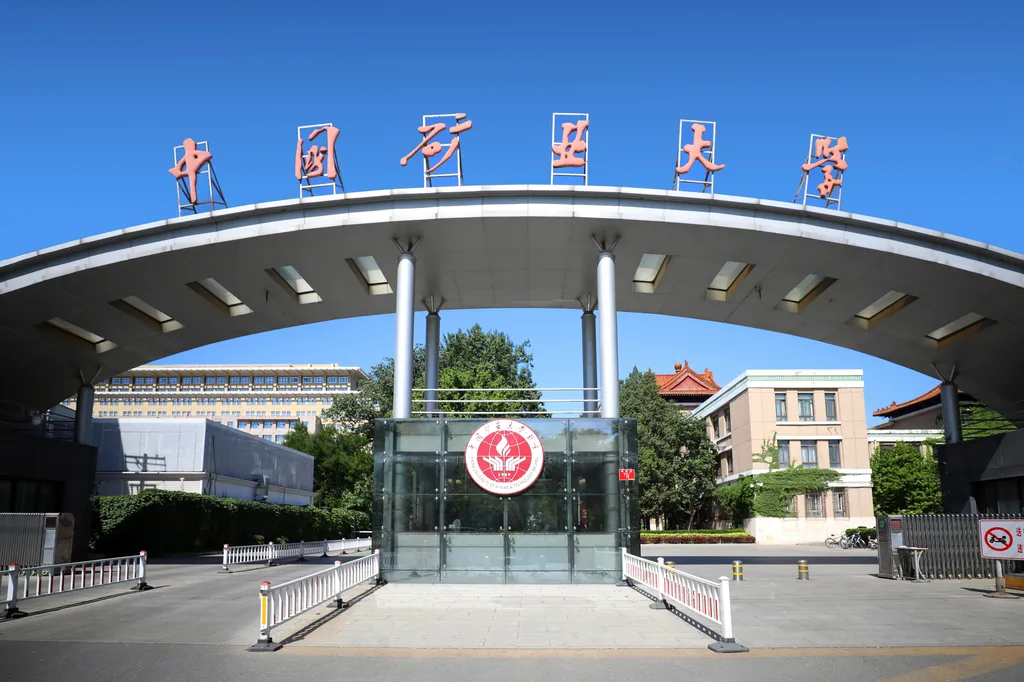
In the ever-evolving landscape of geotechnical engineering, a groundbreaking study has emerged that could significantly impact the design and safety of retaining walls, particularly in seismic zones. Led by Dr. Li Dongyang from the College of Mechanics and Civil Engineering at China University of Mining Technology-Beijing, the research delves into the often-overlooked aspect of embedment depth in retaining wall stability analysis.
Traditionally, most studies on the seismic stability of retaining walls have assumed a zero embedment depth, effectively ignoring the role of the backfill in front of the wall. However, Dr. Li and his team have challenged this convention. “We realized that neglecting the embedment depth could lead to a significant underestimation of the wall’s seismic stability,” Dr. Li explained. Their study, published in *Yantu gongcheng xuebao* (translated to *Rock and Soil Engineering*), employs the upper-bound limit analysis theory to investigate the impact of embedment depth on the seismic stability of retaining walls with cohesive backfill.
The team employed the diagonal slice method to differentiate the backfill into rigid soil slices parallel to the rupture surface, both in front of and behind the wall. This innovative approach allowed them to establish a wall-soil system where the retaining wall rotates around the toe, and the fill slides in pieces. According to Dr. Li, “This method provides a more accurate representation of the soil-wall interaction during seismic events.”
The study derived an expression for the seismic acceleration coefficient of the retaining wall, shedding light on how factors such as filling height, internal friction angle, filling cohesion, and wall-soil friction angle influence the seismic rotational stability. The results were eye-opening. When the ratio of the height of backfill in front of the wall to the height of backfill behind the wall (H2/H1) exceeds 0.15, the coefficient of seismic yield acceleration increases dramatically. This finding underscores the critical role of the embedment depth in ensuring the seismic stability of retaining walls.
The implications of this research are profound, particularly for the energy sector. Retaining walls are crucial components in various energy infrastructure projects, from hydroelectric dams to oil and gas pipelines. Ensuring their stability during seismic events is paramount to preventing catastrophic failures and costly repairs. By incorporating the embedment depth into their designs, engineers can enhance the safety and longevity of these structures, ultimately saving millions in potential damages and downtime.
Dr. Li’s team also validated their method by comparing it with the limit equilibrium theory, confirming its accuracy. This validation step is crucial for the widespread adoption of the new method in practical engineering applications.
As the energy sector continues to expand into seismic-prone areas, the need for robust and reliable retaining wall designs becomes increasingly critical. Dr. Li’s research offers a promising avenue for improving the seismic stability of these structures, ensuring the safety and efficiency of energy infrastructure projects worldwide. The study not only advances our understanding of soil-wall interactions but also paves the way for more innovative and resilient engineering solutions in the future.