
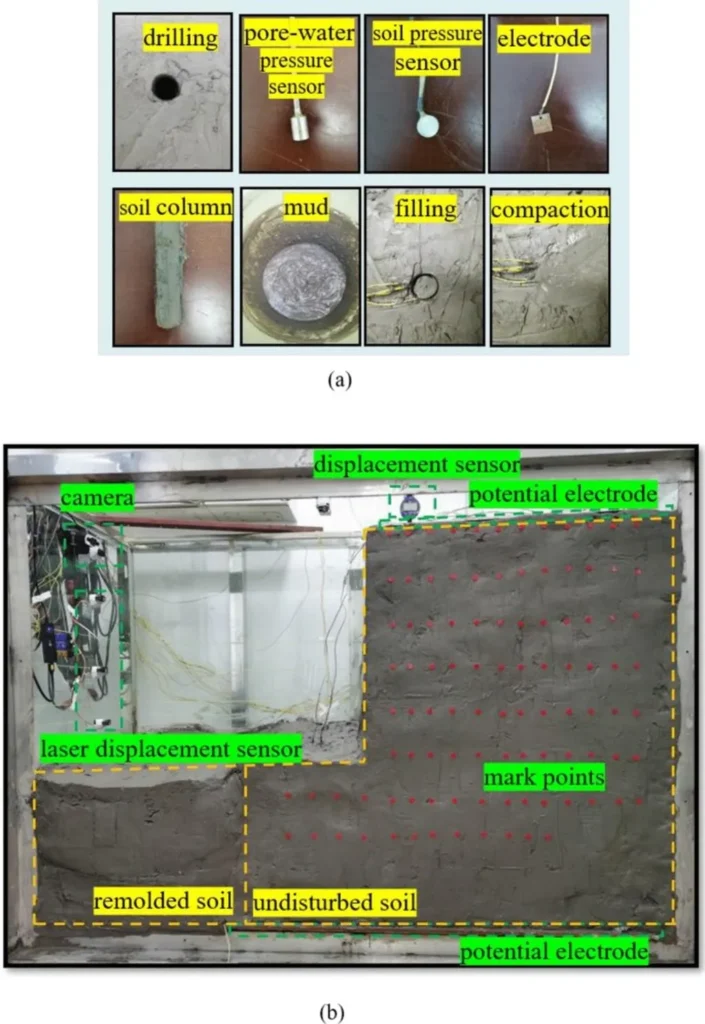
In the world of geotechnical engineering, ensuring the stability of soft soil foundations is paramount, especially for critical infrastructure projects. A recent study published in *Yantu gongcheng xuebao* (Chinese Journal of Geotechnical Engineering) sheds light on a common challenge: the asynchronous deformation between inclinometer pipes and the surrounding soft soil. This discrepancy can complicate accurate assessments of foundation stability, a concern that resonates deeply within the energy sector, where precision is non-negotiable.
Led by LI Yongquan of Guangdong Road and Bridge Construction Development Co., Ltd., along with collaborators from Hohai University, the research team conducted centrifugal model tests to investigate this phenomenon. Their findings reveal that the lateral pressure and consolidation degree of soft soil layers are the primary culprits behind the displacement differences observed between inclinometer pipes and the soil itself.
“The displacement of the inclinometer pipe and the soil body develops asynchronously,” explains LI Yongquan. “While their maximum displacements are located at similar depths, the displacement of the inclinometer pipe is significantly smaller than that of the soil body, with a notable difference.” This discrepancy underscores the necessity for engineers to make necessary displacement corrections to ensure accurate monitoring and assessment.
The implications for the energy sector are substantial. Accurate deformation monitoring is crucial for the stability of pipelines, wind turbines, and other infrastructure built on soft soil foundations. Asynchronous deformation can lead to misinterpretations of soil behavior, potentially compromising the safety and longevity of these critical assets. By understanding and addressing these discrepancies, engineers can enhance the reliability of their assessments, ultimately reducing risks and costs associated with foundation failures.
The research highlights the importance of refining monitoring techniques to account for these discrepancies. “At the same depth, the ratio of the soil displacement to that of the inclinometer tube is positively correlated with the applied load,” notes LI Yongquan. This insight suggests that as loads increase, the difference between soil and pipe displacement becomes more pronounced, emphasizing the need for dynamic adjustments in monitoring practices.
As the energy sector continues to expand into challenging terrains, the findings from this study offer a valuable tool for engineers. By integrating these insights into their practices, they can ensure more accurate and reliable assessments of foundation stability, ultimately contributing to the safety and efficiency of energy infrastructure projects.
The study, published in *Yantu gongcheng xuebao*, provides a crucial step forward in understanding and mitigating the challenges posed by soft soil foundations. As the field continues to evolve, this research sets the stage for future developments in geotechnical engineering, ensuring that the foundations of our energy infrastructure remain stable and secure.