
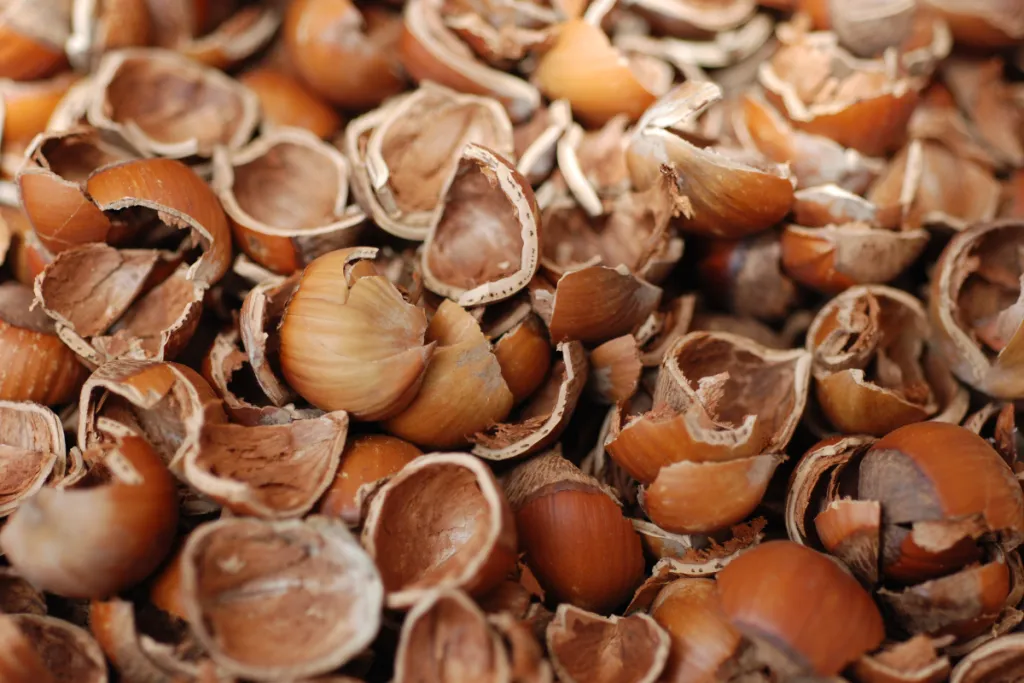
In the quest for sustainable construction materials, a team of researchers led by Sergio J. Yanez from the Department of Civil Engineering has uncovered promising insights into the use of crushed hazelnut shells as a partial replacement for fine aggregates in mortar. Published in the journal *Advances in Materials Science and Engineering* (which translates to *Advances in Materials Science and Engineering* in English), the study explores the mechanical and physical performance of mortars incorporating this unconventional material.
The research team prepared mortar mixtures with varying water-to-cement ratios and hazelnut shell (HS) dosages ranging from 2.5% to 7.5% by weight. The results revealed a trade-off between strength and sustainability. While the incorporation of crushed hazelnut shells increased water absorption by up to 60% and reduced compressive and flexural strengths by 35% and 25%, respectively, it also offered significant benefits in terms of dimensional stability and internal curing.
“Although the inclusion of HS leads to a decrease in strength, it contributes to improved dimensional stability and sustainability,” Yanez explained. This finding is particularly relevant for the construction industry, which is increasingly seeking eco-friendly materials that can reduce the environmental impact of buildings and infrastructure.
The study’s findings suggest that crushed hazelnut shells can be a viable material for nonstructural, eco-friendly mortar applications where moderate strength reduction is acceptable. This could open up new opportunities for the use of agricultural waste in construction, potentially reducing the industry’s reliance on traditional fine aggregates and lowering its carbon footprint.
The research also highlights the potential for hazelnut shells to attenuate autogenous and drying shrinkage by up to 45% and delay the setting time by approximately 40%. These properties could be particularly beneficial in large-scale construction projects where controlling shrinkage and setting times is crucial.
As the construction industry continues to grapple with the challenges of sustainability and resource efficiency, the findings of this study offer a glimpse into the potential of innovative, eco-friendly materials. By incorporating agricultural waste such as crushed hazelnut shells into mortar mixtures, the industry could take a significant step towards reducing its environmental impact and promoting a more sustainable built environment.
The study’s findings are particularly relevant for the energy sector, which is increasingly seeking sustainable and cost-effective materials for building and maintaining infrastructure. The use of crushed hazelnut shells in mortar could offer a viable alternative to traditional fine aggregates, reducing the sector’s reliance on finite resources and lowering its carbon footprint.
As Yanez noted, “The inclusion of HS leads to improved dimensional stability and sustainability, making it a promising material for nonstructural, eco-friendly mortar applications.” This research could pave the way for further exploration of agricultural waste materials in construction, potentially revolutionizing the industry’s approach to sustainability and resource efficiency.
In conclusion, the study by Yanez and his team offers valuable insights into the potential of crushed hazelnut shells as a partial replacement for fine aggregates in mortar. By highlighting the trade-offs between strength and sustainability, the research provides a compelling case for the use of eco-friendly materials in construction. As the industry continues to evolve, the findings of this study could shape future developments in the field, promoting a more sustainable and resource-efficient built environment.