
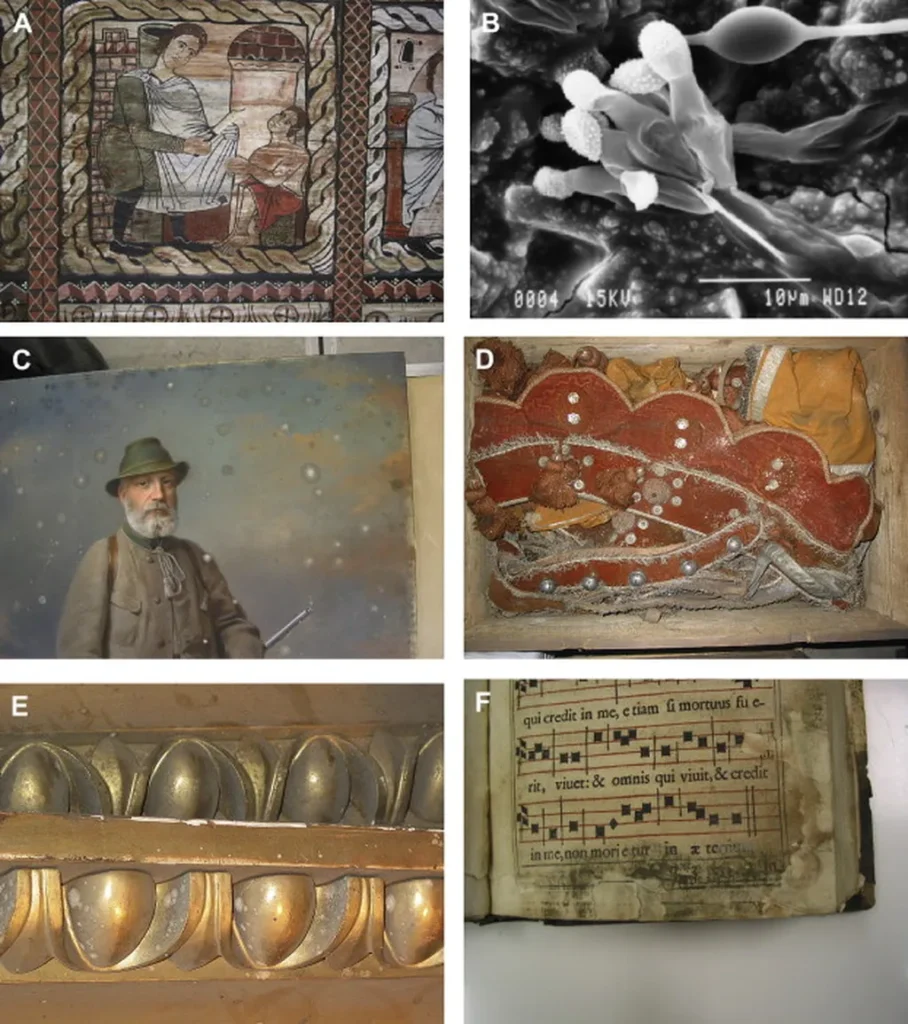
In the world of cultural heritage and indoor air quality, a silent threat lurks in the form of xerophilic fungi—organisms that thrive in dry conditions and can wreak havoc on both historical artifacts and human health. A groundbreaking study led by Anne Mette Madsen from The National Research Centre for the Working Environment has developed a supplementary database for Matrix-Assisted Laser Desorption/Ionization Time-of-Flight Mass Spectrometry (MALDI-TOF MS), a powerful tool for identifying these fungi. This research, published in ‘UCL Open: Environment’ (formerly known as UCL Open Environment), could revolutionize how we detect and manage xerophilic fungi in various environments, including homes, museums, and warehouses.
The study focused on creating a supplementary MALDI-TOF MS database specifically for xerophilic and xerotolerant Aspergillus species, which are particularly adept at surviving in low-moisture conditions. “The aim was to complement the existing Bruker library with a more specialized database that could accurately identify these fungi,” Madsen explained. To achieve this, the team grew 19 different Aspergillus species in four different broth media, generating mass spectra for each.
The results were promising. The supplementary database successfully identified isolates from environmental samples that the Bruker fungi library had previously misidentified or failed to identify. Species such as Aspergillus conicus, Aspergillus domesticus, Aspergillus glabribes, and Aspergillus pseudogracilis were accurately detected, thanks to the new database. “Using low water-activity agar media was crucial for the detection of these xerophilic/xerotolerant Aspergillus species,” Madsen noted.
The implications of this research are far-reaching. For cultural heritage sites and libraries, accurate detection of xerophilic fungi is essential for preserving artifacts and protecting staff from fungal exposure. Museums and warehouses, which often house valuable collections in dry environments, stand to benefit significantly from this improved detection method. The study also highlights the importance of using low-water activity broth media for both constructing the database and its subsequent application.
In the commercial sector, particularly in the energy industry, this research could influence the development of more robust monitoring systems for indoor air quality. Buildings with poor ventilation or those located in arid regions could implement this technology to ensure a healthier environment for occupants and to protect valuable equipment from fungal damage.
The study’s findings suggest that the future of fungal detection lies in the development of specialized databases that can be tailored to specific environmental conditions. As Madsen put it, “This work shows that it is possible to develop a supplementary MALDI-TOF MS database for the identification of xerophilic/xerotolerant Aspergillus species, and that low-water activity broth media are recommended for the construction of a database and the following application.”
With the publication of this research in ‘UCL Open: Environment’, the scientific community now has a valuable resource to build upon. The study not only advances our understanding of xerophilic fungi but also paves the way for innovative solutions in cultural heritage preservation and indoor air quality management. As the energy sector continues to evolve, the integration of such advanced detection methods could become a standard practice, ensuring safer and more efficient operations across various industries.