
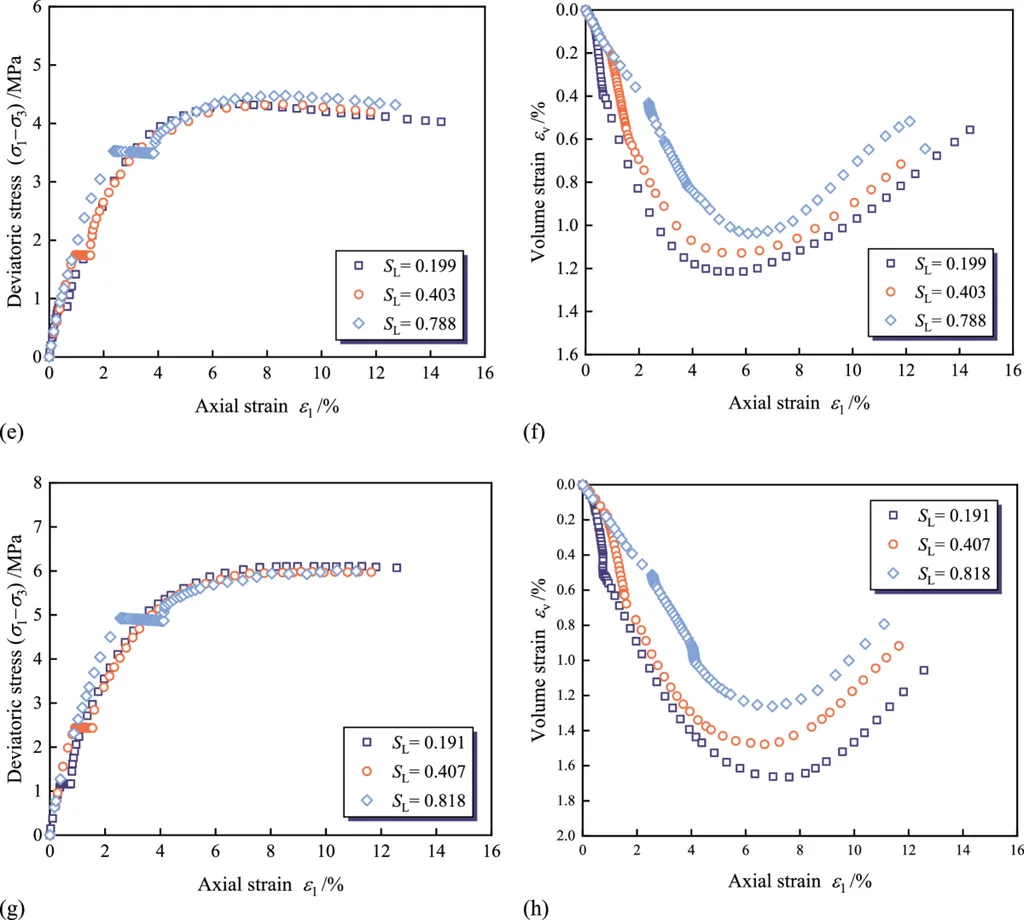
In the world of dam construction and maintenance, understanding the behavior of rockfill materials under wetting conditions is crucial for ensuring the safety and longevity of these massive structures. A recent study published in *Yantu gongcheng xuebao* (translated to *Rock and Soil Engineering*) has shed new light on this complex phenomenon, offering valuable insights that could reshape how engineers approach the design and analysis of rockfill dams.
Led by Dr. Zhou Xiongxiong from the Key Laboratory of Agricultural Soil and Water Engineering in Arid and Semiarid Areas at Northwest A & F University, the research team delved into the intricate world of wetting deformation, a significant factor in the post-completion deformation of earth-rock dams. “Wetting deformation is a critical aspect that influences the stress deformation behavior and overall safety of dam bodies during initial impoundment,” Dr. Zhou explained. “Our study aimed to provide a more comprehensive understanding of this process and develop accurate methods for predicting and analyzing it.”
The team’s work built upon previous research and extensive wetting test results to establish a relationship between wetting strains and their variation rules. They proposed a new formula for calculating the Poisson’s ratio of wetting, a key parameter in understanding the material’s behavior under stress. This formula establishes a close relationship among the wetting Poisson’s ratio, the average effective stress, and the generalized shear stress.
One of the most significant findings of the study is the development of an accurate wetting dilatancy equation. Dilatancy refers to the volume change in a material under shear stress, and understanding this phenomenon is vital for predicting the behavior of rockfill materials. The researchers found that the correlation coefficient between their calculated results and the test data was above 0.95, indicating a high degree of accuracy and reliability.
The implications of this research for the energy sector, particularly in hydropower projects, are substantial. Accurate prediction of wetting deformation can lead to more precise design and construction of rockfill dams, reducing the risk of failures and extending the lifespan of these critical infrastructure projects. “Our research provides important reference and support for the study of wetting deformation characteristics of rockfill and the elastic or plastic simulation of the wetting deformation of rockfill dams,” Dr. Zhou noted.
The study’s findings could also have broader commercial impacts, as they offer a more reliable framework for assessing the performance of rockfill materials in various engineering applications. This could lead to cost savings and improved safety standards across the industry.
As the world continues to invest in large-scale infrastructure projects, particularly in the energy sector, the need for accurate and reliable methods for predicting material behavior becomes ever more pressing. The research conducted by Dr. Zhou and his team represents a significant step forward in this field, offering valuable tools and insights that will shape future developments in dam construction and maintenance.
In an era where precision and reliability are paramount, this study serves as a testament to the power of rigorous scientific inquiry and its potential to drive innovation and progress in the construction industry. As the energy sector continues to evolve, the insights gained from this research will undoubtedly play a crucial role in shaping the future of hydropower and other large-scale infrastructure projects.