
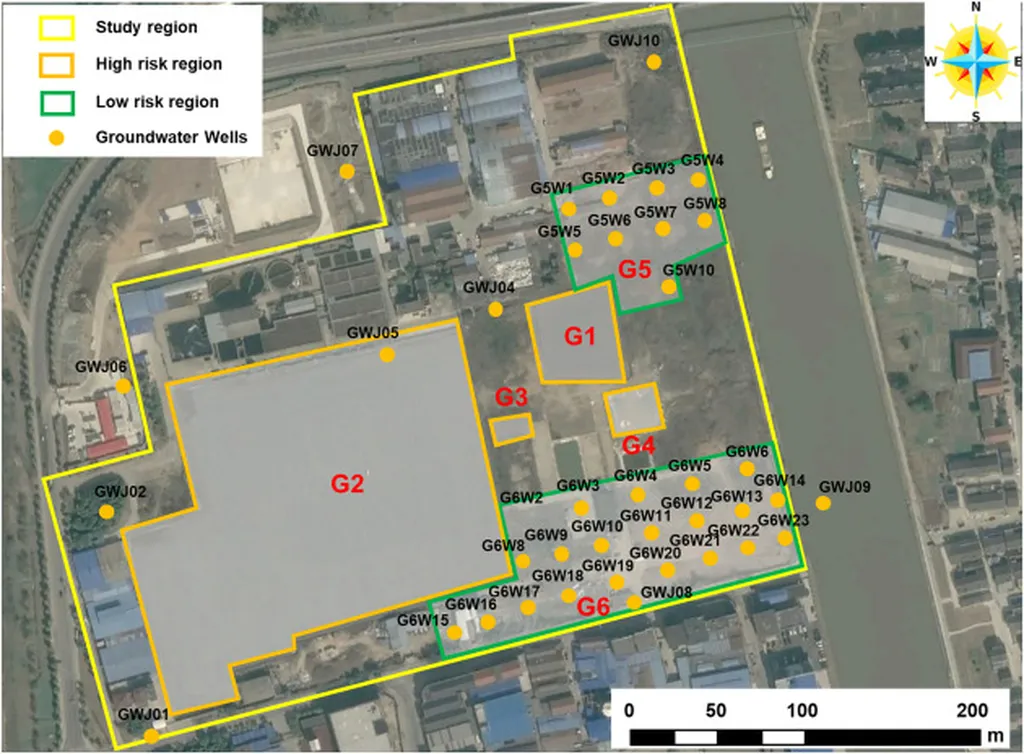
In the realm of environmental protection and pollution management, ensuring the integrity of vertical cut-off walls in contaminated sites is paramount. These walls, often constructed from slurry like soil-bentonite, play a crucial role in seepage control and groundwater pollution prevention. A recent study published in *Yantu gongcheng xuebao* (translated as *Rock and Soil Mechanics*) sheds light on modern in-situ evaluation techniques that could revolutionize how we assess these critical structures.
Led by WANG Ke from the College of Civil Engineering at Anhui Jianzhu University and the Anhui Institute of Intelligent Underground Detection Technology, the research team explored a variety of evaluation methods, including Cone Penetration Test with Pore Pressure Measurement (CPTU) technology, resistivity tomography (ERT) technology, and acoustic technology. These techniques offer a comprehensive approach to evaluating the physical and mechanical properties, as well as the impermeability of vertical cut-off walls.
“Our study demonstrates that these modern techniques can effectively ensure the long-term stability and environmental safety of vertical cut-off walls,” said WANG Ke. “By integrating and innovating these methods, we can provide a more robust assessment of these structures, which is crucial for environmental protection and pollution management.”
The implications for the energy sector are significant. Vertical cut-off walls are often used in landfills and mine tailings management, areas where environmental safety is paramount. The ability to accurately evaluate these walls can prevent potential environmental hazards, ensuring that contaminated sites are managed effectively and safely.
The research also highlights the need for further development in experimental devices that can couple multiple physical processes. Exploring the quantitative relationship between shear wave velocity and soil physico-mechanical properties is another area ripe for future investigation. “This research provides a new perspective on in-situ evaluation techniques for vertical cut-off walls,” added WANG Ke. “It offers a scientific and practical approach that can greatly benefit environmental protection efforts.”
As the energy sector continues to grapple with the challenges of environmental protection and pollution management, the findings from this study could shape future developments in the field. By adopting these modern evaluation techniques, industries can ensure the integrity of their vertical cut-off walls, safeguarding both the environment and public health.
The study, published in *Yantu gongcheng xuebao*, marks a significant step forward in the quest for more effective and reliable methods of assessing vertical cut-off walls. As the research team continues to explore new avenues for innovation, the potential for enhancing environmental safety and protection grows ever more promising.