
In the heart of Thailand, a groundbreaking study is challenging the status quo of carbon capture and storage, offering a glimpse into a future where carbon dioxide (CO2) is not just captured but rapidly converted into valuable resources. Kittikhun Khotmungkhun, a researcher from the Division of Physics at Rajamangala University of Technology Thanyaburi, has spearheaded a study that could revolutionize the energy sector’s approach to CO2 mitigation.
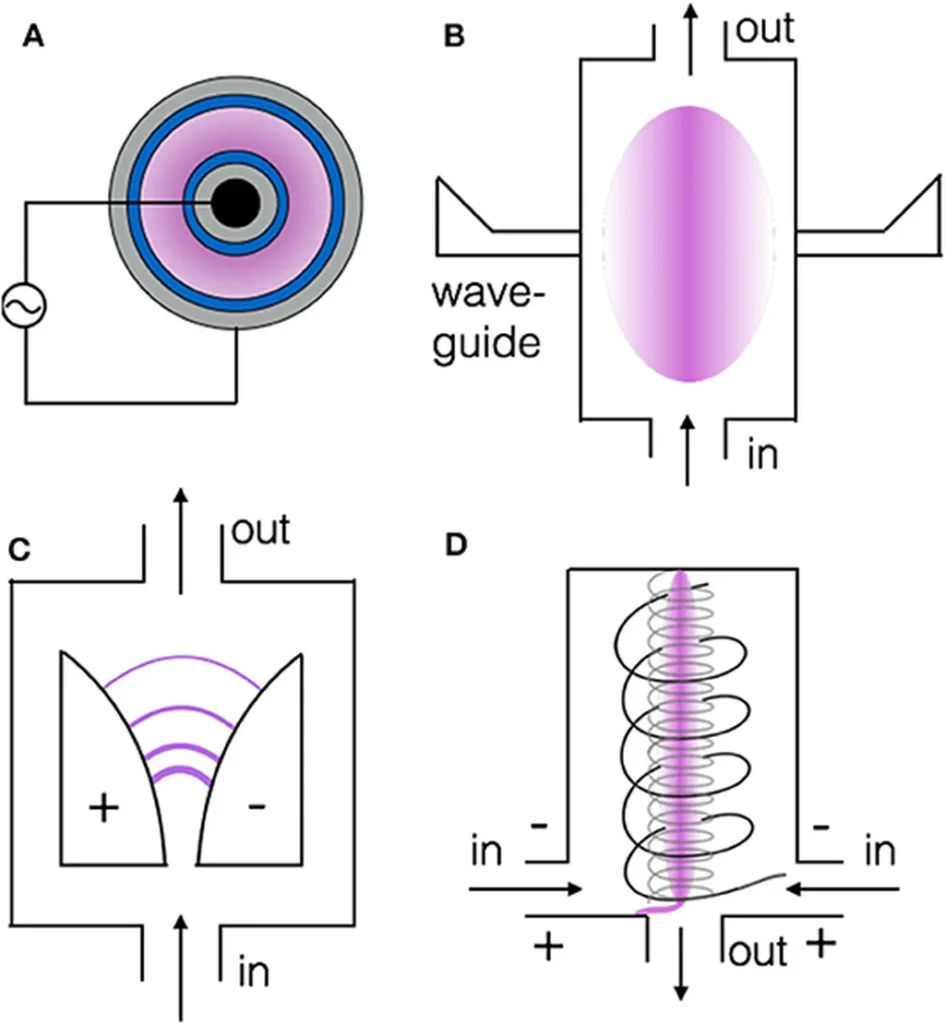
The research, published in *Cleaner Materials* (translated as “Materials for a Cleaner World”), explores the potential of electric/microwave arc plasma technology to disintegrate CO2 into carbon and carbide, using various metals as catalysts. This innovative approach could eliminate the need for complex and costly underground carbon storage, instead enabling onsite conversion of CO2 into useful materials.
Khotmungkhun and his team exposed metals such as gold, copper, aluminum, magnesium, iron, zinc, titanium, and tungsten to microwaves, inducing arc plasma in a controlled chamber. The interactions were analyzed using advanced techniques like scanning electron microscopy (SEM) and Raman spectroscopy. The results were promising, with titanium exhibiting the fastest reduction rate and tungsten standing out due to its durability and resistance to degradation.
“This technology presents a promising and efficient method for CO2 reduction,” Khotmungkhun explained. “It’s a significant step towards more sustainable and efficient carbon capture and utilization strategies.”
The implications for the energy sector are substantial. Traditional carbon capture methods often involve transporting CO2 to storage sites, a process that is both energy-intensive and costly. This new approach could allow for onsite conversion, reducing transportation needs and potentially lowering costs. Moreover, the conversion of CO2 into carbon and carbide could open up new avenues for resource utilization, turning a greenhouse gas into a valuable commodity.
The study also highlights the potential for further research and development in this field. As Khotmungkhun noted, “While our findings are promising, there’s still much to explore. The optimization of the process, the exploration of other metals, and the scaling up of the technology are all areas that warrant further investigation.”
The research by Khotmungkhun and his team is a testament to the power of innovation in addressing global challenges. As the world grapples with the realities of climate change, such breakthroughs offer hope and a path forward. The energy sector, in particular, stands to gain significantly from this technology, paving the way for a more sustainable and efficient future.
In the words of Khotmungkhun, “This is not just about mitigating climate change. It’s about turning a problem into an opportunity. It’s about creating value from waste. And that’s something we can all get behind.”