
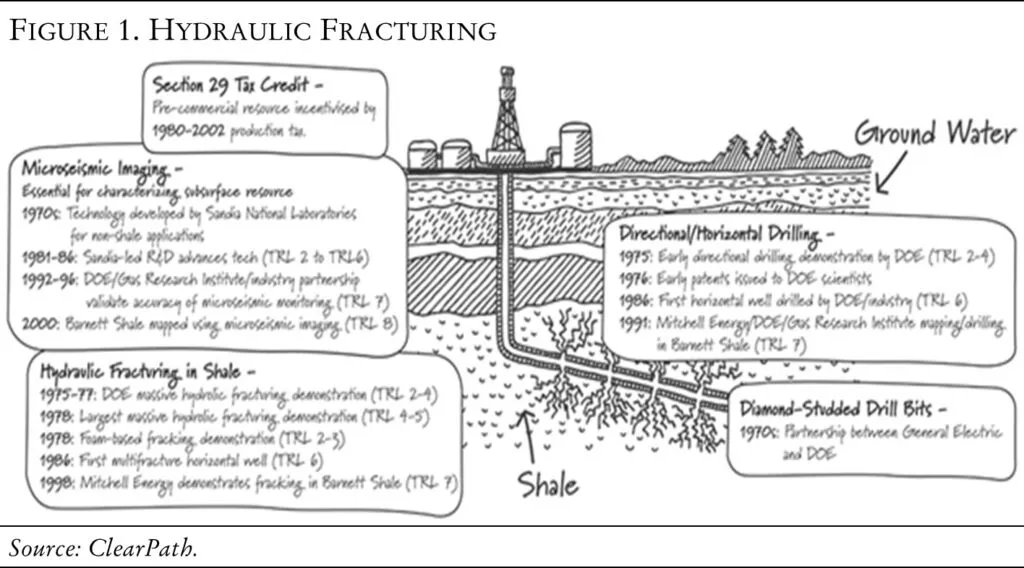
In the quest to clean up contaminated sites, particularly those with low-permeability strata, researchers have faced a significant challenge: how to effectively transport and distribute oxidants to break down pollutants. Traditional in-situ chemical oxidation (ISCO) techniques often fall short, leaving remediation efforts less effective than desired. However, a recent study published in *Yantu gongcheng xuebao* (Chinese Journal of Geotechnical Engineering) offers a promising solution by combining hydraulic fracturing with oxidation, potentially revolutionizing the way we approach environmental cleanup in the energy sector.
Led by ZHENG Qiteng from the Department of Geotechnical Engineering at Tongji University, the research team developed a two-dimensional axisymmetric model to simulate ISCO remediation in low-permeability strata with a single fracture. This model considers the complex interplay of compound solute advection, diffusion, reactions, and natural oxidant demand (NOD), providing a comprehensive understanding of how oxidants migrate and transform across pore-fracture multiscale structures.
“The synergistic mechanism between fracturing and oxidation is crucial for enhancing remediation efficiency,” explained ZHENG Qiteng. “Our study reveals that hydraulic fracturing creates advantageous flow channels, significantly improving the distribution of injected oxidants.”
The findings indicate that hydraulic fracturing ISCO is particularly effective in low-permeability contaminated strata with matrix permeability of 10^-7 m/s or less and diffusion coefficients of 8.4×10^-10 m^2/s or less. The research also suggests that placing fractures in the lower layer of the contaminant plume and maintaining hydraulic head post-oxidant injection can optimize remediation efforts.
For the energy sector, these insights are invaluable. Contaminated sites with low-permeability strata are common, and the ability to effectively remediate these areas can lead to significant cost savings and environmental benefits. By refining synergistic hydraulic fracturing-enhanced remediation technologies, energy companies can minimize the environmental impact of their operations and ensure compliance with increasingly stringent regulations.
“This research provides a theoretical foundation for the development of more efficient and effective remediation strategies,” said ZHANG Xu, a co-author of the study. “It has the potential to shape future developments in the field, offering a more sustainable approach to environmental cleanup.”
As the energy sector continues to evolve, the need for innovative solutions to environmental challenges becomes ever more pressing. The research published in *Yantu gongcheng xuebao* offers a glimpse into the future of remediation technologies, providing a roadmap for the development of more effective and sustainable practices. By leveraging the power of hydraulic fracturing and oxidation, we can take a significant step forward in our quest to protect and preserve the environment for future generations.