
In the heart of China, researchers at the Xi’an University of Architecture and Technology have been tackling a pressing environmental challenge: the removal of heavy metals from contaminated soil. Led by Dr. Kang Nongbo, a team of scientists has been exploring innovative ways to enhance the efficiency of electrokinetic (EK) remediation, a process that uses electric currents to remove contaminants from soil. Their findings, published in the journal *Yantu gongcheng xuebao* (translated to *Rock and Soil Mechanics*), could have significant implications for the energy sector, particularly in the remediation of contaminated sites.
The team’s focus was on copper (Cu) and lead (Pb) contamination in loess, a type of soil found in various parts of the world, including China. Traditional EK remediation methods often face challenges such as electrochemical polarization and the focusing effect, where contaminants accumulate near the cathode, hindering the removal process. Dr. Kang and his team set out to address these issues using a novel hydrogel electrode.
“We wanted to improve the removal efficiency and solve the electrochemical polarization and focusing effects in the EK process,” said Dr. Kang. Their solution involved combining the novel hydrogel electrode with different strengthening methods, such as acid pretreatment and autonomous pH regulation of the cathode.
The results were promising. The novel hydrogel electrode, combined with acid pretreatment and cathode pH regulation, significantly reduced the focusing phenomenon near the cathode. This facilitated the electromigration of both cations and anions, enhancing the removal efficiency of heavy metal ions. The team also found that combining the exchange electrode with point acid further reduced ion accumulation near the cathode.
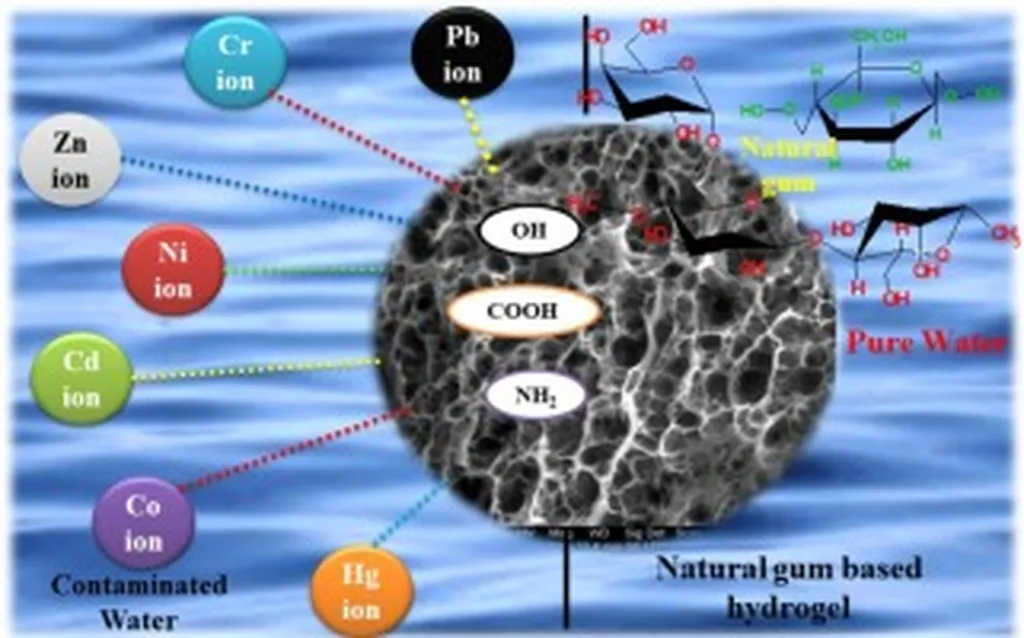
The microscopic analysis of the hydrogel electrode revealed its excellent performance in terms of minimal electrochemical polarization, low resistance, and high conductivity. These properties make it a promising tool for enhancing EK remediation processes.
The implications of this research extend beyond the laboratory. In the energy sector, where heavy metal contamination can pose significant environmental and health risks, efficient remediation methods are crucial. The novel hydrogel electrode and the strengthening methods proposed by Dr. Kang’s team could offer a more effective and efficient solution for cleaning up contaminated sites, thereby reducing the environmental footprint of energy operations.
Moreover, the research highlights the potential of innovative materials and methods in addressing longstanding challenges in environmental remediation. As Dr. Kang noted, “The combination of the exchange electrode and point acid can significantly reduce the accumulation of ions near the cathode.” This insight could pave the way for further advancements in the field, shaping the future of environmental remediation technologies.
In the quest for cleaner energy and a healthier environment, every breakthrough counts. Dr. Kang Nongbo and his team at the Xi’an University of Architecture and Technology have made a significant stride, offering a glimpse into a future where heavy metal contamination is no longer a persistent challenge but a solvable problem.