
In the vast landscapes where transmission lines stretch across loess terrains, a silent revolution is underway, one that could redefine the way we build and secure the foundations of our energy infrastructure. At the heart of this transformation is a groundbreaking study led by Xiaomin Xue from the Department of Civil Engineering, which delves into the uplift behavior of mini-piles in moistened loess foundations. Published in the journal *Advances in Civil Engineering* (translated from Chinese as *Advances in Civil Engineering*), this research promises to illuminate the path toward safer, more efficient transmission tower foundations.
Mini-piles, known for their ease of construction and high uplift capacity, are becoming increasingly popular for supporting transmission towers. However, in regions dominated by loess—a type of soil prone to collapse when wet—their performance has remained shrouded in uncertainty. “Systematic research on the uplift performance of mini-piles in loess has been limited, often leading to inadequate design, particularly under moistened soil conditions,” Xue explains. This gap in knowledge has left engineers grappling with the challenges of ensuring stability in these dynamic environments.
To address this, Xue and his team embarked on a comprehensive investigation, combining laboratory testing, numerical simulation, and analytical modeling. Geotechnical and water immersion tests were conducted to determine the mechanical properties of loess at varying water contents. Uplift load tests on mini-piles embedded in both unsaturated and saturated loess followed, providing critical insights into their ultimate bearing capacities.
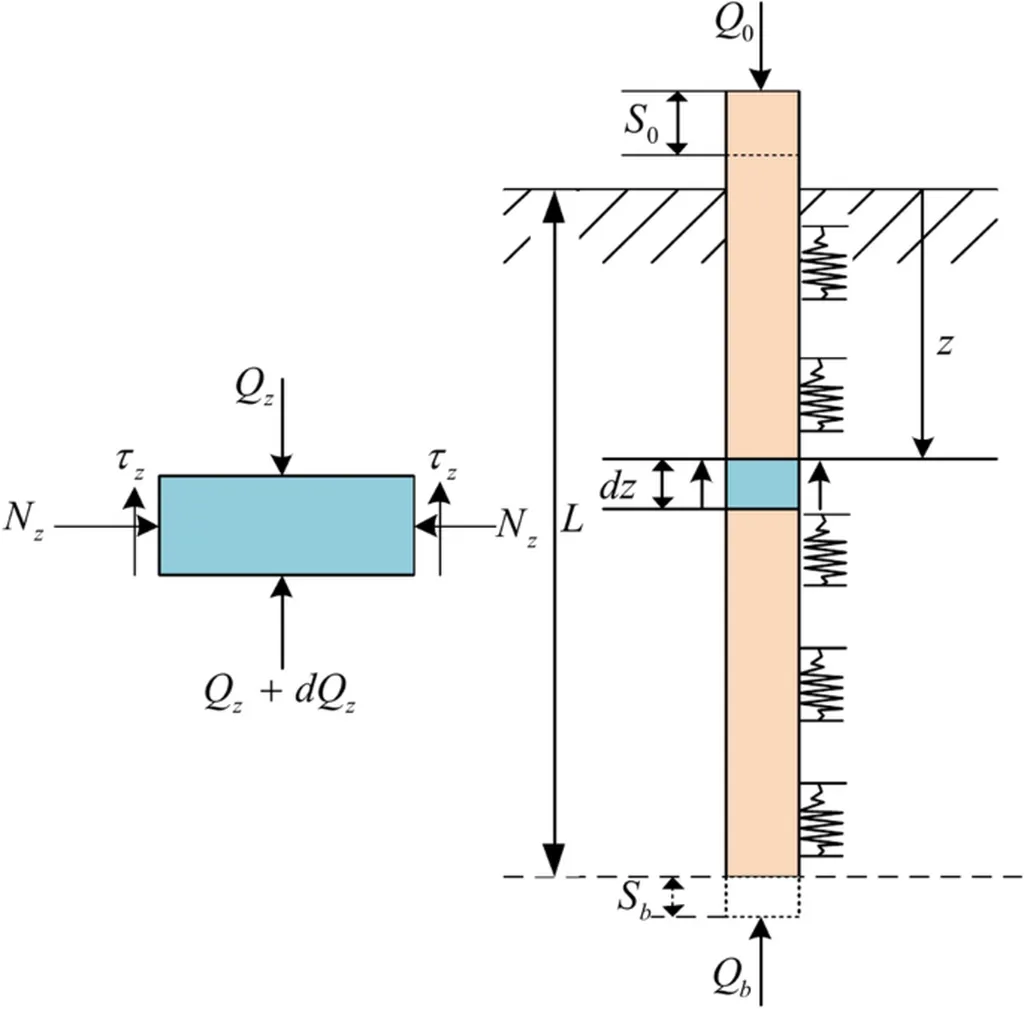
The team then developed a finite element (FE) model, validated against experimental results, to analyze the load–displacement response, mechanical behavior, and failure mechanisms of the pile–soil system. Sensitivity analysis (SA) was conducted to quantify the significance of key soil and pile parameters, leading to the proposal of an improved analytical model for predicting the uplift capacity of piles in diverse soils. This model demonstrates higher accuracy than conventional approaches, offering a more reliable tool for engineers.
The implications of this research are profound for the energy sector. Transmission towers are critical components of the power grid, and their stability is paramount. By providing a deeper understanding of the uplift behavior of mini-piles in loess, this study offers practical guidance for the safe and efficient design of foundations in similar geotechnical settings. “The findings provide new insight into the uplift mechanism of pile foundations in collapsible loess and offer practical guidance for the safe and efficient design of transmission tower foundations in similar geotechnical settings,” Xue notes.
As the energy sector continues to expand into challenging terrains, the need for robust and adaptable foundation solutions becomes ever more pressing. This research not only addresses a critical gap in knowledge but also paves the way for future developments in the field. By equipping engineers with more accurate tools and insights, it ensures that the foundations of our energy infrastructure are built to last, even in the most demanding conditions.
In the words of Xue, “This study is a step toward ensuring the reliability and safety of transmission tower foundations in loess regions, ultimately contributing to the stability and efficiency of our energy infrastructure.” As the industry continues to evolve, the insights gained from this research will undoubtedly shape the future of foundation design, ensuring that our energy networks remain resilient and robust.