
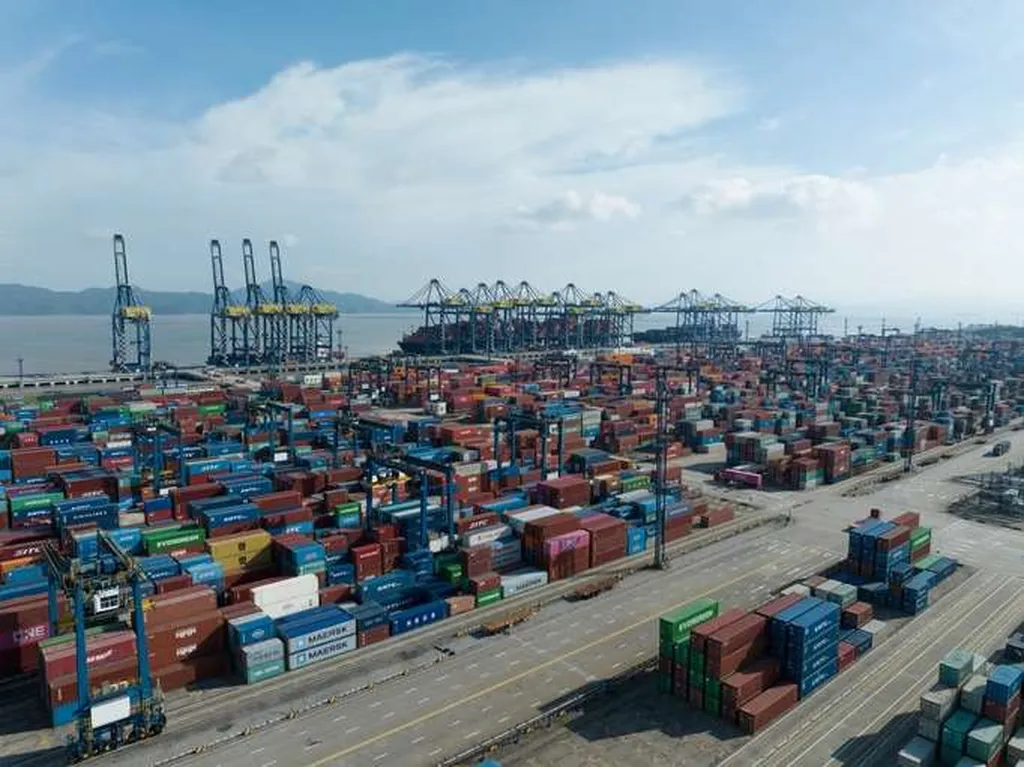
In the bustling port city of Zhuhai, a critical issue has emerged that could reshape how we approach the construction and maintenance of port infrastructure. The Xianli Wharf, a vital component of Doumen Port, has been experiencing a series of horizontal cracks in its all-vertical piles after 13 years of operation. This issue, if left unaddressed, could significantly impact the safety and operational efficiency of the port, a crucial hub for energy and goods transportation.
A team of researchers, led by WANG Mingyuan from PowerChina Huadong Engineering Corporation Limited, has been diligently investigating the root causes of these cracks. Their findings, recently published in the Chinese journal *Yantu gongcheng xuebao* (translated to English as “Rock and Soil Engineering”), shed light on the complex interplay of forces at work.
The team conducted a thorough geological investigation, physical model tests, and numerical simulations to understand the cracking mechanism. Their research revealed that the ship mooring force and the slurry dredging procedure in front of the wharf cause horizontal displacements of the wharf platform toward the sea. This movement results in large bending moments acting on the pile top, particularly affecting the first row of piles near the shore.
“These piles experience the largest bending moments due to the shortest free deformation section above the mud surface and insufficient flexibility,” explained WANG Mingyuan. “This is why the cracks first appeared in the first row of piles. Once these piles crack, the stress adjustment in the plate-pile structure can cause the second and third row piles to crack successively.”
The implications of this research are significant for the energy sector, where the safe and efficient operation of ports is paramount. Understanding the causes of these cracks can help prevent similar issues in other ports, ensuring the smooth flow of goods and energy resources.
To address the problem, the researchers developed a strengthening scheme involving the mounting of rebars between the embankment concrete floor and the wharf platform. This solution effectively prevents the platform from continuing to move outwards, thereby limiting the further generation of pile cracks. As a result, the wharf has restored its safe operation state.
This study not only provides a solution to an immediate problem but also offers valuable insights for future developments in the field. As ZHOU Xiaowen from the State Key Laboratory of Subtropical Building Science at South China University of Technology noted, “Our findings can guide the design and maintenance of similar structures, ensuring their longevity and safety.”
In an era where infrastructure resilience is more critical than ever, this research serves as a reminder of the importance of continuous monitoring and innovative solutions in maintaining the integrity of our vital port facilities.