
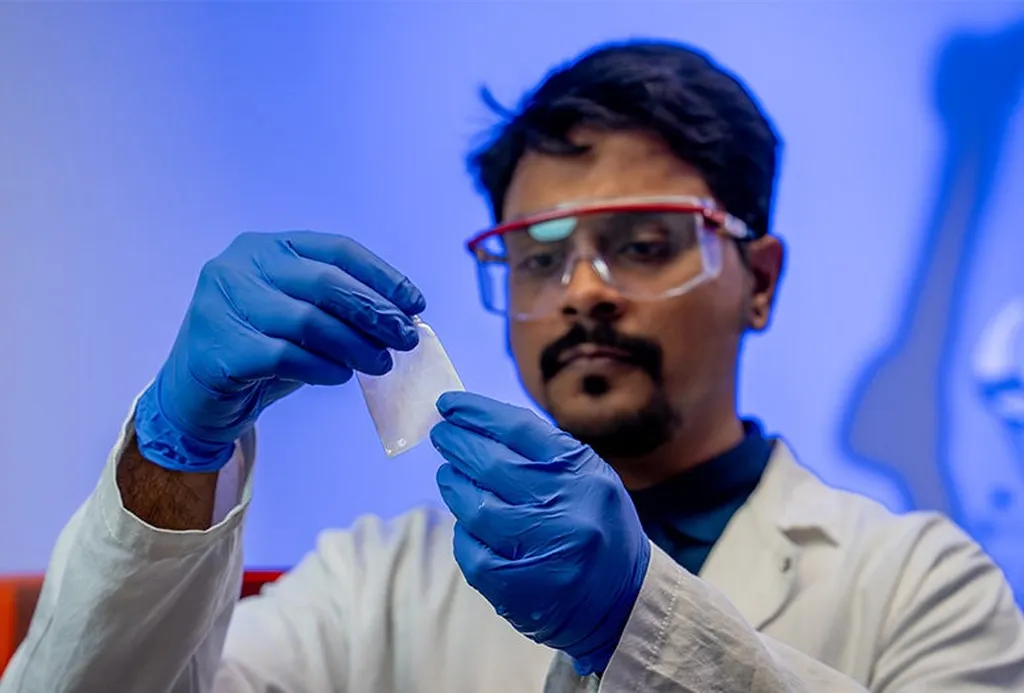
In the quest for sustainable materials, researchers have turned an underutilized agricultural byproduct into a potential game-changer for the plastics industry. Laura Nunes de Menezes, from the Department of Chemical and Materials Engineering at the Pontifical Catholic University of Rio de Janeiro (PUC-Rio), has led a study that explores the use of carnauba stalk particles as a reinforcement for high-density polyethylene (HDPE) composites. The research, published in *Academia Materials Science* (translated as “Academia of Materials Science”), opens doors for eco-friendly innovations in sectors like automotive and packaging.
Carnauba, a palm native to northeastern Brazil, is primarily known for its wax, a valuable commodity in industries ranging from cosmetics to automotive. However, the stalks of the plant have largely been discarded, representing a missed opportunity for sustainable resource utilization. De Menezes and her team saw potential in these stalks, investigating their use as a renewable filler in HDPE composites.
The study incorporated carnauba stalk particles into HDPE at varying concentrations—5, 10, and 15% by weight—and subjected the resulting composites to rigorous testing. Thermal analysis revealed a significant improvement in thermal stability, with the maximum degradation temperature increasing by up to 23°C. “This enhancement suggests that carnauba stalk particles could contribute to the durability of HDPE composites in high-temperature applications,” De Menezes noted.
However, the journey to optimal performance is not without challenges. Tensile testing showed that higher particle content reduced plastic deformation, leading to a ductile-to-brittle transition. Scanning electron microscopy (SEM) and X-ray microtomography (microCT) uncovered voids and weak interfacial adhesion, which hindered effective stress transfer. “While the thermal benefits are promising, we must address these mechanical limitations to fully harness the potential of carnauba stalks as a reinforcement,” De Menezes explained.
Creep behavior analysis indicated that long-term deformation was relatively consistent across the composites, though higher filler loadings exhibited slightly greater compliance. Among the tested formulations, the composite with 5% stalk particles struck the best balance between thermal stability and mechanical performance.
The findings of this study are not just academic; they have tangible implications for industries seeking sustainable solutions. The automotive sector, for instance, could benefit from eco-friendly interior components, while the packaging industry could explore more sustainable materials. “This research supports the valorization of agro-industrial residues, contributing to a circular economy and reducing waste,” De Menezes said.
The path forward involves improving interfacial bonding through processing adjustments or coupling agents. By addressing these limitations, carnauba stalk-reinforced HDPE composites could become a viable option for non-structural applications, paving the way for a greener future in materials science. As the world increasingly prioritizes sustainability, innovations like these will be crucial in shaping the next generation of industrial materials.