
In the fast-paced world of manufacturing, agility is key. As market conditions shift and evolve, so too must the products and production systems that serve them. However, traditional factory planning approaches often fall short, missing time and cost targets due to communication breakdowns, inadequate tools, and lack of interfaces. Enter Thomas Neuhäuser, a researcher who sees a promising solution in an unlikely place: the construction industry.
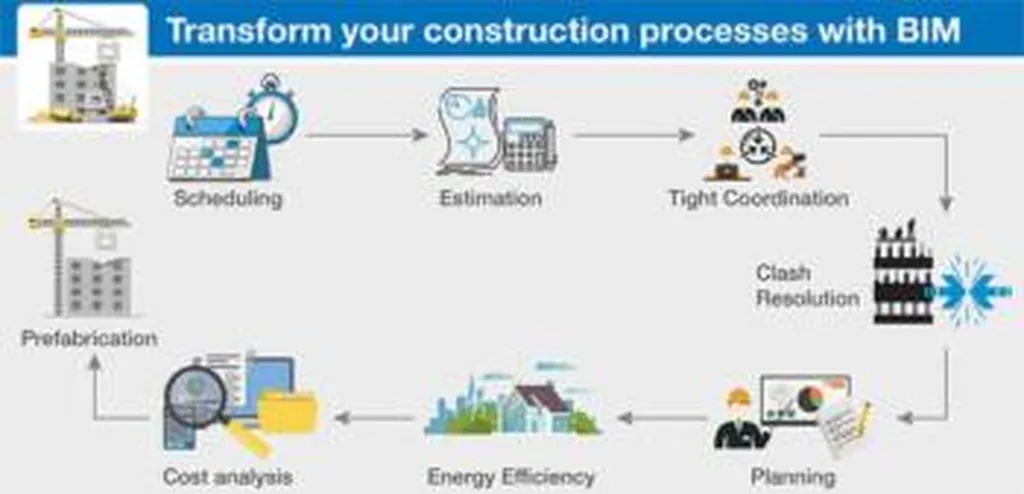
Neuhäuser, whose affiliation is not specified, proposes adapting the concept of Building Information Modeling (BIM) to factory layout planning. BIM is a digital modeling approach that has revolutionized the construction industry by enabling stakeholders to collaborate more effectively. By applying this method to factory planning, Neuhäuser believes that communication can be structured, new tools can be utilized, and interfaces can be stabilized, ultimately improving the success of factory planning projects.
But how exactly does this work? Neuhäuser introduces the concept of the Level of Development (LOD), which refers to the geometric and non-geometric definition of model contents. By tailoring the LOD to the specific phase of a factory planning project, the right information can be provided at the right time, in the right level of detail. “This approach allows for a more dynamic and responsive planning process,” Neuhäuser explains. “It enables planners to adapt quickly to changes and ensures that all stakeholders are on the same page.”
To illustrate this, Neuhäuser presents two use cases that demonstrate the power of this approach. In one case, the LOD-based planning process helped a manufacturing company reduce planning time by 30% and cut costs by 15%. In another, it enabled a company to detect and correct deviations early in the planning process, avoiding costly mistakes down the line.
But Neuhäuser doesn’t stop at just introducing the LOD concept. He also addresses the critical issue of quality assurance. By defining a clear process for quality assurance, Neuhäuser ensures that the information provided in the digital models is accurate and reliable. “Quality assurance is crucial,” he stresses. “It ensures that the models are not just detailed, but also correct and up-to-date.”
So, what does this mean for the future of factory planning? Neuhäuser’s research, published in the Proceedings of the Conference on Production Systems and Logistics (which translates to English as “Proceedings of the Conference on Production Systems and Logistics”), suggests a shift towards more digital, collaborative, and adaptive planning processes. This could have significant implications for the energy sector, where manufacturing plays a crucial role. By improving the efficiency and effectiveness of factory planning, companies in the energy sector could see significant cost savings and improved time-to-market for their products.
Moreover, this research could pave the way for further advancements in Industry 4.0, where digitalization and automation are key. By integrating the LOD concept with other digital tools and technologies, such as artificial intelligence and machine learning, the planning process could become even more intelligent and autonomous.
In the end, Neuhäuser’s research offers a compelling vision of the future of factory planning. By adapting proven methods from the construction industry and tailoring them to the unique needs of manufacturing, he shows how companies can become more agile, more efficient, and more competitive in an increasingly dynamic market. As the manufacturing landscape continues to evolve, this research could serve as a valuable guide for companies looking to stay ahead of the curve.