
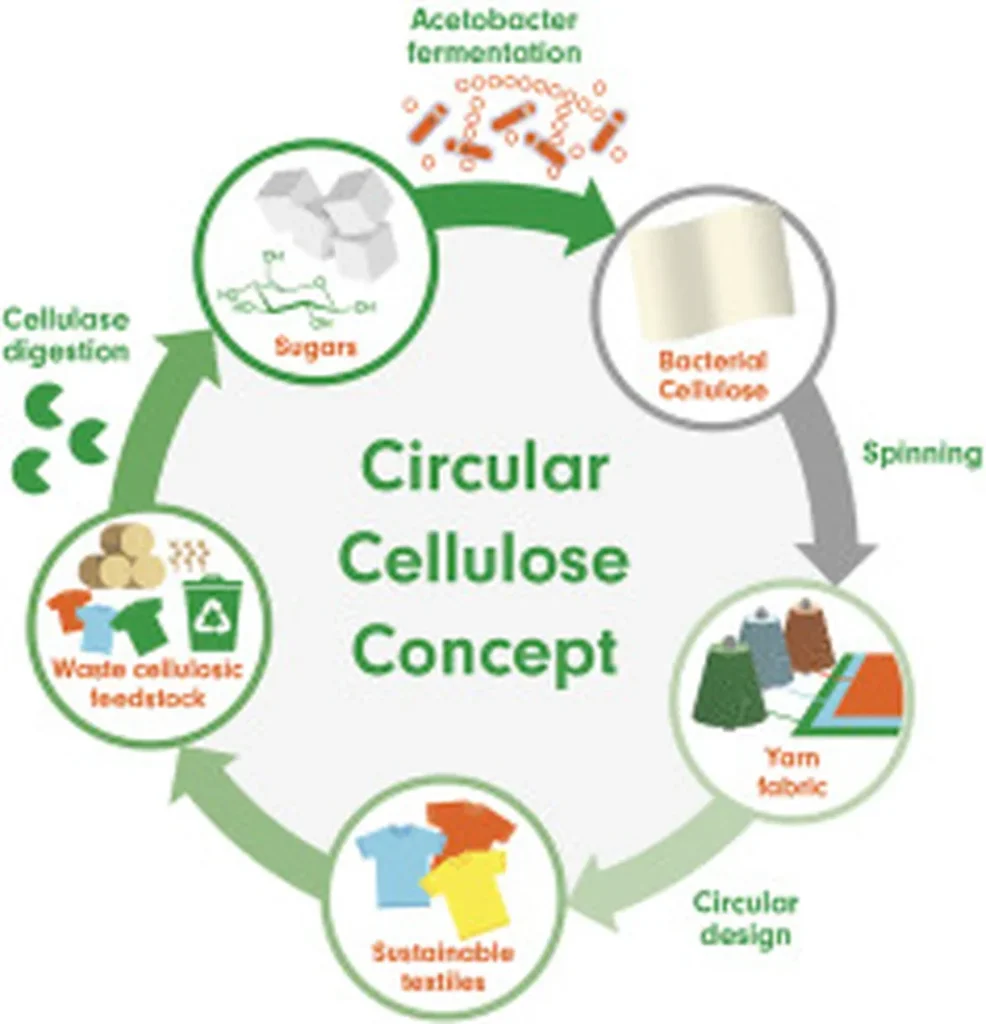
In the quest for sustainable textiles, researchers have turned their attention to an often-overlooked component of wood biomass: hemicellulose. A recent study led by Ritesh Sharma from the Department of Bioproducts and Biosystems at Aalto University in Finland has shed light on the challenges and opportunities of dyeing hemicellulose-rich man-made cellulosic fibers, potentially opening new avenues for the textile industry.
The study, published in the journal ‘Macromolecular Materials and Engineering’ (which translates to ‘Macromolecular Materials and Engineering’ in English), focuses on the dyeing properties of these innovative fibers. Hemicellulose, a complex carbohydrate found in plant cell walls, is typically discarded during the production of traditional cellulosic fibers like viscose and Lyocell. However, Sharma and his team have demonstrated that hemicellulose can be transformed into a valuable resource, offering a more sustainable route for textile production.
One of the main challenges in utilizing hemicellulose-rich fibers is their sensitivity to alkaline conditions during wet processing, particularly during dyeing with reactive dyes. “The high hemicellulose content in these fibers poses unique challenges for alkaline wet processing,” Sharma explains. “We wanted to understand how different alkaline conditions influence both the structural stability and dyeability of these fibers.”
The researchers investigated the effects of sodium hydroxide (NaOH) and sodium carbonate (Na2CO3) treatments on the fibers. They found that while NaOH at higher concentrations led to hemicellulose degradation and cellulose depolymerization, Na2CO3 preserved the hemicellulose even at elevated concentrations. This is a significant finding, as it suggests that Na2CO3 could be a more suitable alkali for processing hemicellulose-rich fibers.
The dyeing experiments revealed that hemicellulose-rich fibers consistently exhibited higher dye exhaustion, fixation, and color strength compared to traditional fibers like cotton, viscose, and Lyocell. The optimal dyeing conditions were achieved with 15 grams per liter of Na2CO3, which activated the fiber hydroxy groups, minimized dye hydrolysis, and preserved the hemicellulose.
The commercial implications of this research are substantial. As the textile industry increasingly seeks sustainable and eco-friendly materials, hemicellulose-rich fibers offer a promising alternative. The findings of this study could pave the way for the development of new, more efficient dyeing processes that are both environmentally friendly and cost-effective.
Moreover, the enhanced dyeability of these fibers could lead to a wider range of color options and improved colorfastness, making them more attractive to manufacturers and consumers alike. “This research not only addresses a knowledge gap in the processing of next-generation biobased cellulosic fibers but also opens up new possibilities for the textile industry,” Sharma notes.
As the world continues to grapple with the environmental impact of fast fashion, innovations like these are crucial. By transforming waste into valuable resources, the textile industry can move towards a more sustainable future. The study by Sharma and his team is a significant step in this direction, offering valuable insights into the potential of hemicellulose-rich fibers and setting the stage for future developments in the field.