
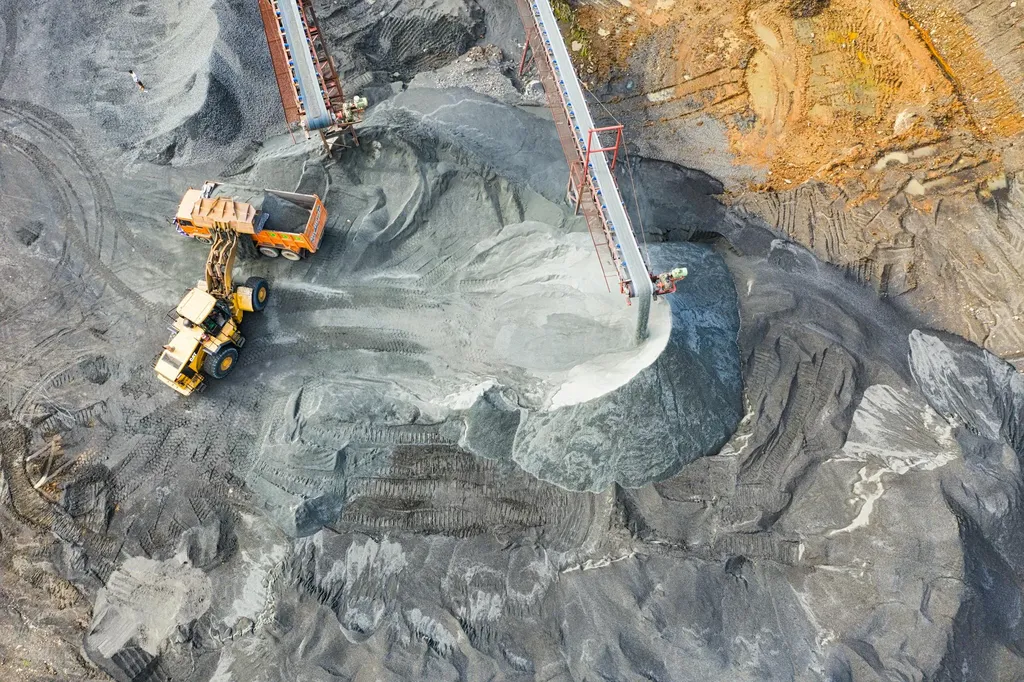
In the heart of Germany’s industrial landscape, a quiet revolution is taking place, not in the bustling cities, but in the often-overlooked quarrying sector. This industry, a backbone of the German economy, is largely made up of small and medium-sized enterprises (SMEs) that have traditionally lagged in digitization. However, a new research project, PROmining, is set to change the game, promising to boost efficiency and productivity through data-centric platforms.
At the helm of this research is John von Stamm, whose work is published in the ‘Proceedings of the Conference on Production Systems and Logistics’ (translated from German as ‘Proceedings of the Conference on Production Systems and Logistics’). Von Stamm’s research focuses on creating a data-centric platform that improves demand forecast accuracy and multi-site capacity utilization, a significant leap for an industry that has long relied on short-term planning.
The quarrying industry faces unique challenges. With over 95% of its raw materials used domestically, the sector operates on a demand-oriented basis with short planning horizons. The low level of digitization and reluctance to share data have left untapped potential in data-based demand forecasting and capacity planning. Adding to the complexity, SMEs often have heterogeneous mobile machinery to avoid dependency on individual suppliers, and transport distances over 50 kilometers are uneconomical due to high transport costs and low material values.
Von Stamm’s research aims to address these challenges head-on. “The core functionality of our platform is an industry-specific demand forecasting model,” von Stamm explains. By analyzing the expected demands of secondary industry sectors, the platform aims to improve mid-term volume-forecasting accuracy for the local quarrying industry. The data-centric platform will connect demand forecasting data with relevant key performance indicators of multi-site asset utilization, extending operational planning horizons and significantly improving overall production efficiency.
The implications of this research are far-reaching. By enabling quarrying businesses to respond effectively to fluctuating demand volumes, the platform can increase personnel and machine utilization across multiple quarry sites. This not only boosts efficiency but also has significant commercial impacts, particularly for the energy sector, which relies heavily on raw materials from the quarrying industry.
Von Stamm’s work is a testament to the power of data in transforming traditional industries. As the quarrying sector becomes more digitized, it can expect to see improved demand forecasting, better capacity utilization, and ultimately, increased profitability. The research published in the ‘Proceedings of the Conference on Production Systems and Logistics’ marks a significant step forward in this journey, setting the stage for future developments in the field.
In the words of von Stamm, “This is not just about improving efficiency; it’s about empowering businesses to make data-driven decisions that can transform their operations and drive growth.” As the quarrying industry embraces this data-centric approach, it is poised to unlock new levels of productivity and innovation, reshaping the future of the sector.