
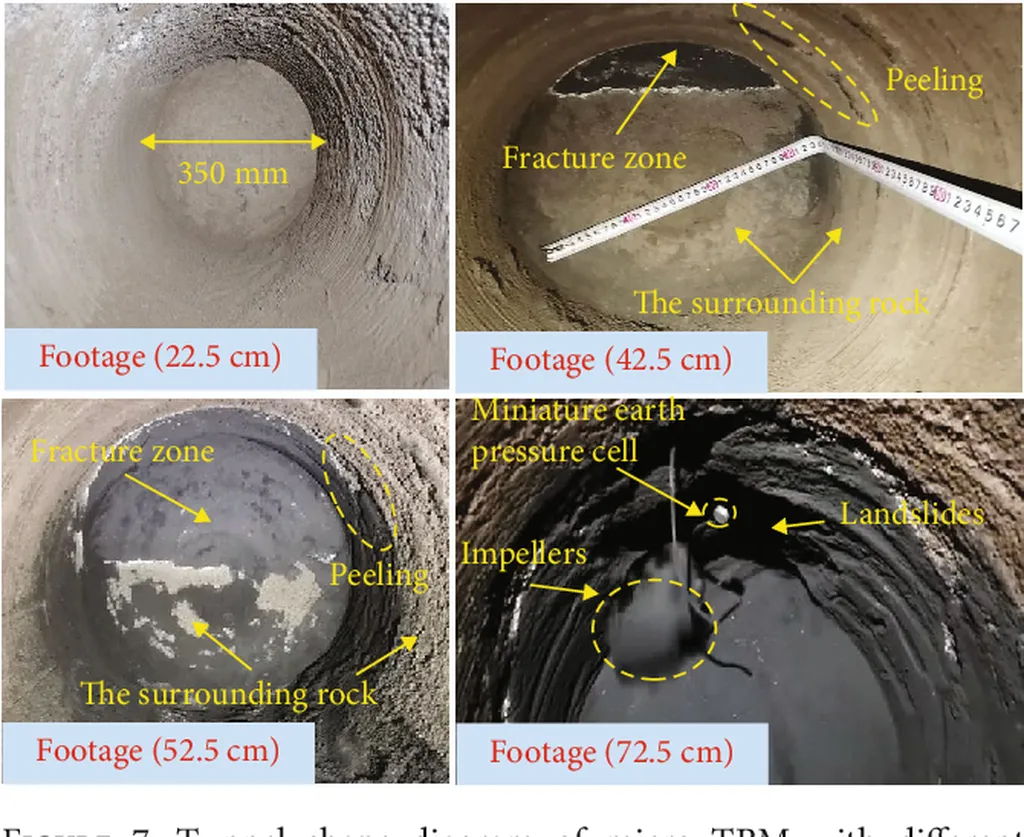
In the high-stakes world of underground construction, particularly in the energy sector, understanding the behavior of faults and their impact on tunnels is crucial. A recent study published in the *Electronic Journal of Structural Engineering* (translated as *Structural Engineering Electronic Journal*) sheds new light on this complex issue, offering insights that could significantly influence future tunnel design and construction practices.
The research, led by Zhiyong Liu from Chengdu Engineering Corporation Limited, focuses on the deformation of sites with fault-crossing tunnels and evaluates the deformation of tunnels subjected to normal faulting. The study is particularly relevant for the energy sector, where underground tunnels are often used for pipelines, power lines, and other critical infrastructure.
The team conducted three experimental tests using a self-designed large-scaled model box to simulate different fault parameters, such as the width of the fault fracture zone and fault dip. The results revealed that these parameters significantly affect the pattern of fault rupture and, consequently, the deformation of the ground surface and the failure of underground structures.
“Our findings show that the fault parameters have a profound impact on the propagation of fault rupture,” Liu explained. “This, in turn, affects the deformation on the ground surface and the failure of underground structures. Understanding this mechanism is vital for the safe and efficient construction of fault-crossing tunnels.”
The study identified four sub-regions on the ground surface based on the propagation of fault rupture: the stability region in the footwall, the coordination region, the severe deformation region, and the stability region in the hanging wall. The research also highlighted that the influence of the fault fracture zone is particularly sensitive for tunnels, with the most damage occurring near this zone.
The team categorized the typical damage types transversely into four categories based on the degree of damage. They emphasized that moderate damage or serious damage should be avoided to ensure the normal operation of the tunnel.
This research could have significant implications for the energy sector, where the integrity of underground infrastructure is paramount. By understanding the mechanisms of fault rupture and its impact on tunnels, engineers can design more robust and resilient structures, reducing the risk of failure and the associated costs.
As the energy sector continues to expand and diversify, the need for safe and efficient underground infrastructure will only grow. This research provides a valuable contribution to this field, offering insights that could shape future developments and ensure the safe and reliable operation of critical infrastructure.
In the words of Liu, “This research is a step towards ensuring the safety and efficiency of underground construction in fault-prone areas. It provides a foundation for future studies and practical applications in the field.”