
In a significant stride towards advancing flexible electronics, researchers have developed an innovative method for creating stretchable conductors and circuits using self-assembling aqueous liquid metal inks. This breakthrough, published in the journal *npj Flexible Electronics* (translated to English as “Flexible Electronics”), could have profound implications for the energy sector and beyond.
The study, led by Dandan Pei from BOE Technology Group Co. Ltd., introduces an environmentally friendly approach that leverages the unique properties of liquid metals (LMs). These materials are prized for their high conductivity and inherent deformability, making them ideal for applications in stretchable electronics. However, the challenge has always been in patterning these metals efficiently and precisely.
Pei and her team have addressed this hurdle by developing a process that allows for the self-assembly of aqueous LM inks. The key lies in the anisotropic surface characteristics of the substrate, which drive the movement of the ink from hydrophobic to hydrophilic regions. This precise control ensures that the LM particles are deposited exactly where needed, creating high-resolution patterns with line widths of less than 100 micrometers.
“The anisotropic surface characteristics are crucial,” explains Pei. “They guide the ink to the desired regions, while the stabilizer in the ink prevents premature deposition, ensuring a clean and precise pattern.”
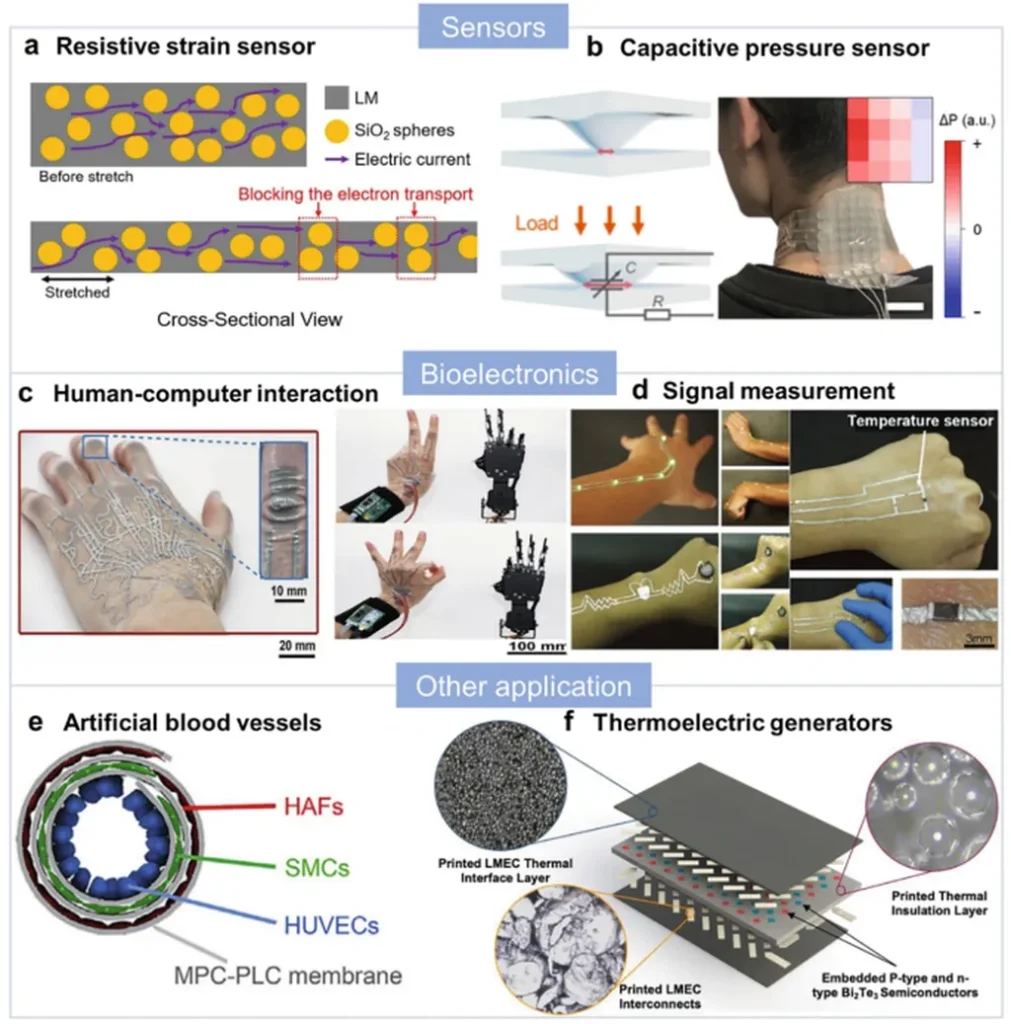
The resulting LM patterns not only exhibit high resolution but also boast impressive conductivity of 2.0×10⁵ S/m and excellent electromechanical durability. These properties make them suitable for a wide range of applications, including stretchable displays, three-dimensional touch sensors, and soft actuators.
For the energy sector, the implications are particularly exciting. Stretchable electronics could revolutionize the way we think about energy storage and distribution. Imagine solar panels that can conform to any surface, or wearable devices that monitor energy usage in real-time. The potential for innovation is vast, and this research brings us one step closer to realizing it.
As Pei notes, “This technology opens up new possibilities for the design and fabrication of flexible and stretchable electronic devices. It’s a significant step forward in the field of flexible electronics.”
The study’s findings were published in *npj Flexible Electronics*, a testament to the growing interest and investment in this cutting-edge field. As researchers continue to push the boundaries of what’s possible, we can expect to see even more groundbreaking developments in the years to come. This research not only shapes the future of electronics but also paves the way for a more sustainable and efficient energy landscape.