
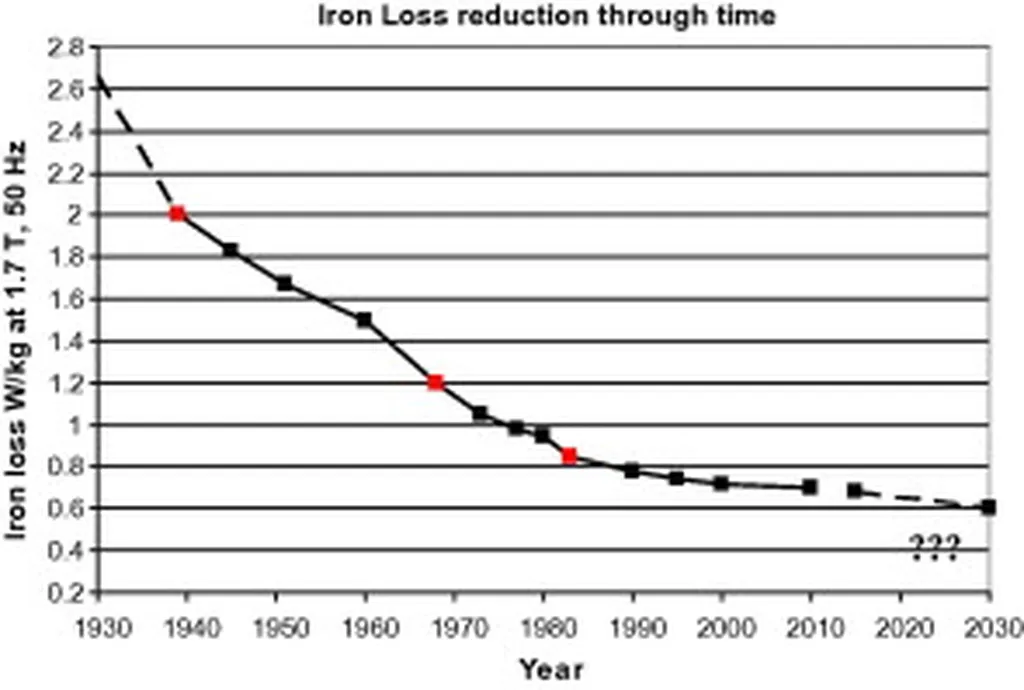
In the heart of Romania, researchers at Valahia University of Targoviste are unraveling the intricate dance between microstructure and magnetic properties in electrical steel, a material that forms the backbone of transformers and generators worldwide. This work, led by Stoian Elena Valentina from the Faculty of Materials Engineering and Mechanics, is not just academic—it’s a potential game-changer for the energy sector.
Electrical steel, particularly the non-oriented variety, is a critical component in the energy infrastructure. Its efficiency directly impacts the performance of transformers and generators, which in turn affects the overall energy consumption and costs. The recent study published in the *Scientific Bulletin of Valahia University: Materials and Mechanics* (translated from Romanian) delves into the microstructural aspects of cold-rolled silicon steel strips, focusing on how grain size influences magnetic losses at different induction levels.
The research reveals that the hardness of the steel strips varies significantly depending on their position within the batch. “We found that the hardness at the head of the rolls is consistently higher for all five analyzed rolls,” explains Stoian. “Interestingly, for the rolls from batch II, the hardness at the ends is higher than at the head.” This variation is crucial because it directly impacts the material’s performance in real-world applications.
The study also highlights the importance of understanding the material’s state—whether it’s raw or aged. The regression equations drawn for the hardness (Rc) and tensile strength (Rm) show remarkably high correlation coefficients, close to 1. This indicates a strong relationship between the material’s state and its mechanical properties. “The correlation coefficients for Rc in the raw state and aged state are 0.98 and 0.97, respectively,” Stoian notes. “Similarly, for Rm, the coefficients are 0.91 for the raw state and 0.98 for the aged state.”
So, what does this mean for the energy sector? The findings could lead to more efficient and cost-effective production of electrical steel, which is vital for the energy infrastructure. By understanding and controlling the microstructural aspects and hardness variations, manufacturers can produce steel strips that are optimized for specific applications, reducing energy losses and improving overall performance.
Moreover, the research underscores the importance of adhering to standards like EN 10106, ensuring that the material meets the necessary quality and performance criteria. This could pave the way for more stringent quality control measures in the industry, ultimately benefiting consumers and the environment.
As the world moves towards more sustainable and efficient energy solutions, research like this is invaluable. It not only advances our understanding of the materials that power our world but also opens up new possibilities for innovation and improvement. In the words of Stoian, “This research is a stepping stone towards more efficient and reliable energy solutions.”
In the coming years, we can expect to see these findings translated into practical applications, shaping the future of the energy sector and beyond. The work of Stoian and her team is a testament to the power of scientific inquiry and its potential to drive meaningful change.