
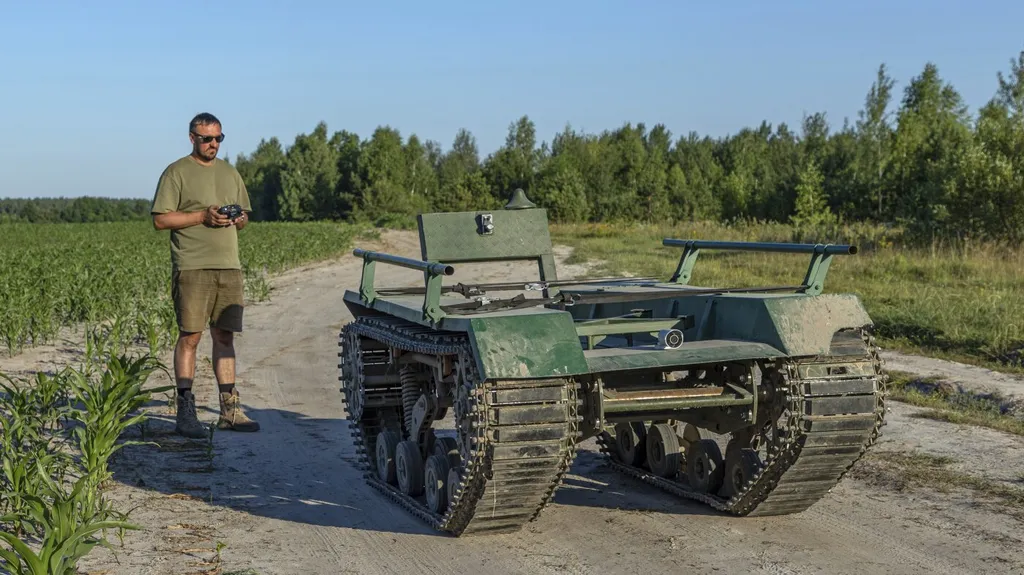
In the realm of intelligent systems and autonomous technology, a significant stride has been made by A.R. Kravchuk, a researcher from Zhytomyr Polytechnic State University in Ukraine. Kravchuk’s work, published in the journal *Технічна інженерія* (Technical Engineering), introduces an intelligent robotic system designed for autonomous reconnaissance data collection and analysis. This innovation could have profound implications for various industries, particularly the energy sector, where safety and efficiency are paramount.
The robotic system developed by Kravchuk is a sophisticated assembly of sensor modules, computational units with artificial intelligence elements, motion control systems, power supply units, and communication tools. This integration allows the robot to operate autonomously, collecting and analyzing data in real-time without human intervention. “The system’s mobility and environmental adaptability are key features that set it apart,” Kravchuk explains. “It can navigate diverse terrains and conditions, making it highly versatile for different applications.”
One of the most compelling aspects of this research is its potential impact on the energy sector. In industries such as oil and gas, where safety and efficiency are critical, autonomous reconnaissance robots could revolutionize operations. These robots could inspect infrastructure, monitor environmental conditions, and even detect potential hazards, all while minimizing human risk. “The ability to process data without operator involvement is a game-changer,” Kravchuk notes. “It enhances both safety and operational efficiency.”
The system’s architecture is meticulously detailed in the study, including the structural features of the chassis, principles of chassis construction, and materials used for the frame. The electrical circuit for the drive control of the platform’s wheels is also described, providing a comprehensive vision for building a reconnaissance robotic system. This level of detail is crucial for understanding the practical implementation of the system’s electronic, mechanical, and software components.
The research published in *Технічна інженерія* (Technical Engineering) not only advances the field of intelligent systems but also opens up new possibilities for commercial applications. As the energy sector continues to evolve, the integration of autonomous technologies like Kravchuk’s robotic system could become a cornerstone of modern operations. The potential for enhanced safety, efficiency, and data accuracy makes this research a significant contribution to the industry.
In the broader context, this innovation could shape future developments in autonomous navigation and automated control systems. The use of neural networks and artificial intelligence in these systems is a testament to the rapid advancements in technology. As these technologies continue to evolve, we can expect to see even more sophisticated applications in various industries, from energy to healthcare and beyond.
Kravchuk’s work is a testament to the power of interdisciplinary research and the potential of intelligent systems to transform industries. As we look to the future, the integration of autonomous technologies will undoubtedly play a crucial role in shaping the landscape of modern operations. The research published in *Технічна інженерія* (Technical Engineering) is a significant step forward in this exciting journey.