
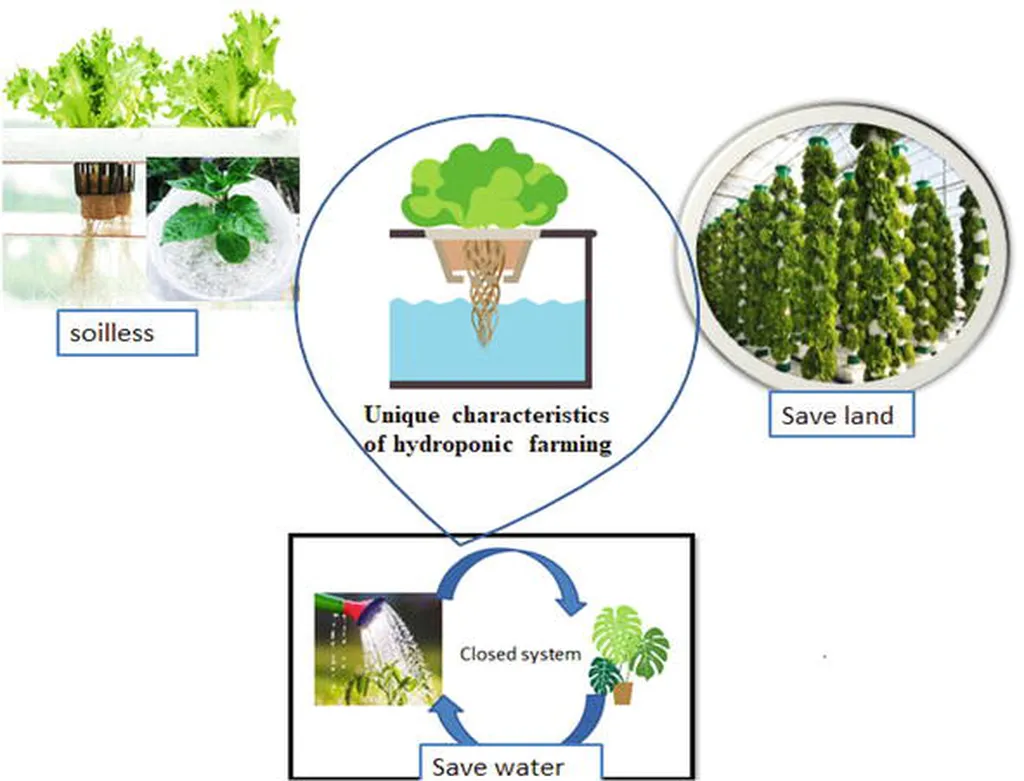
In the quest to merge productivity with sustainability in modern agriculture, a team of researchers has made a significant stride. Led by Renato de Sousa Nascimento Júnior, a scientist affiliated with a prominent research institution, the study introduces a novel approach to hydroponic systems using activated carbon-modified polymer composites. This innovation could potentially reshape the agricultural landscape, offering a more eco-friendly alternative to traditional farming methods.
The research, published in the journal *Materials Research* (translated from Portuguese), focuses on the development of composites based on poly (butylene adipate-co-terephthalate) (PBAT), a biodegradable polymer. By incorporating activated carbon (AC) and the cationic surfactant CTAB, the team aimed to enhance the mechanical performance, stability, and compatibility of these materials with nutrient solutions.
“Contemporary agriculture faces the challenge of reconciling productivity and sustainability, making hydroponics a promising alternative,” Nascimento Júnior explained. “However, the lack of biodegradable materials that combine mechanical performance, stability, and compatibility with nutrient solutions limits its expansion.”
The team formulated several composites, including PBAT, PBAT/5AC, PBAT/5AC/1CTAB, and PBAT/5AC/2CTAB, which were processed by extrusion and injection. These materials underwent rigorous testing, including mechanical testing, thermogravimetric analysis, scanning electron microscopy, and contact angle measurements.
The results were promising. The addition of CTAB as a functionalizing agent improved the dispersion of activated carbon, reducing agglomerates and enhancing the material’s properties. Specifically, the composites exhibited a 15.53% increase in the modulus of elasticity and a 4.05% increase in tensile strength. Additionally, the surface hydrophilicity was improved, which is crucial for the adhesion of aqueous solutions in hydroponic systems.
“Despite lower thermal stability, the properties obtained favor the adhesion of aqueous solutions, making the composites promising for sustainable substrates and components in hydroponic cultivation,” Nascimento Júnior noted.
The implications of this research extend beyond agriculture. The development of biodegradable materials with enhanced mechanical and thermal properties could have significant commercial impacts in the energy sector. For instance, these composites could be used in the production of sustainable packaging materials, reducing the environmental footprint of various industries.
Moreover, the innovative use of activated carbon and cationic surfactants in polymer composites opens new avenues for research and development. Future studies could explore the potential of these materials in other applications, such as water filtration and energy storage, further contributing to the advancement of sustainable technologies.
As the world continues to grapple with the challenges of climate change and environmental degradation, the need for sustainable solutions has never been more urgent. The research led by Nascimento Júnior offers a glimpse into a future where productivity and sustainability coexist, paving the way for a more eco-friendly and resilient agricultural sector.
In the words of the lead author, “This study represents a significant step forward in the development of biodegradable materials for hydroponic systems. The properties obtained not only enhance the performance of these materials but also contribute to the broader goal of sustainability in agriculture and beyond.”
As the scientific community continues to push the boundaries of innovation, the potential applications of these composites are vast and varied. From agriculture to energy, the impact of this research could be far-reaching, shaping the future of sustainable development.