
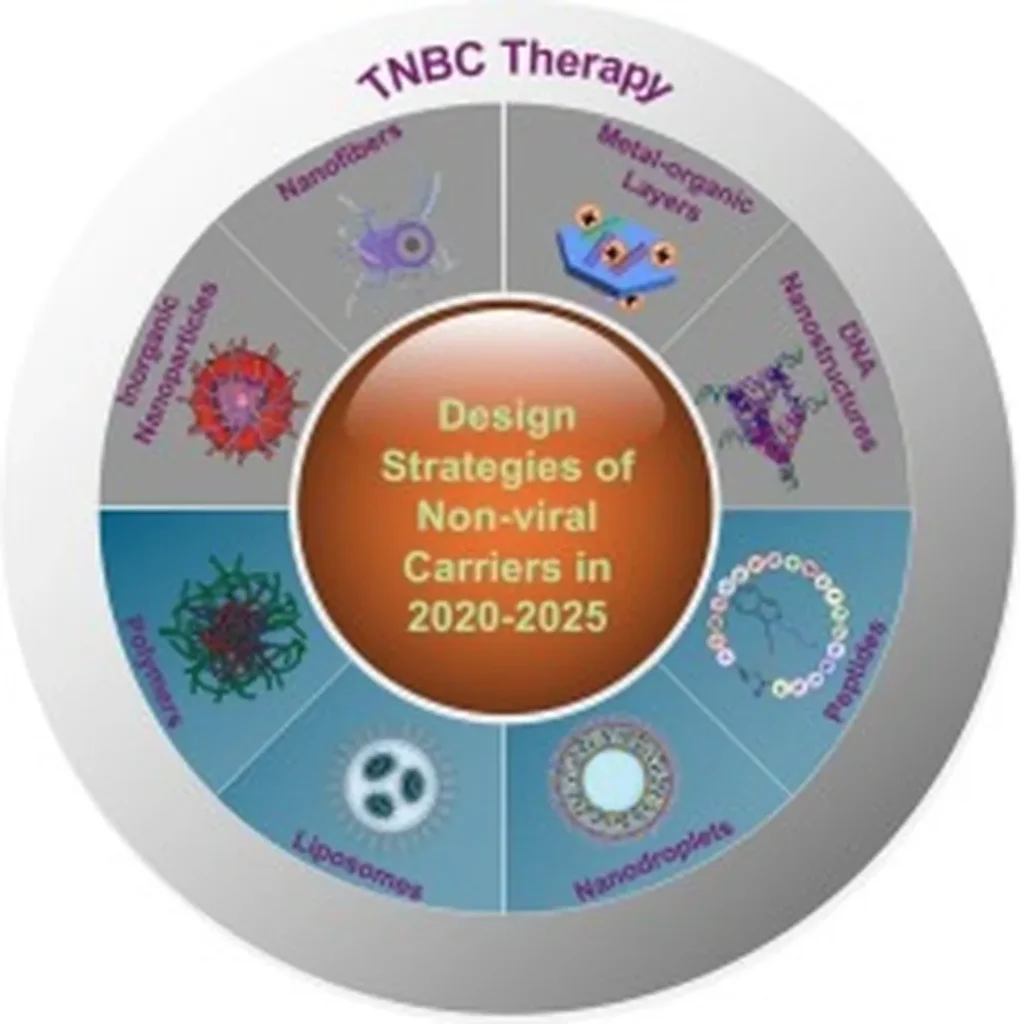
In the relentless battle against triple-negative breast cancer (TNBC), a formidable and aggressive subtype, researchers are turning to innovative strategies to improve treatment outcomes. A recent review published in the journal *Materials & Design* (which translates to *Materials & Design* in English) sheds light on the latest advancements in non-viral carriers for delivering small interfering RNA (siRNA), a promising therapeutic tool that has historically faced challenges in stability and cellular uptake.
Lead author Weijie Liu, affiliated with the Anhui Provincial Key Laboratory of Advanced Catalysis and Energy Materials at Anqing Normal University, highlights the critical need for efficient carriers to overcome these hurdles. “Non-viral vectors offer a safer and more tunable alternative to viral vectors,” Liu explains. “Their structural adaptability and loading capacity make them particularly attractive for siRNA delivery in TNBC therapy.”
The review, which covers research from 2020 to 2025, delves into various non-viral carriers, including polymers, inorganic nanoparticles, liposomes, exosomes, and emerging platforms like DNA nanostructures, cationic metal–organic layers, nanodroplets, nanofibers, and peptides. Statistical analysis reveals that polymers dominate the field, accounting for 39.7% of the studies, due to their versatility and efficiency in delivering siRNA.
One of the key findings is the growing interest in emerging carriers, which offer unique advantages and novel mechanisms for targeted delivery. “The diversity of these carriers allows us to tailor treatments to the specific needs of TNBC patients,” Liu notes. “This personalized approach could significantly enhance therapeutic efficacy and reduce side effects.”
The review also outlines the therapeutic targets of siRNA investigated during this period and their roles in TNBC progression. By targeting specific genes involved in cancer cell growth and survival, siRNA therapy holds the potential to revolutionize TNBC treatment. However, the authors emphasize the need to address key challenges in siRNA delivery, such as stability, specificity, and immune response.
Looking ahead, the future of siRNA delivery in TNBC therapy is poised for exciting developments. Liu envisions a focus on stimuli-responsive carriers, material hybridization, combination therapy, and personalized medicine. “These advancements could not only improve outcomes for TNBC patients but also pave the way for more effective treatments for other aggressive cancers,” Liu says.
The insights from this review could have far-reaching implications for the energy sector as well. The development of high-efficiency gene carriers could inspire innovations in energy storage and conversion technologies, where similar challenges in stability and delivery exist. By fostering collaboration between the biomedical and energy sectors, these advancements could drive progress in both fields.
As the scientific community continues to push the boundaries of gene therapy, the work of researchers like Weijie Liu and their colleagues offers hope for a future where aggressive cancers like TNBC can be effectively treated, ultimately improving patient outcomes and quality of life. The review published in *Materials & Design* serves as a testament to the power of interdisciplinary research and the potential of non-viral carriers in transforming cancer therapy.