
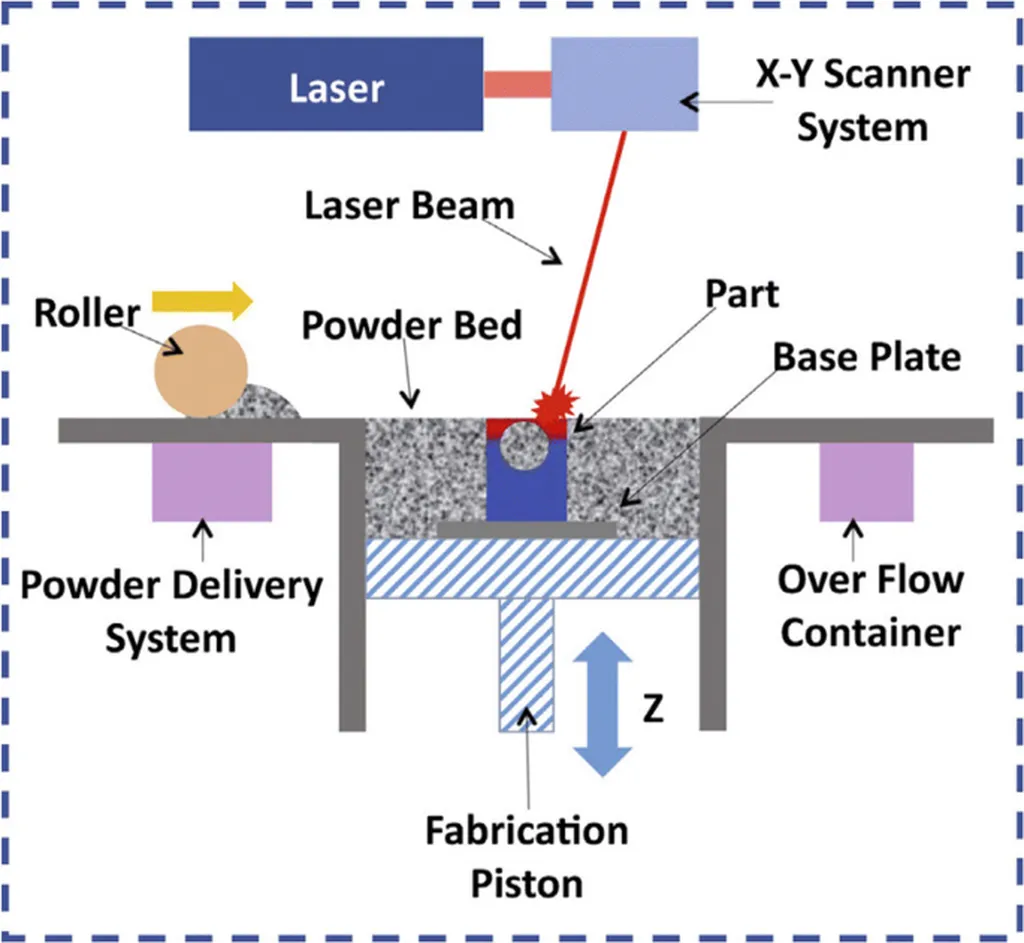
In the ever-evolving landscape of advanced materials, a groundbreaking study led by Shixi Gan, a researcher affiliated with a prominent institution, is set to redefine the boundaries of high-performance applications, particularly in the energy sector. The study, published in the esteemed journal *Materials Research* (translated to English as *Materials Research*), delves into the feasibility of using Selective Laser Melting (SLM) to fabricate high-entropy alloy (HEA) reinforced aluminium matrix composites (AMCs), offering a glimpse into the future of material science.
The research, which includes a comprehensive review, case study analysis, and a predictive framework, aims to elucidate the relationship between SLM process parameters, microstructural evolution, and mechanical property improvement. “This study is not just about understanding the current capabilities of SLM-fabricated HEA-reinforced AMCs,” Gan explains, “but also about charting a course for future developments that can address both the challenges and opportunities in this field.”
One of the most compelling aspects of this research is its potential impact on the energy sector. The study reveals that HEA-reinforced AMCs can demonstrate superior tensile strength, hardness, fatigue, and thermal stability compared to traditional materials. This could translate into more durable and efficient components for energy applications, from power generation to transmission and storage.
However, the journey towards widespread adoption is not without its hurdles. The research identifies challenges such as porosity, oxidation, and scalability. Yet, it also highlights opportunities in hybrid reinforcement strategies, process optimisation with artificial intelligence, and sustainable manufacturing. “We are at a critical juncture where we can leverage these challenges as opportunities to innovate and push the boundaries of what’s possible,” Gan notes.
The study offers a three-step research roadmap from laboratory optimisation to industrial validation, providing a clear path forward for researchers and industry professionals alike. By categorising fabrication issues into material intrinsic, process-induced, and application-scale issues, the research offers a nuanced understanding of the complexities involved in developing these advanced materials.
As we look to the future, this research could shape the development of SLM-integrated HEA-reinforced AMCs, paving the way for a new class of advanced materials that can meet the demanding requirements of high-performance applications. The insights gained from this study, published in *Materials Research*, could very well be the catalyst that propels the energy sector into a new era of efficiency and sustainability.