
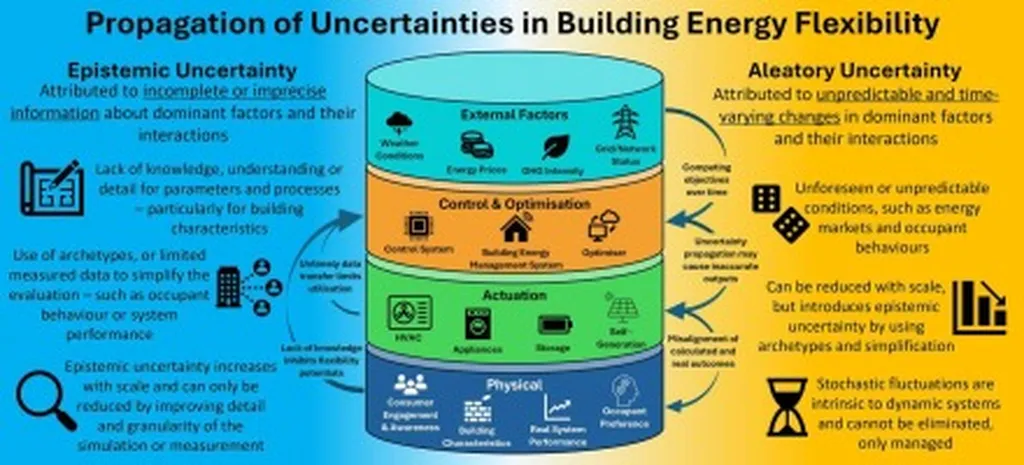
In a groundbreaking development poised to reshape the energy landscape, researchers have introduced a novel hierarchical optimization framework that transforms all-electric buildings into active participants in grid operations. This innovative approach, detailed in a recent study published in the *International Journal of Electrical Power & Energy Systems* (translated from its original title), bridges the gap between the energy flexibility potential of buildings and the power grid’s needs, ensuring that flexibility is not only technically feasible but also deliverable through distribution networks.
At the heart of this research is Sevda Zeinal Kheiri, an assistant professor in the Department of Electrical and Computer Engineering at the University of Utah. Kheiri and her team have developed a two-tiered system that optimizes energy flexibility at both the local and central levels. “Our framework ensures that the energy flexibility provided by buildings is not only beneficial for the grid but also respects network constraints and occupant comfort,” Kheiri explains. This dual optimization process involves local controllers coordinating various distributed energy resources within buildings, followed by a central controller operated by the distribution system operator (DSO) to aggregate and optimize this flexibility for the day-ahead energy market.
The study focuses on cold-climate air source heat pumps (ccASHPs), heat pump water heaters (HPWHs), photovoltaic (PV) systems, and energy storage systems. By integrating the thermal dynamics of heating and cooling loads with the electrical characteristics of these resources, the framework enables coordinated energy flexibility provision. This coordination maintains occupant comfort through controlled indoor and water temperatures while reducing DSO operation costs and electricity bills for buildings.
The implications for the energy sector are profound. As buildings increasingly electrify, the potential for energy flexibility grows. This research provides a roadmap for harnessing that flexibility to support grid operations, enhance energy efficiency, and reduce costs. “This is not just about reducing carbon footprints; it’s about transforming buildings into active participants in the energy ecosystem,” Kheiri notes.
The hierarchical optimization model proposed by Kheiri and her team could revolutionize how energy is managed and distributed. By ensuring that energy flexibility is deliverable and respectful of network constraints, this approach paves the way for more resilient and efficient energy systems. As the energy sector continues to evolve, such innovations will be crucial in meeting the demands of a rapidly changing landscape.
This research, published in the *International Journal of Electrical Power & Energy Systems*, offers a glimpse into the future of energy management, where buildings are not just consumers but active contributors to a more sustainable and efficient energy grid. The study’s findings could shape future developments in the field, driving advancements in energy flexibility and grid support. As the energy sector looks to the future, the work of Kheiri and her team provides a compelling vision of what is possible.