
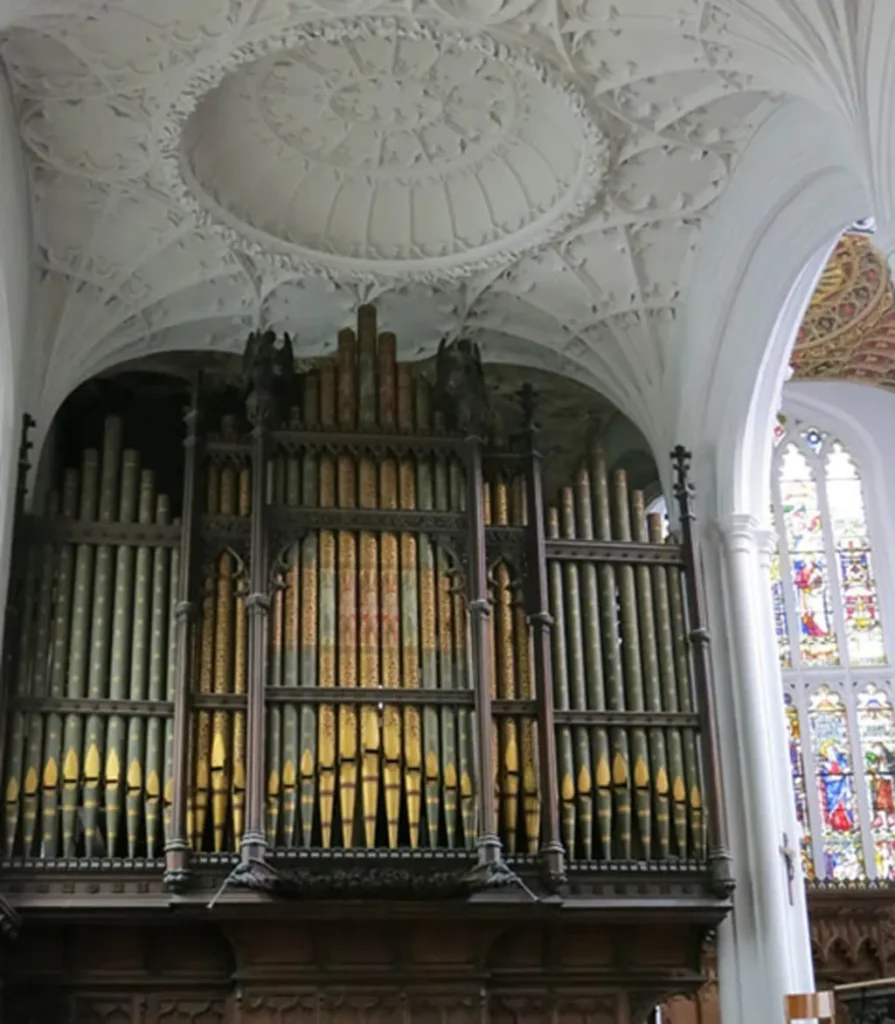
In the quiet corners of historic churches, an unexpected treasure trove of data is helping scientists understand the delicate balance between preserving our past and embracing a sustainable future. Bruno Bingley, a researcher from the School of Architecture, Design and Built Environment at Nottingham Trent University, has uncovered a unique resource: organ tuning books. These unassuming records, meticulously kept by organ tuners, are providing invaluable insights into the indoor environmental conditions of churches, with significant implications for the energy sector and heritage conservation.
Churches, with their rich history and intricate artefacts, face a growing challenge: how to maintain thermal comfort for visitors while preserving the delicate microclimates that protect their historic contents. Bingley’s research, published in the journal ‘Buildings & Cities’ (translated as ‘Gebäude und Städte’), has revealed that the tuning books document temperature and humidity data, offering a rare historical perspective on indoor environmental trends.
“These tuning books are a goldmine of information,” Bingley explains. “They show us how temperature and humidity have changed over time, and the impact this has on the conservation of church interiors.” The data, extracted from 18 tuning books across the UK, including those from Sir Christopher Wren’s City of London churches, paint a concerning picture. Rising and fluctuating indoor temperatures and humidity levels pose a significant risk to the preservation of historic buildings and their artefacts.
The findings have profound implications for the energy sector, particularly in the context of zero-carbon policies. As churches strive to reduce their carbon footprint, there is a risk that higher indoor temperatures could become an unintended consequence of retrofitting and changes in heating behaviour. “The creation and control of suitable internal thermal environments is critical for the conservation of historic church buildings,” Bingley emphasizes.
This research underscores the need for a balanced approach to energy efficiency and heritage conservation. As the energy sector continues to evolve, understanding the long-term impacts of indoor environmental changes will be crucial. Bingley’s work highlights the importance of historical data in shaping future developments, ensuring that our pursuit of sustainability does not come at the cost of our cultural heritage.
In an era where climate change and energy efficiency are at the forefront of global discussions, this study serves as a reminder of the delicate interplay between our past and our future. As Bruno Bingley continues to delve into the secrets of these tuning books, the energy sector and conservationists alike will be watching closely, eager to learn from the lessons of history.