
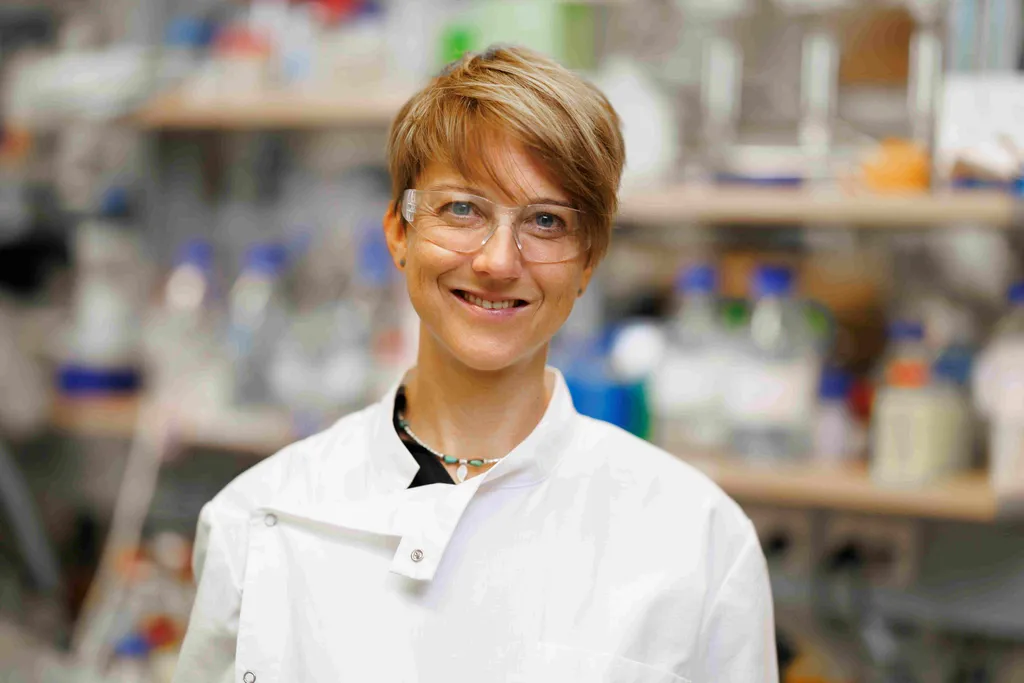
In a significant stride towards sustainable materials, researchers have unlocked new potential for lignin, a often underutilized byproduct of biomass processing. Oumaima Mhirsi, a researcher at the Fraunhofer Institute for Solar Energy Systems ISE in Freiburg, Germany, has led a study that could revolutionize the way we think about lignin and its applications in the energy sector. The research, published in the journal “Macromolecular Materials and Engineering” (which translates to “Macromolecular Materials and Engineering”), delves into the methacrylation of lignin and its impact on photocuring kinetics, offering promising insights for industries seeking eco-friendly and efficient materials.
Lignin, a complex organic polymer found in the cell walls of plants, has long been overlooked due to its complex structure and limited processing options. However, Mhirsi and her team have shown that by tuning the methacrylation process—essentially attaching methacrylate groups to lignin—they can significantly enhance its photocuring properties. “We found that the extent of methacrylation can be precisely controlled by adjusting the molar ratio of methacrylic anhydride to lignin hydroxyl groups and the catalyst concentration,” Mhirsi explains. This fine-tuning allows for tailored photocuring kinetics, making lignin a more versatile and valuable material.
The study reveals that lignin methacrylate derivatives cure readily under UV light, with both the cure rate and full cure extent increasing with the degree of methacrylation. This discovery opens up new avenues for lignin-based materials in applications such as 3D printing and other UV light-induced processing methods. “The Sestak–Berggren autocatalytic kinetic model successfully describes UV-photocure, showing that the autocatalytic and retardation effects decrease with increasing methacrylation extent,” Mhirsi notes. This means that as lignin becomes more methacrylated, it becomes more efficient and predictable in its curing process, which is crucial for industrial applications.
The implications for the energy sector are substantial. Lignin, being a renewable and abundant resource, offers a sustainable alternative to petroleum-based materials. By optimizing its properties through methacrylation, researchers can develop high-performance materials that are not only eco-friendly but also cost-effective. This could lead to advancements in areas such as renewable energy storage, photovoltaic materials, and even construction materials that are both durable and environmentally responsible.
Mhirsi’s research highlights the importance of understanding and manipulating the fundamental properties of lignin. “Our findings suggest that lignin methacrylation can be tuned to adjust rheological and photocuring properties, making it a promising candidate for various industrial applications,” she says. This work not only advances our scientific understanding but also paves the way for innovative solutions in the energy sector, where sustainability and efficiency are paramount.
As the world continues to seek greener and more efficient materials, the insights from this study could shape the future of lignin-based technologies. By harnessing the full potential of this abundant resource, researchers and industries alike can contribute to a more sustainable and energy-efficient future. The journey towards a greener tomorrow starts with groundbreaking research like this, and the possibilities are as vast as they are exciting.