
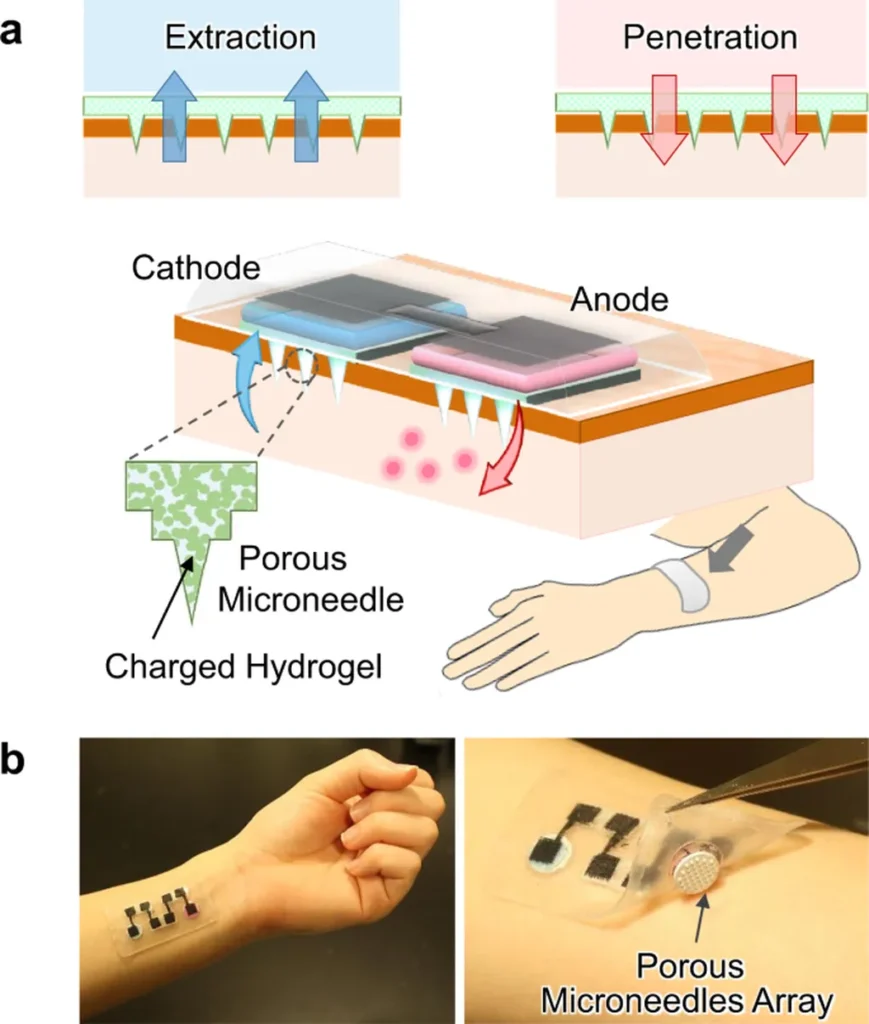
In the realm of biomedical innovation, a groundbreaking development is poised to revolutionize minimally invasive therapies and diagnostics. Researchers, led by Ying Liu from the College of Bioresources Chemical and Materials Engineering at Shaanxi University of Science & Technology, have introduced electroactive bio-microneedles (Ebio-MNs), a cutting-edge technology that combines electrical responsiveness with biological adaptability. This advancement, detailed in a recent study published in the *International Journal of Extreme Manufacturing* (which translates to *International Journal of Extreme Manufacturing* in English), promises to redefine the landscape of theranostic applications—integrated therapeutic and diagnostic systems.
Traditional microneedles (MNs) have long been valued for their ability to deliver drugs and gather diagnostic information painlessly through the skin. However, they come with significant limitations, including a lack of multifunctionality, inefficient drug utilization, and potential immune complications. Enter Ebio-MNs, which address these challenges by integrating electrical stimulation with biological materials, creating a smarter, more responsive platform for medical interventions.
“Ebio-MNs represent a paradigm shift in biomedicine,” explains Ying Liu. “By harnessing electrical signals, these microneedles can dynamically respond to physiological changes, enabling real-time monitoring and targeted treatment delivery. This closed-loop system enhances precision and efficacy, paving the way for personalized healthcare solutions.”
The study systematically explores the mechanisms behind Ebio-MNs, highlighting their potential in various medical applications. For instance, in diabetes management, these microneedles can monitor glucose levels and deliver insulin as needed, offering a seamless and automated approach to disease management. Similarly, in chronic wound repair, Ebio-MNs facilitate electrostimulation-enhanced healing, accelerating tissue regeneration and reducing recovery times.
The commercial implications of this research are profound, particularly for the energy sector. As the demand for sustainable and efficient energy solutions grows, the integration of bioelectronic interfaces like Ebio-MNs could lead to innovative energy-harvesting technologies. Imagine wearable devices that not only monitor health metrics but also generate energy from biological processes, creating a symbiotic relationship between human health and energy production.
Moreover, the precision manufacturing technologies employed in the development of Ebio-MNs, such as lithography, 3D printing, and MEMS (Micro-Electro-Mechanical Systems), open new avenues for scalable production. This could lead to cost-effective, mass-produced medical devices that are both accessible and affordable, democratizing advanced healthcare solutions.
As the field of biomedicine continues to evolve, the introduction of Ebio-MNs marks a significant milestone. By bridging the gap between electrical engineering and biological sciences, this research offers a glimpse into a future where intelligent, responsive medical devices become the norm. The potential applications are vast, and the impact on both healthcare and the energy sector could be transformative.
In the words of Ying Liu, “The future of theranostics lies in the integration of intelligent systems that can adapt and respond to the body’s needs in real time. Ebio-MNs are a step in that direction, and we are excited to see how this technology will shape the next generation of medical interventions.”
As we stand on the brink of this technological revolution, one thing is clear: the fusion of electrical engineering and biomedicine is not just a possibility—it’s the future.