
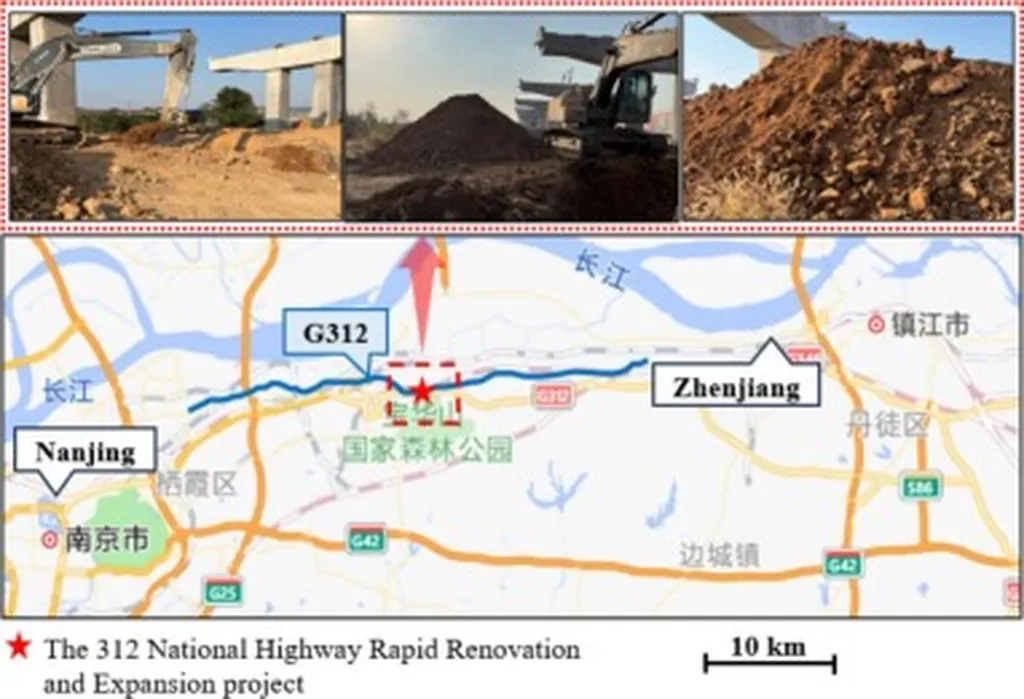
In the heart of Shaoxing, a city known for its rich history and vibrant culture, a groundbreaking study is unfolding that could reshape how we approach road construction and environmental sustainability. Led by HU Hong of Jinzhu Traffic Construction Co., Ltd., under the Zhejiang Communications Construction Group Co., Ltd., this research is delving into the behavior of lime-stabilized soil under various conditions, with implications that stretch far beyond the roads of Shaoxing.
The study, recently published in ‘Zhongwai Gonglu’ (which translates to ‘China Foreign Highway’), focuses on the performance of lime-stabilized soil under cyclic loading, a critical factor in road construction and maintenance. By conducting cyclic triaxial incremental loading tests on undisturbed lime soil, HU and his team are uncovering insights that could lead to more durable, cost-effective, and environmentally friendly road construction practices.
One of the key findings is the behavior of lime soil under varying cyclic stress ratios. “When the cyclic stress ratio increases from 1 to 4, the cumulative strain and resilient strain increase rapidly in the initial loading stage,” explains HU. This ‘stepwise’ increase in strain could have significant implications for the design and maintenance of roads, particularly in areas with heavy traffic or variable loading conditions.
The study also reveals that confining pressure plays a crucial role in the performance of lime-stabilized soil. Increasing the confining pressure significantly increases the resilient modulus, a measure of the soil’s ability to recover from deformation. “The resilient modulus increases significantly at the cyclic stress ratio of 1 when the confining pressure is increased from 20 kPa to 40 kPa,” notes HU. This finding could lead to more efficient use of materials and resources in road construction, potentially reducing costs and environmental impact.
Perhaps most intriguingly, the study explores the effects of water immersion on lime-stabilized soil. After 24 hours of water immersion, the total and cumulative strains in the axial direction increase significantly, particularly at lower confining pressures. This could have important implications for road construction in areas with high rainfall or fluctuating water tables.
So, what does this mean for the future of road construction and the energy sector? The findings could lead to the development of more resilient and durable road materials, reducing the need for frequent maintenance and repairs. This, in turn, could lower the energy consumption and carbon emissions associated with road construction and maintenance, contributing to a more sustainable future.
Moreover, the study’s focus on the solidification of soft soil foundations under complex traffic loads could have broader applications in the energy sector. For instance, it could inform the design and construction of foundations for wind turbines, solar farms, and other energy infrastructure, ensuring their stability and longevity in challenging conditions.
As HU and his team continue to unravel the complexities of lime-stabilized soil, one thing is clear: their work is not just about roads. It’s about building a more sustainable, resilient, and energy-efficient future. And that’s a journey worth watching.